If you have ever wondered whether just a few minutes of phonological awareness practice each day can make a difference, the answer is yes.
Long before children begin sounding out words, they need to develop the ability to hear, notice, and manipulate the sounds in spoken language. These early listening skills form the foundation for later phonics instruction and reading success. The good news is that they do not require lengthy lessons. A consistent 5 to 10 minutes each day can have a lasting impact.
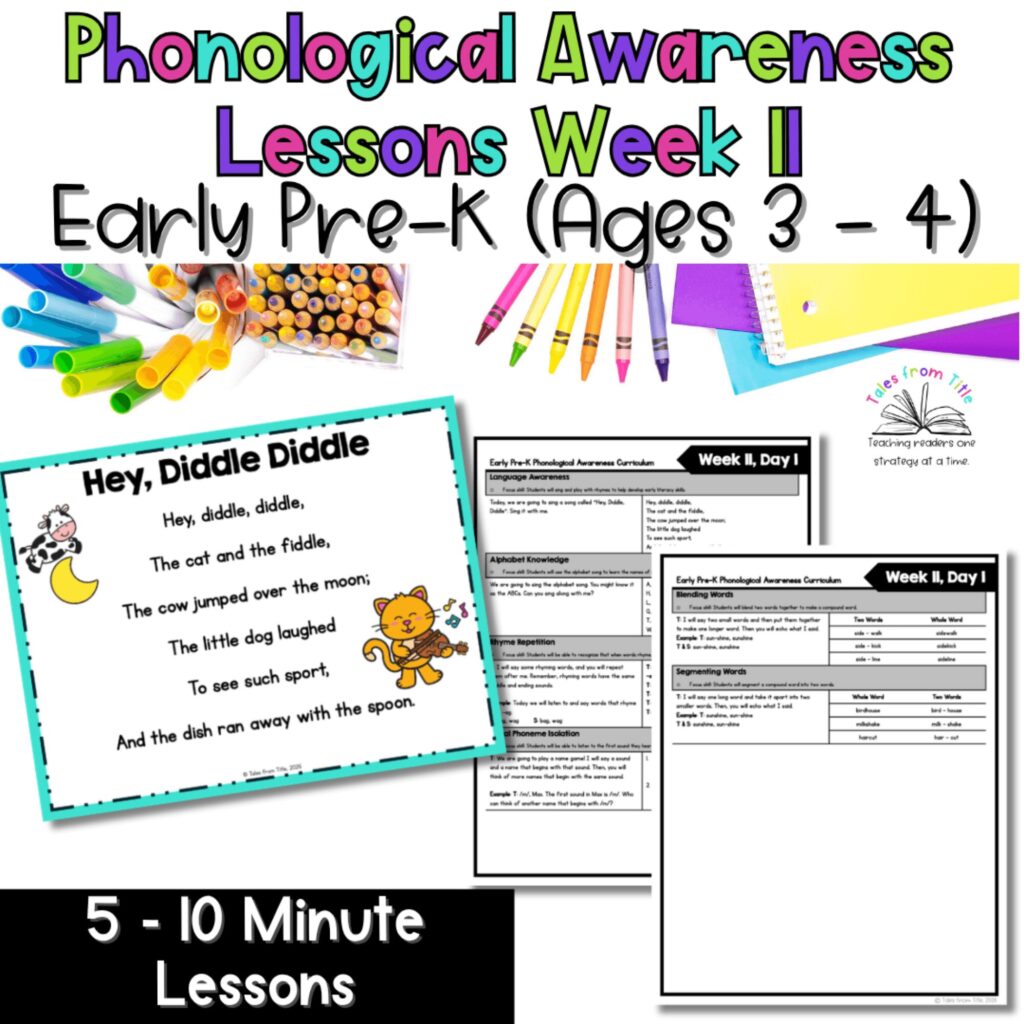
My Early Pre-K Phonological Awareness Week 11 Lesson Plans were created to make those daily moments simple, engaging, and effective. Each lesson is fully scripted, requires little to no preparation, and follows a predictable routine that helps young learners build confidence while strengthening essential pre-reading skills.
Why Phonological Awareness Matters
The Science of Reading has consistently shown that phonological awareness is one of the strongest predictors of future reading achievement. Before children can connect letters to sounds, they must first recognize and work with the sounds they hear in spoken words.
Research has found that children with well-developed phonological awareness are more successful when learning phonics because they already understand that words are made up of smaller sound units. Those who struggle to hear rhymes, identify beginning sounds, or blend spoken words often need additional support before decoding becomes easier.
The National Reading Panel identified phonological awareness instruction as an essential component of effective early literacy instruction. More recently, researchers such as Dr. Louisa Moats have continued to emphasize that explicit instruction in spoken language prepares children for successful reading and spelling.
That is why these lessons focus entirely on listening and speaking. Children are not expected to read or write. Instead, they are developing the oral language skills that make future reading instruction much more meaningful.
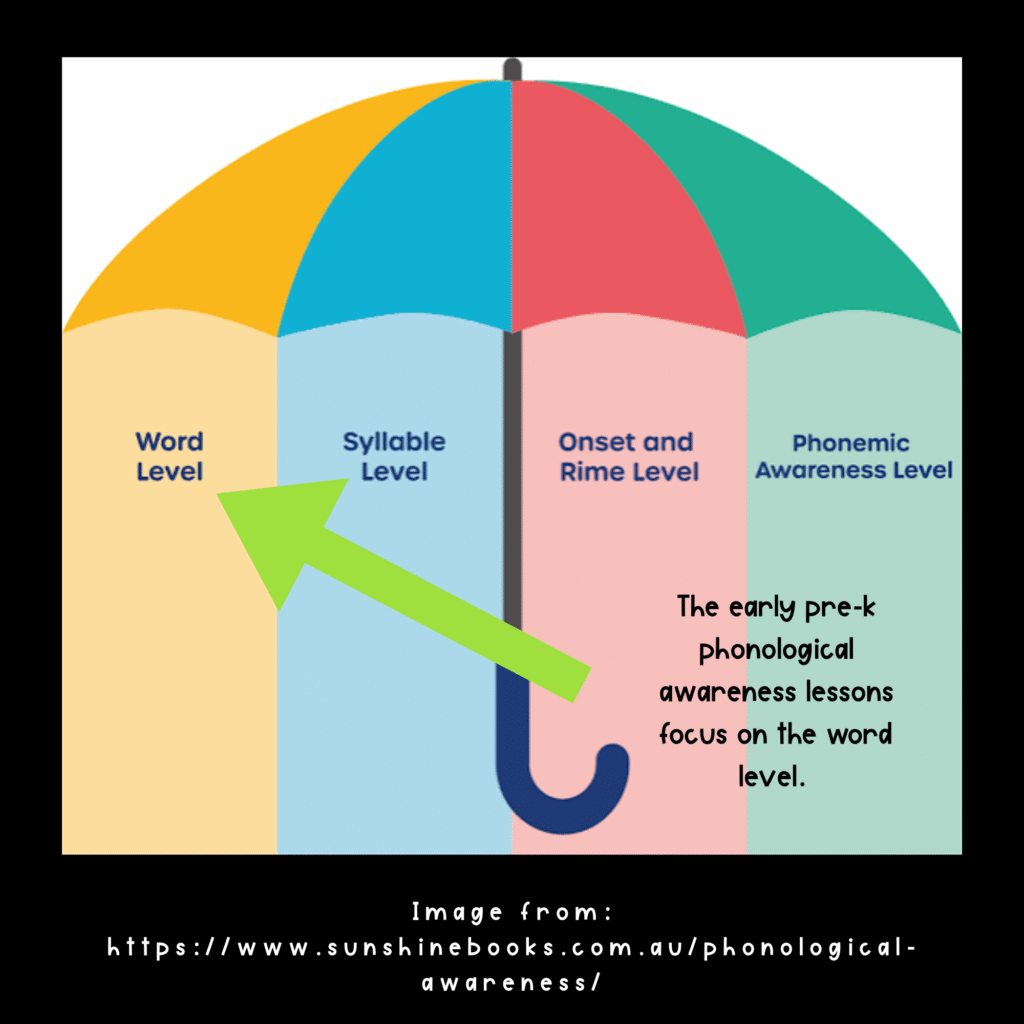
What Children Learn During Week 11
Week 11 continues building the foundational skills introduced earlier in Month 3. While no new concepts are introduced, children continue strengthening their understanding through new words, engaging activities, and repeated practice.
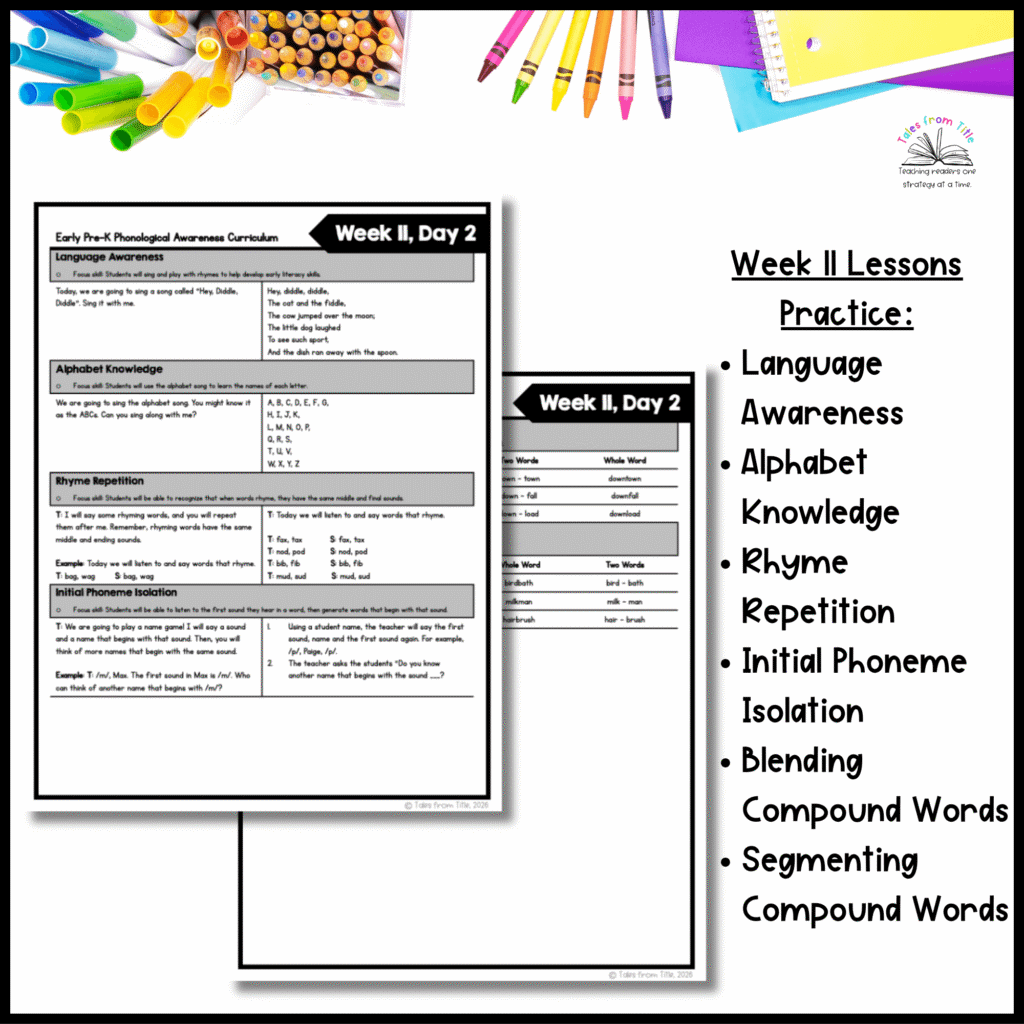
Each lesson includes:
Language Awareness
Children participate in songs and rhymes that encourage careful listening and vocabulary development. These experiences help children recognize patterns in spoken language while expanding the words they understand and use.

Alphabet Knowledge
Although phonological awareness is an auditory skill, daily alphabet practice helps children become familiar with letter names. This knowledge will become increasingly important as they begin connecting letters with their corresponding sounds.
Rhyme Repetition
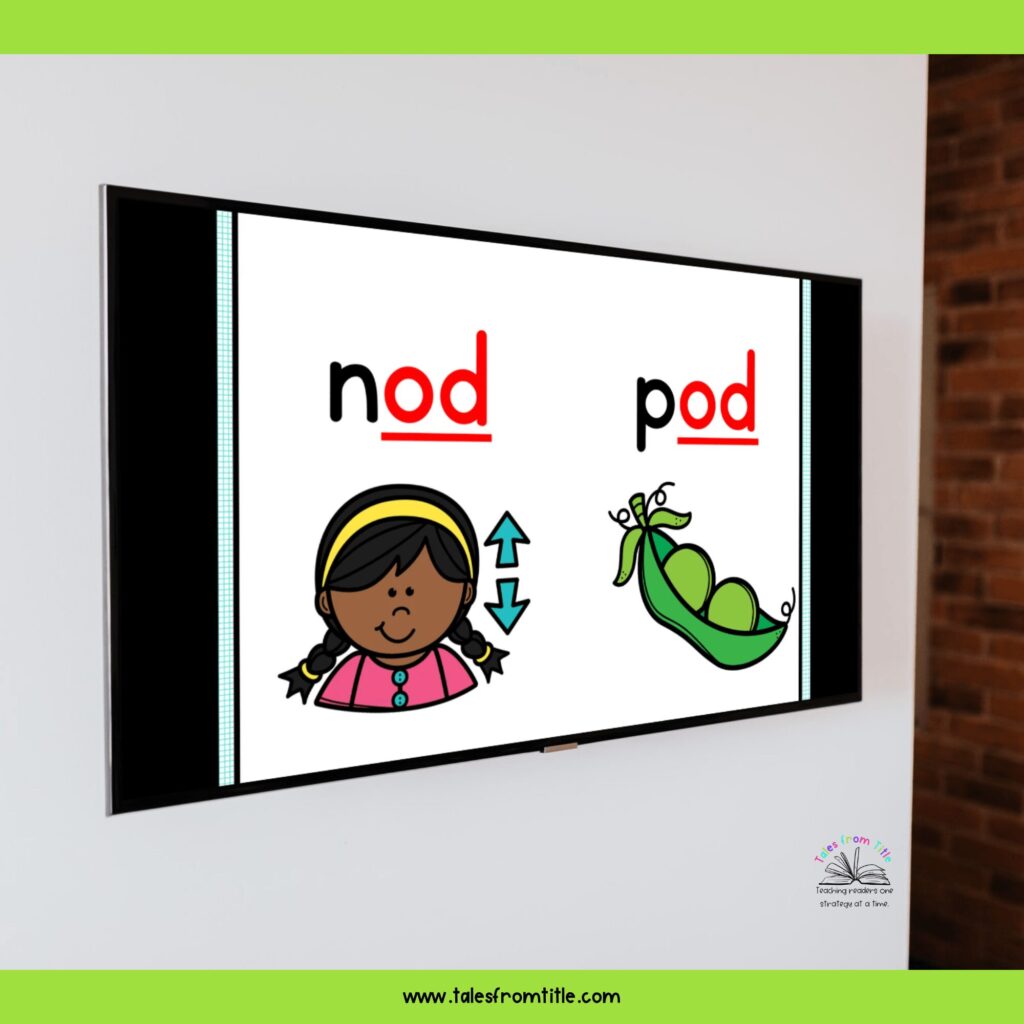
Children listen to and repeat rhyming words, helping them recognize that words can share similar ending sounds.
For example, after hearing words like cat, hat, and bat, children begin noticing that the ending sound stays the same even though the beginning sound changes.
Initial Phoneme Isolation and Production
Week 11 also provides practice identifying the first sound in familiar names
Instead of simply recognizing the beginning sound, children also produce other names with the same initial sound. For example, after hearing the name Max, they identify that it begins with the /m/ sound. Then, they begin producing other names with the same initial sound. These quick oral activities strengthen listening skills that later support phonics instruction.
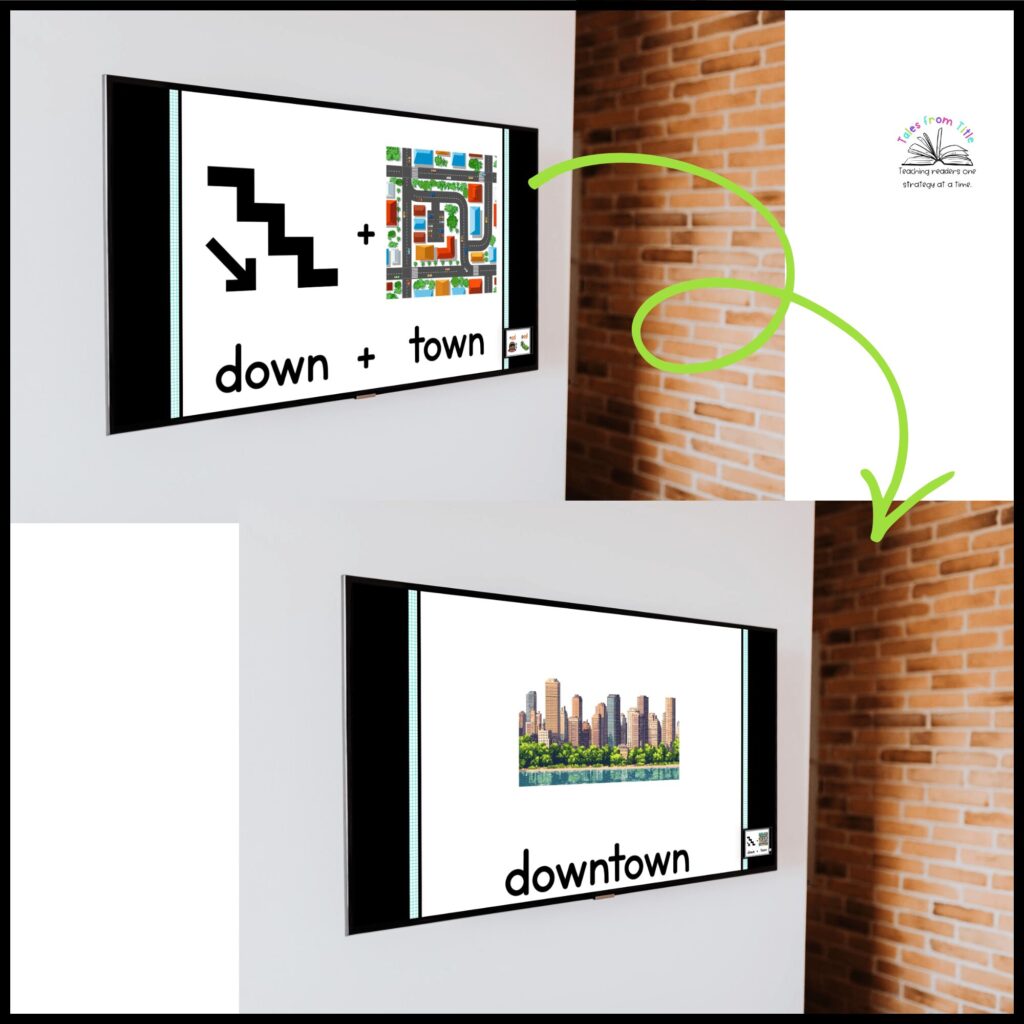
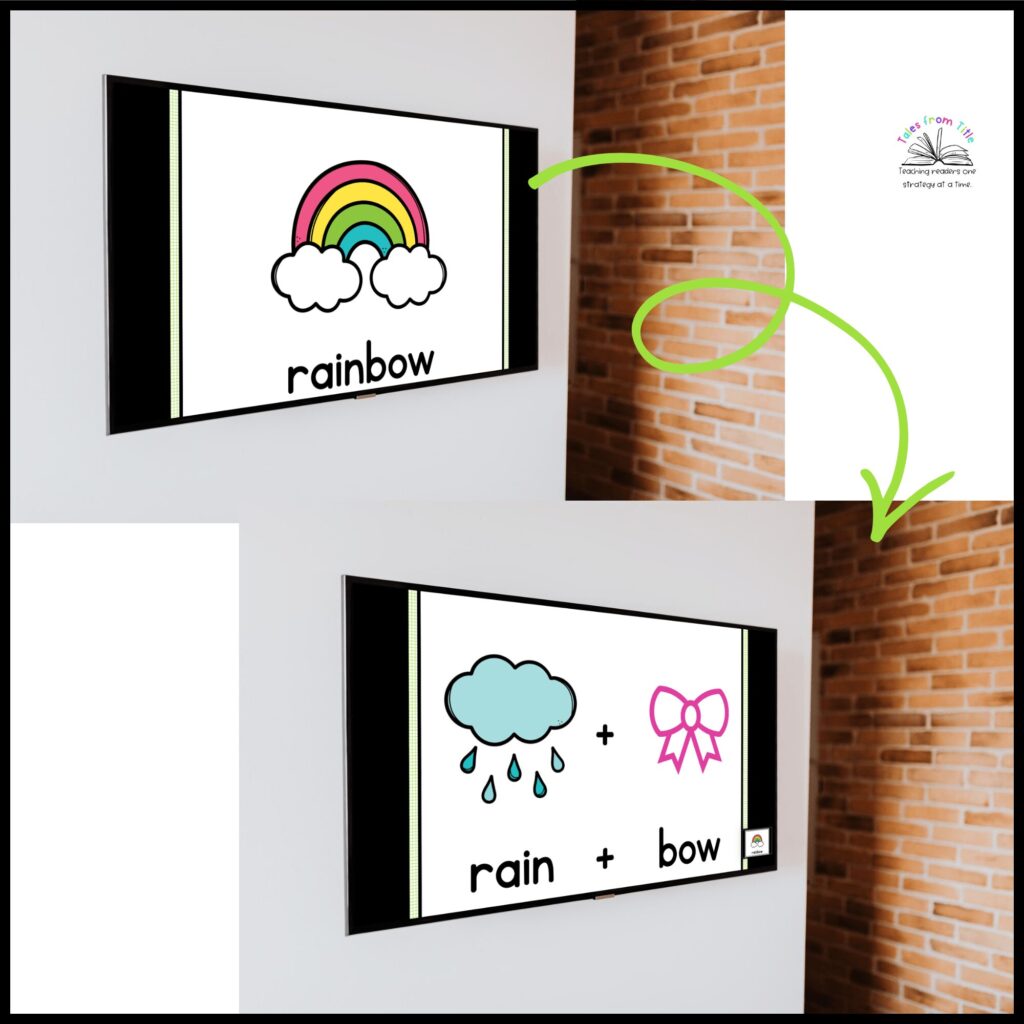
Blending Compound Words
Children hear two smaller spoken words and combine them into one compound word.
For example:
- rain + bow = rainbow
- snow + man = snowman
- tooth + brush = toothbrush
This helps children understand that spoken words can be combined to create new words.
Segmenting Compound Words
Children also practice breaking familiar compound words apart into their smaller words.
For example:
- cupcake becomes cup + cake
- playground becomes play + ground
- sunflower becomes sun + flower
These activities encourage children to think about the structure of spoken language while developing important listening skills.
Why Repetition Is So Important
Young children benefit from repeated opportunities to practice the same skills.
Imagine trying to learn to ride a bicycle after practicing only once. The same idea applies to early literacy development. Children become more confident when instructional routines remain familiar while the words and examples change.
That is exactly how the Early Pre-K Phonological Awareness Curriculum is designed.
Instead of introducing new concepts every week, children revisit previously learned skills using fresh activities that gradually build independence. This systematic approach helps children develop automaticity while keeping lessons enjoyable.
Designed for Busy Preschool Teachers
Whether you teach in a preschool classroom, provide reading intervention, or homeschool your preschooler, these lessons are designed to fit naturally into your daily schedule.
Each week includes:
- Three fully scripted lessons
- Optional instructional slides in PowerPoint, Google Slides, and PDF formats
- Weekly rhyming song visuals
- Lessons that take only 5 to 10 minutes each day
- Little to no preparation required
Simply open the lesson and teach.
New to the Curriculum? Start with Week 1 Free
If you are wondering whether this curriculum is a good fit for your students, start with Week 1.
You’ll receive a complete week of scripted phonological awareness lessons at no cost, giving you the opportunity to experience the lesson format, daily routines, and engaging activities before purchasing additional weeks.
Download your FREE Week 1 Phonological Awareness Lessons and see how easy it is to build meaningful literacy routines in just a few minutes each day.
Save More with the Month 3 Bundle
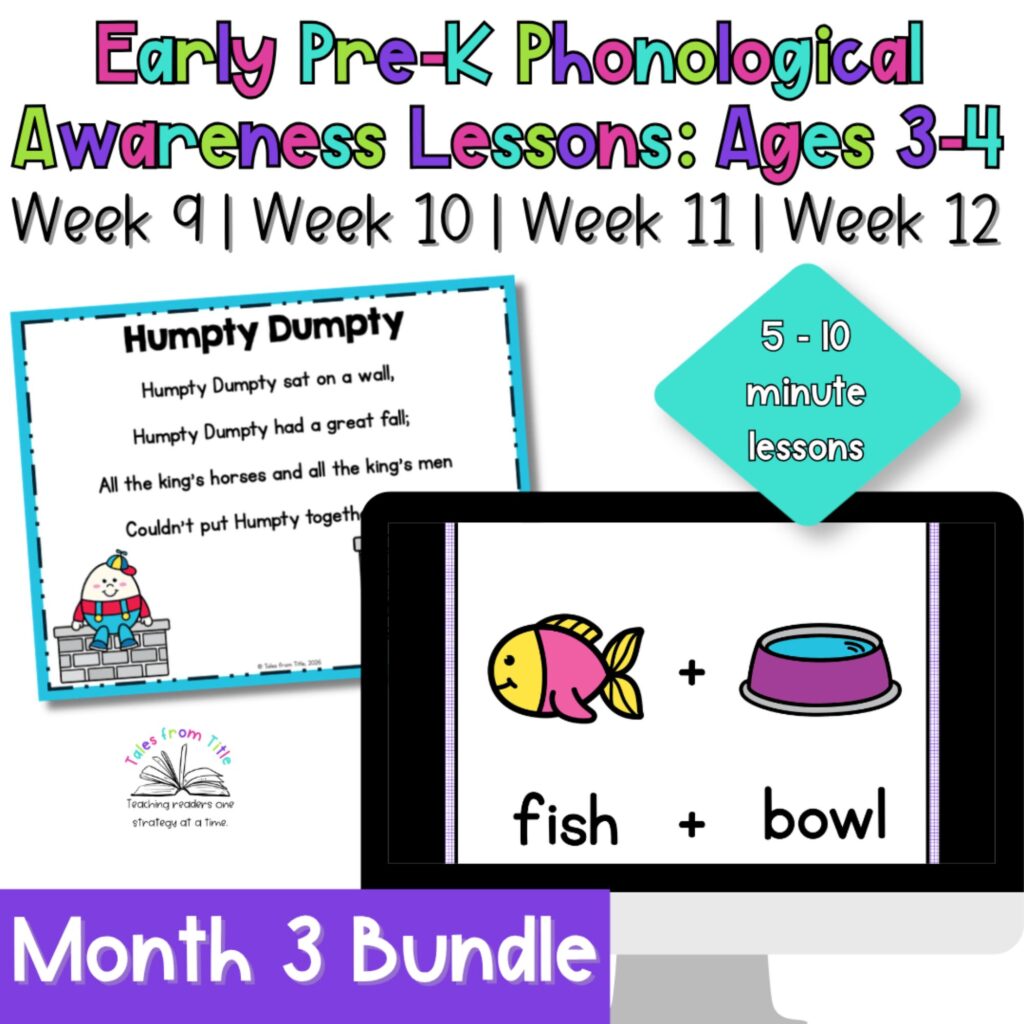
Planning an entire month of instruction is even easier with the Early Pre-K Phonological Awareness Month 3 Bundle.
The bundle includes Weeks 9 through 12, providing a full month of carefully sequenced lessons that continue building children’s phonological awareness through consistent daily practice. Purchasing the bundle also saves you 20 percent compared to buying each week individually.
If you are already using Week 9 or Week 10, the Month 3 Bundle is the most economical way to complete your instruction while keeping your lesson routines consistent.
If you shop on Etsy, please note that file size limits require me to bundle these resources a little differently. Instead of receiving a full 4-week bundle, you’ll receive a 20% discount when purchasing bundles of three weeks at a time (for example, Weeks 2–4, Weeks 5–7, or Weeks 8–10). These discounts can be seen in the sidebar when you are looking at the resource, and there is an option to add a set of resources to your cart.
Build Strong Readers One Conversation at a Time
Reading begins long before children open their first book.
It begins with listening, talking, singing, rhyming, and playing with language.
Those simple conversations and short daily activities help children develop the phonological awareness skills that support decoding, spelling, and reading comprehension in the years ahead.
Week 11 provides another opportunity to strengthen those essential skills through engaging, developmentally appropriate lessons that are easy to teach and enjoyable for young learners.
If you are looking for a simple, research-based way to support early literacy, these lessons are ready when you are.