If you’ve ever wondered whether five or ten minutes of phonological awareness practice each day is really enough to make a difference, the research says yes.
Young children do not need lengthy reading lessons to begin developing literacy skills. They need intentional, consistent opportunities to listen to language, notice sounds, and play with words. Those simple daily experiences become the foundation for learning to read.
That is exactly why I created my Early Pre-K Phonological Awareness Curriculum. Each week builds on the last with predictable routines, new words, and developmentally appropriate activities that help children strengthen the skills they will need when formal reading instruction begins.
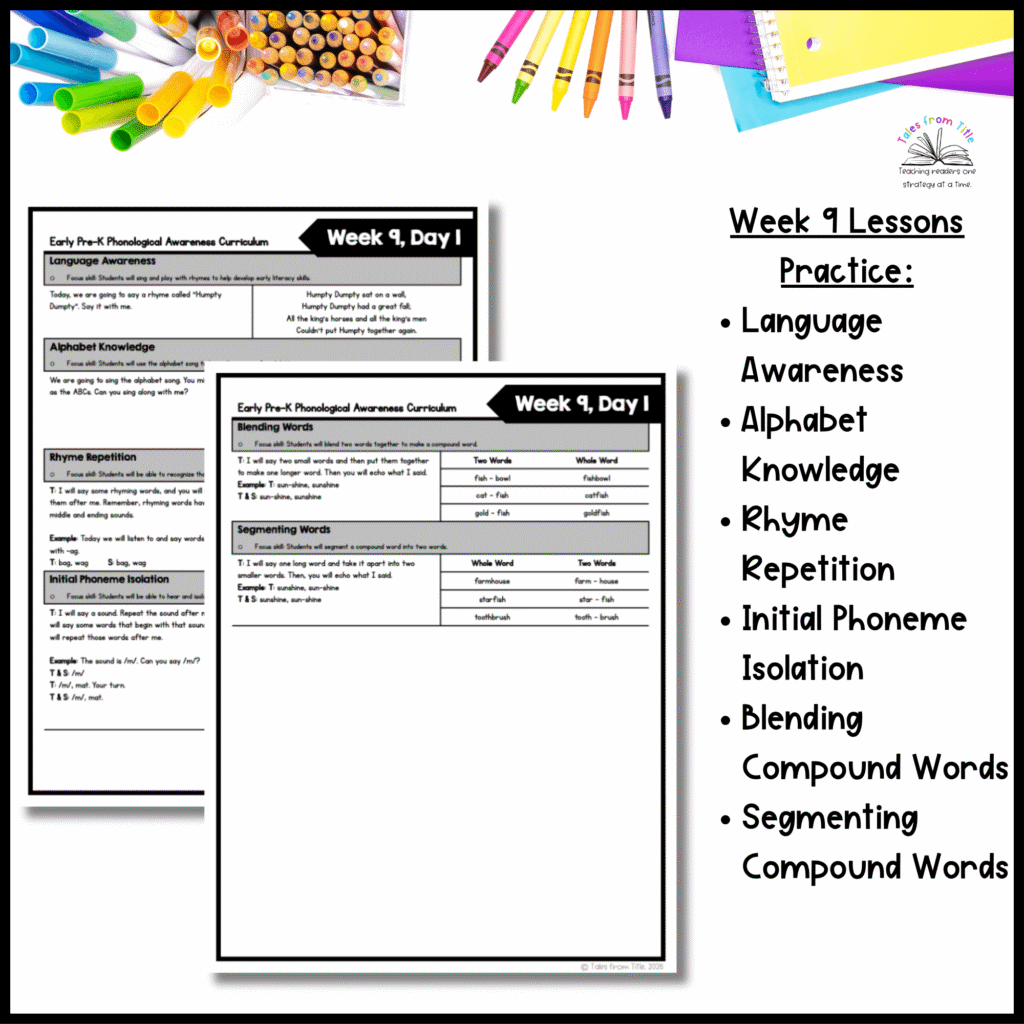
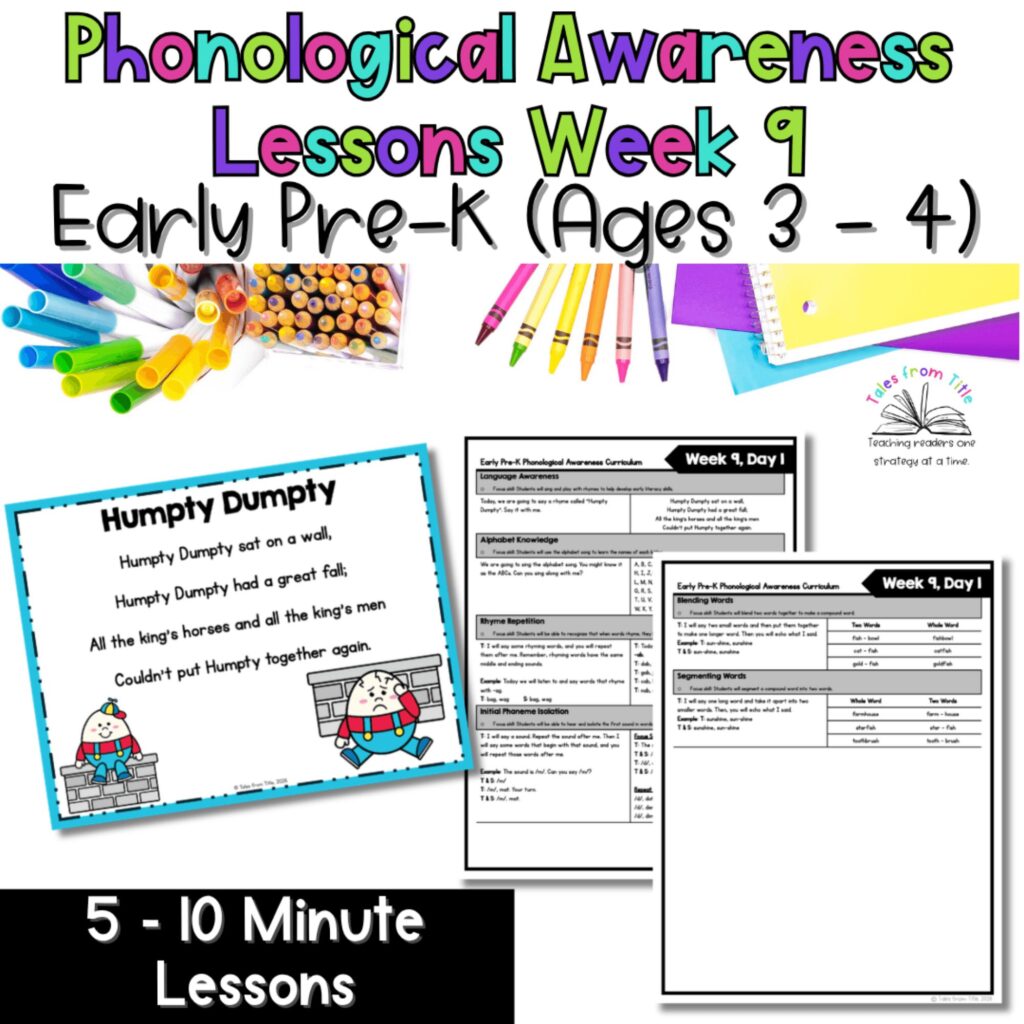
Week 9 continues that progression with engaging practice in language awareness, alphabet knowledge, rhyme repetition, initial phoneme isolation, blending compound words, and segmenting compound words.
Why Phonological Awareness Is So Important
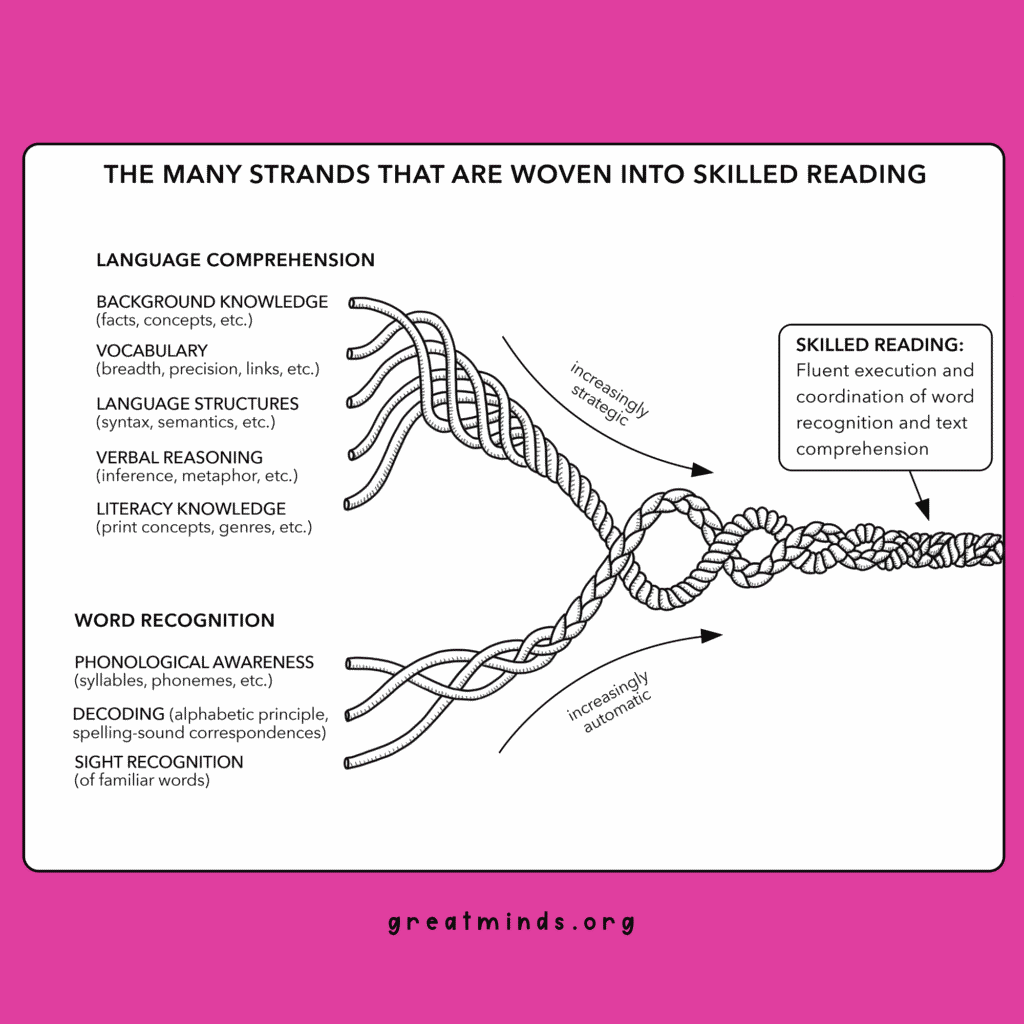
Before children can match letters to sounds, they need to hear and work with the sounds in spoken language.
That ability is called phonological awareness, and it is one of the strongest early predictors of future reading success.
The National Reading Panel identified phonological awareness instruction as one of the essential components of effective early literacy instruction. Children who receive explicit instruction in phonological awareness develop stronger decoding skills than those who do not.
Phonological awareness is entirely oral. There are no worksheets to complete or words to read. Instead, children learn to listen carefully as they clap syllables, recognize rhyming words, identify beginning sounds, and pull apart compound words.
These listening activities help prepare the brain for the more complex work of connecting sounds to letters during phonics instruction.
What Children Practice During Week 9
Each lesson is designed to fit into a busy preschool schedule while providing meaningful opportunities to practice important pre-reading skills.
Language Awareness
Young children learn language through songs and rhymes.
Each lesson begins with activities that encourage children to listen and interact with spoken language. These experiences help build vocabulary while strengthening listening comprehension.
Alphabet Knowledge
Knowing the names of letters may seem simple, but it plays an important role in early literacy.
During Week 9, children continue practicing letter names through familiar alphabet routines. Keeping this portion consistent allows children to build confidence through repetition.
Rhyme Repetition
Rhyming helps children notice that words can sound alike even when they have different meanings.
As children repeat rhyming word families aloud, they begin recognizing sound patterns naturally. Those patterns make it easier to hear smaller parts of words later on.
Initial Phoneme Isolation
One of the biggest milestones in preschool is learning to identify the first sound in a spoken word.
Instead of asking children to identify letters, these activities focus only on listening.
For example, you might ask:
“What sound do you hear at the beginning of sun?”
Children are learning to notice sounds before connecting those sounds to print.
Blending Compound Words
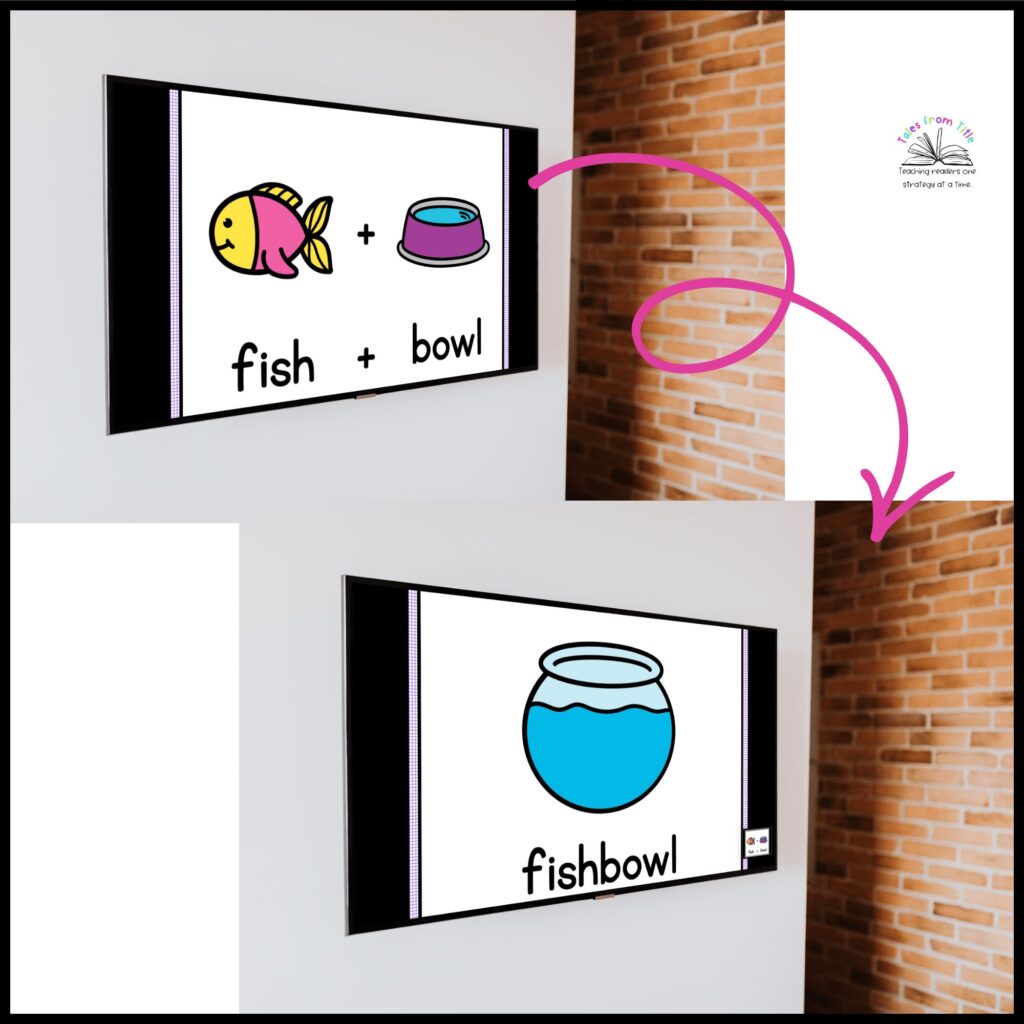
Compound words provide an excellent introduction to blending.
Children hear two separate words, such as play and ground, then combine them to make playground.
This playful activity introduces the idea that words can be joined together to create new words.
Segmenting Compound Words
Segmenting asks children to do the opposite.
Instead of combining two words, they break a compound word apart.
For example:
Birthday becomes birth and day.
This strengthens children’s understanding that larger words are made from smaller meaningful parts.
Why Short Daily Lessons Work
Preschool children learn best through frequent, meaningful practice.
A five-minute lesson completed every day often produces better results than a longer lesson once a week. Daily routines reduce cognitive load because children already know what to expect. That frees up more attention for listening, thinking, and participating.
The consistent structure also makes lesson planning easier for teachers. Rather than creating new activities every day, you can spend your energy interacting with students instead of preparing materials.
What's Included in Week 9
The Early Pre-K Phonological Awareness Week 9 resource includes:
- Three fully scripted lesson plans
- Optional instructional slides in PowerPoint, Google Slides, and PDF formats
- Weekly rhyming song visuals
Whether you’re teaching during circle time, leading a small intervention group, or homeschooling, the lessons are ready to use with very little preparation.
New to the Curriculum?
If you’re just discovering this preschool phonological awareness series, start with Week 1.
You can download the Week 1 lessons for free and see exactly how the daily routine works before purchasing additional weeks. It is an easy way to introduce consistent phonological awareness instruction into your classroom while giving your students valuable practice with foundational literacy skills.
Once you’ve completed Week 1, you can continue through Weeks 2 through 9 as children build confidence and strengthen their listening skills one week at a time.
Build Strong Readers One Week at a Time
Learning to read begins long before children open their first decodable book.
It starts when they notice that cat and hat rhyme.
It grows when they can hear the first sound in sun.
It becomes stronger every time they blend two words into one or pull a compound word apart.
Those moments may seem small, but together they build the foundation for future reading success.
Week 9 continues that journey with simple, engaging lessons that help preschoolers develop the listening skills every future reader needs.
If you’re looking for a consistent, low-prep preschool literacy routine, download the Week 9 lessons and see how a few minutes of focused phonological awareness practice can make a lasting difference.