If you’ve been using my early pre-k phonological awareness curriculum, you know by Week 10, something exciting starts to happen.
Children begin anticipating the routine. They know it’s time to sing, listen, rhyme, and play with words. Instead of spending energy figuring out what comes next, they can focus on the sounds they’re hearing.
That consistency is one of the biggest advantages of a systematic phonological awareness routine.
Young children thrive on repetition. When the structure stays familiar but the words change, they have the chance to practice new skills without feeling overwhelmed. Those daily opportunities to listen carefully and talk about sounds help build the foundation they’ll rely on when they begin phonics and reading instruction.
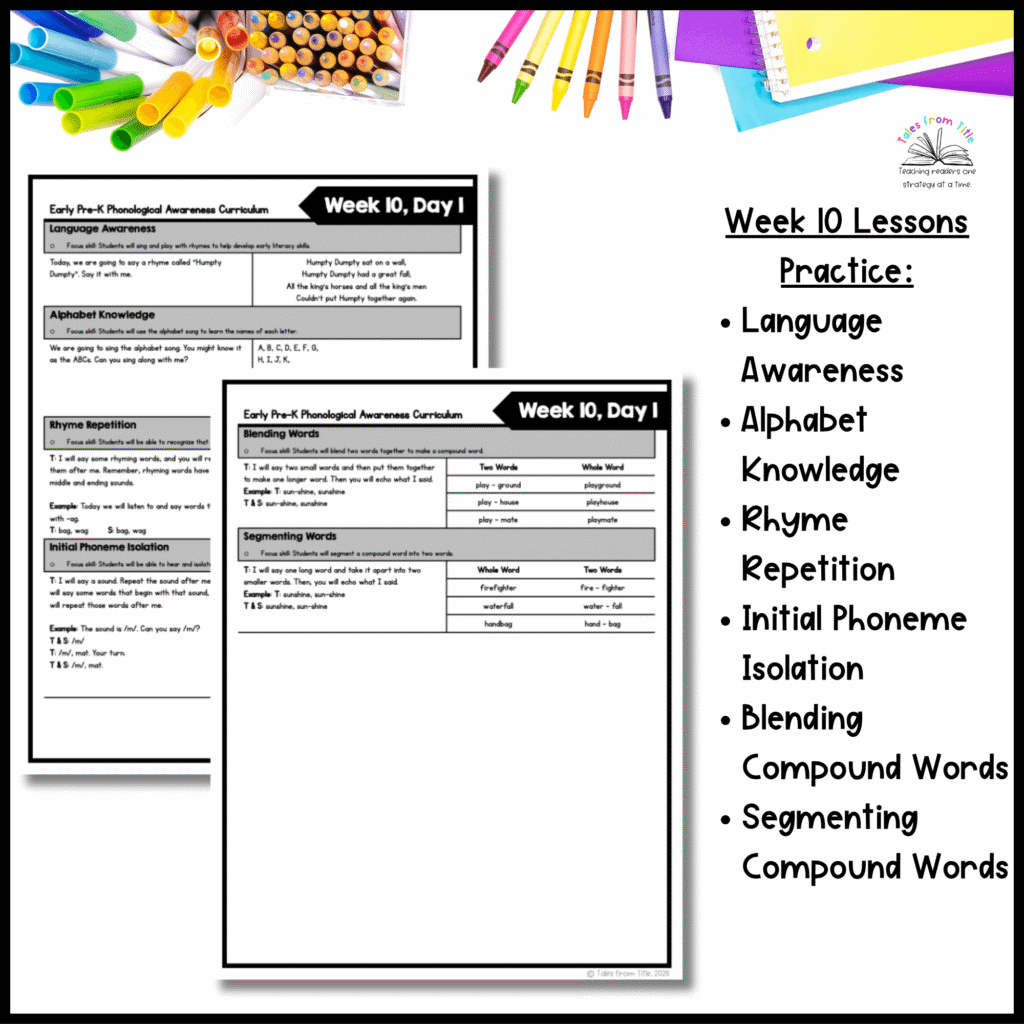
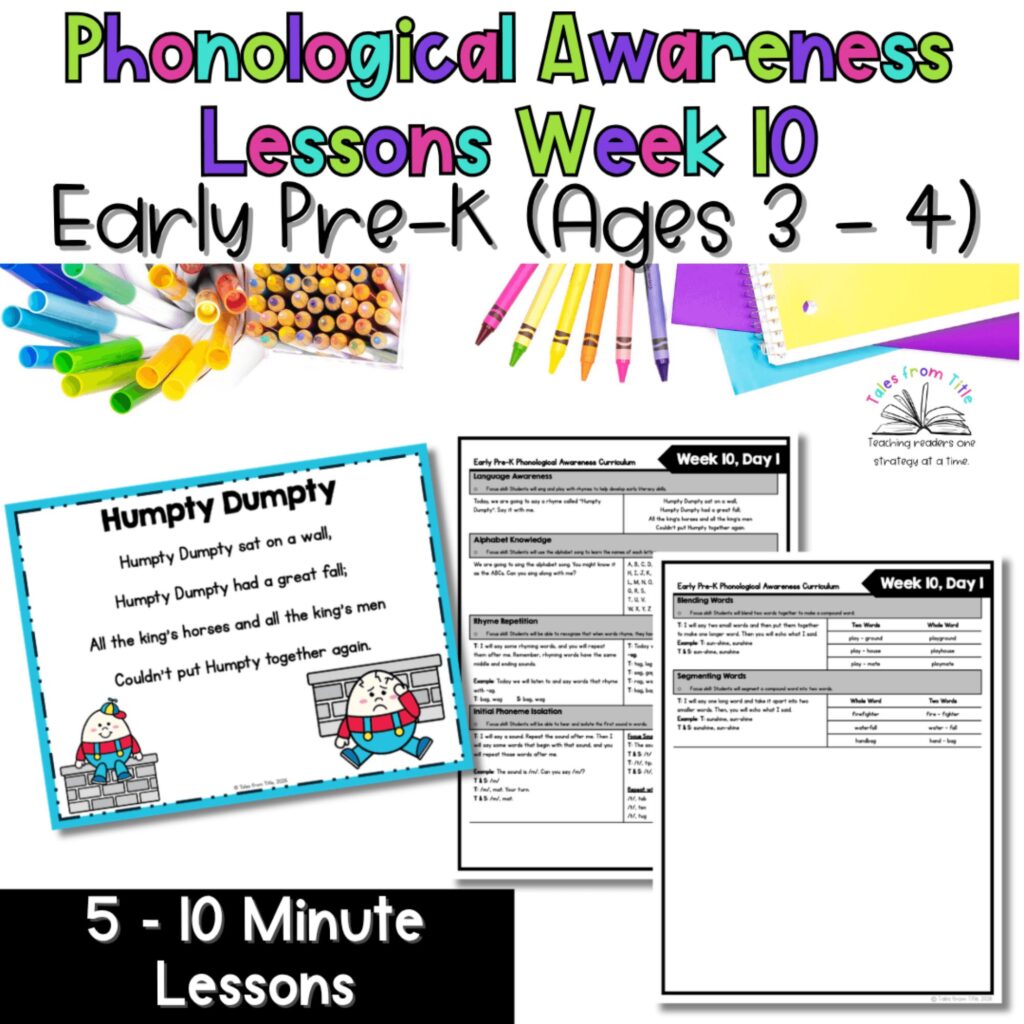
If you’re looking for a simple literacy routine that fits naturally into your preschool day, Week 10 continues that steady progression with engaging practice in language awareness, alphabet knowledge, rhyme repetition, initial phoneme isolation, blending compound words, and segmenting compound words.
The Science Behind Daily Phonological Awareness Practice
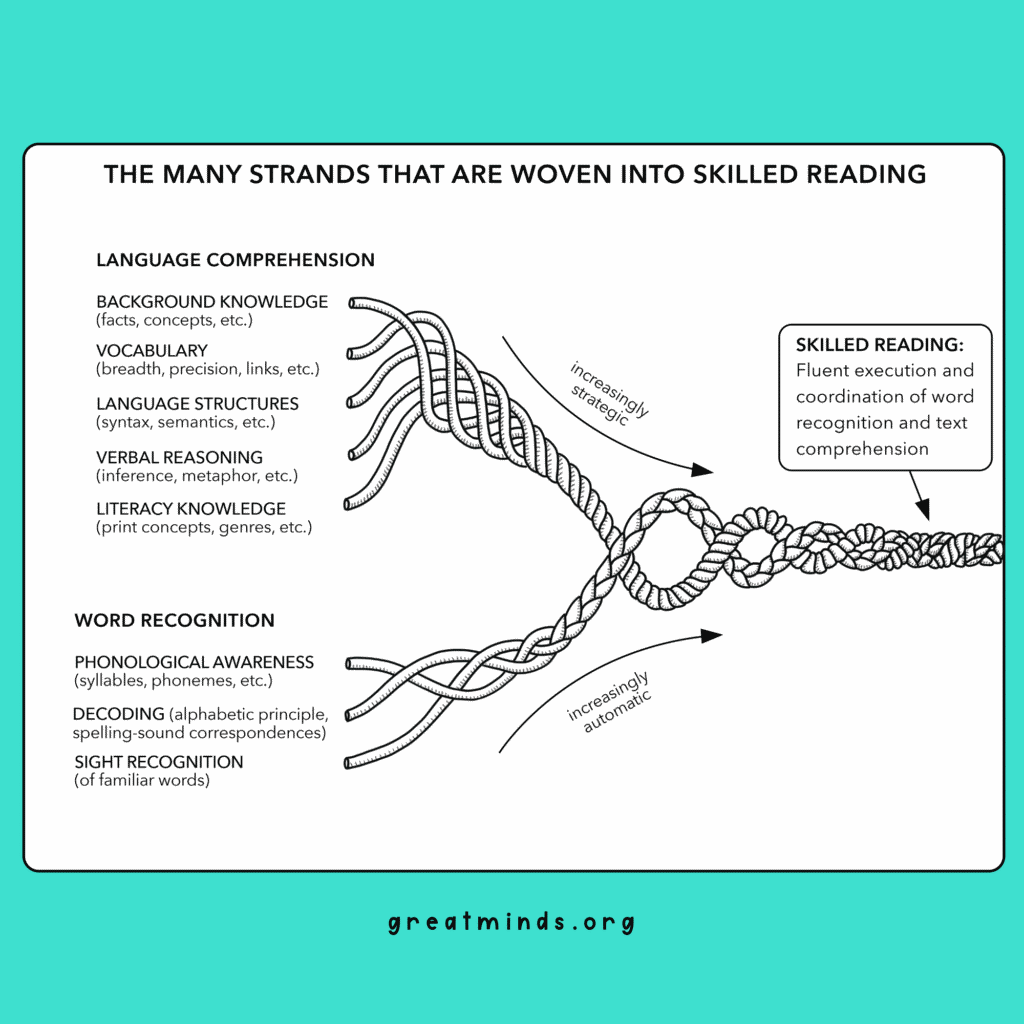
Research has consistently shown that phonological awareness is one of the strongest predictors of future reading success.
According to the National Center on Improving Literacy, children who develop strong phonological awareness are better prepared to connect sounds with letters and decode words when formal reading instruction begins. These skills do not develop by chance. They improve through intentional instruction and repeated opportunities to hear, compare, blend, and manipulate sounds in spoken language.
That doesn’t mean preschoolers need long literacy blocks.
In fact, short lessons often work better because they match young children’s attention spans. Five to ten minutes of focused instruction each day gives children repeated practice without asking them to sit longer than they’re developmentally ready to.
Over time, those small lessons add up.
Why Predictable Routines Help Young Learners
Think about how children learn songs.
They rarely memorize every word after hearing it once. Instead, they hear the same tune over and over until joining in becomes effortless.
Phonological awareness develops in much the same way.
A familiar lesson routine gives children confidence because they know what to expect. Instead of wondering what the activity is, they can devote their attention to listening for rhymes, identifying sounds, and manipulating words.
That is why every lesson in this curriculum follows a consistent format while introducing new words and examples each week.
What Children Practice During Week 10
Week 10 continues building the listening skills that prepare children for future reading instruction.
Language Awareness
Children participate in songs and rhymes that encourage active listening and oral language development.
These simple interactions expand vocabulary while helping children become more attentive listeners.
Alphabet Knowledge
Daily alphabet routines give children repeated exposure to letter names in a fun, low-pressure setting.
Although phonological awareness focuses on spoken language, developing alphabet knowledge alongside these activities helps prepare children for later phonics instruction.
Rhyme Repetition
Hearing and repeating rhyming words helps children recognize that spoken words share sound patterns.
For example, after hearing several words that rhyme with cat, children begin noticing that the ending sounds stay the same even though the beginning sounds change.
That growing awareness becomes an important building block for reading and spelling.
Initial Phoneme Isolation
During Week 10, children continue listening for the first sound they hear in familiar words.
You might ask questions like:
“What sound do you hear at the beginning of fish?”
Because children respond with sounds instead of letter names, they learn to focus on the spoken language itself before connecting those sounds to print.
Blending Compound Words
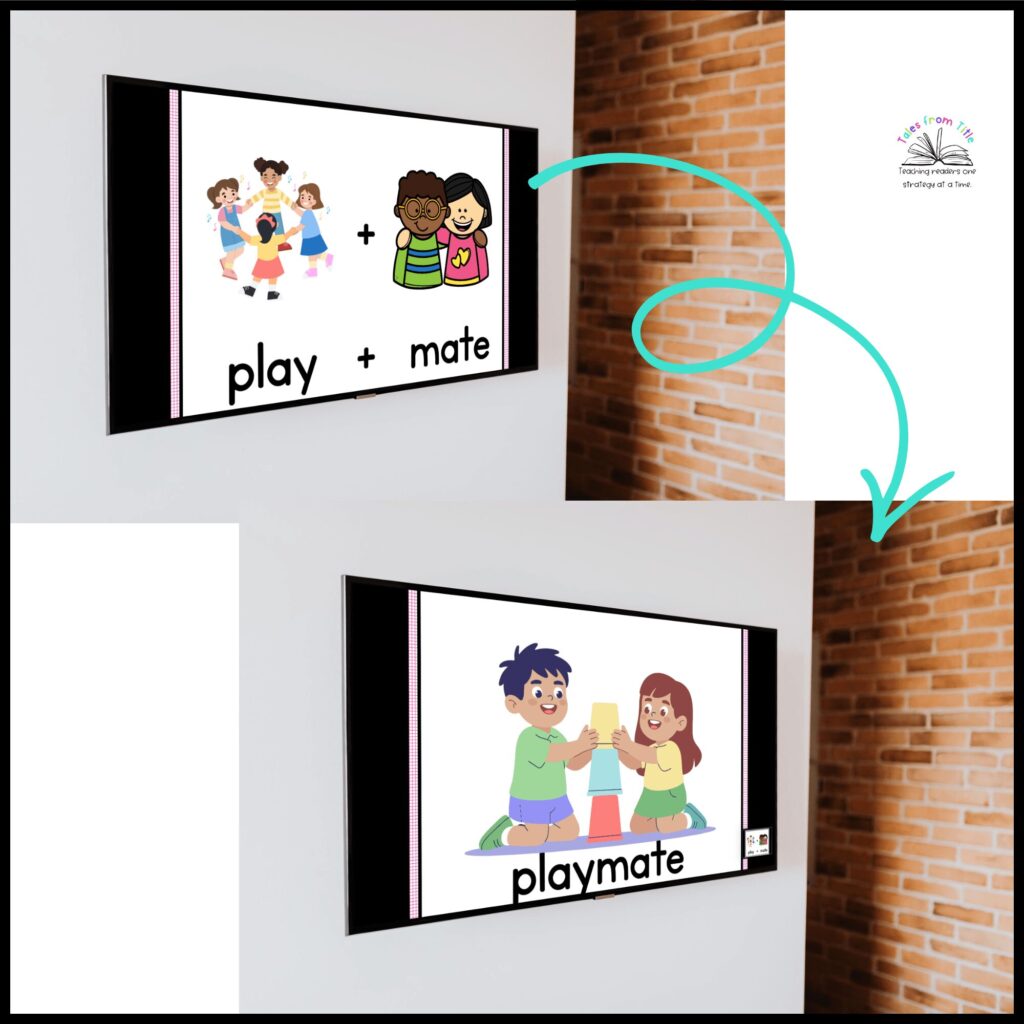
Blending activities encourage children to combine two spoken words into one larger word.
For example:
Back + pack becomes backpack.
This introduces an early form of blending that is both meaningful and developmentally appropriate for preschoolers.
Segmenting Compound Words
Children also practice taking compound words apart.
Hearing that playground is made from play and ground helps children understand that words can be broken into meaningful parts.
These oral activities strengthen listening skills while preparing children for more advanced phonological awareness tasks in the future.
Small Lessons Create Big Growth
It is easy to underestimate the impact of a few minutes each day.
But when children spend ten weeks singing, listening, identifying sounds, blending words, and talking about language, they are building important habits alongside important skills.
They learn to pay attention.
They become more confident participating in group discussions.
They begin noticing sounds naturally during everyday conversations.
Those are meaningful steps toward becoming successful readers.
What's Included in Week 10
The Early Pre-K Phonological Awareness Week 10 resource includes:
- Three fully scripted lesson plans
- Optional instructional slides in PowerPoint, Google Slides, and PDF formats
- Weekly rhyming song visuals
The lessons work well during circle time, small groups, intervention, or homeschool instruction and require very little preparation.
Start with the Free Week 1 Lessons
If you’re new to this preschool phonological awareness curriculum, I recommend beginning with the Week 1 freebie.
You’ll get a complete set of lessons that introduces the daily instructional routine, making it easy to decide whether the curriculum is the right fit for your classroom.
Many teachers find that once children become comfortable with the predictable format, the lessons quickly become one of the easiest parts of their literacy block.
From there, you can continue through the weekly resources at a pace that works for your students.
Give Preschoolers a Strong Start
Children do not become readers overnight.
Reading develops through thousands of small learning experiences that happen long before books become part of independent reading.
Every rhyme they repeat, every beginning sound they identify, and every compound word they blend strengthens the foundation beneath future reading instruction.
Week 10 continues that work with short, engaging lessons that are easy to teach and meaningful for young learners.
If you’re ready to build a consistent preschool literacy routine, download the Week 10 Lessons and see how just a few minutes of focused phonological awareness practice each day can support long-term reading success.