Have you ever sat down to plan preschool literacy activities and realized just how many different skills young children are expected to practice?
Rhyming. Beginning sounds. Syllables. Oral language. Alphabet knowledge.
And while each of these skills is important, preschoolers don’t necessarily need a completely different activity every time you sit down for literacy instruction.
They need consistent opportunities to listen, respond, repeat, and practice.
That’s the idea behind the Early Pre-K Phonological Awareness Curriculum.
The Month 4 Bundle gives you four weeks of short, scripted preschool phonological awareness activities for children ages 3–4. Each week includes three lessons, and each lesson takes just 5–10 minutes.
Rather than spending time searching for another activity to use each week, you can follow a predictable routine and give your students repeated practice with foundational early literacy skills.
What Is Phonological Awareness?
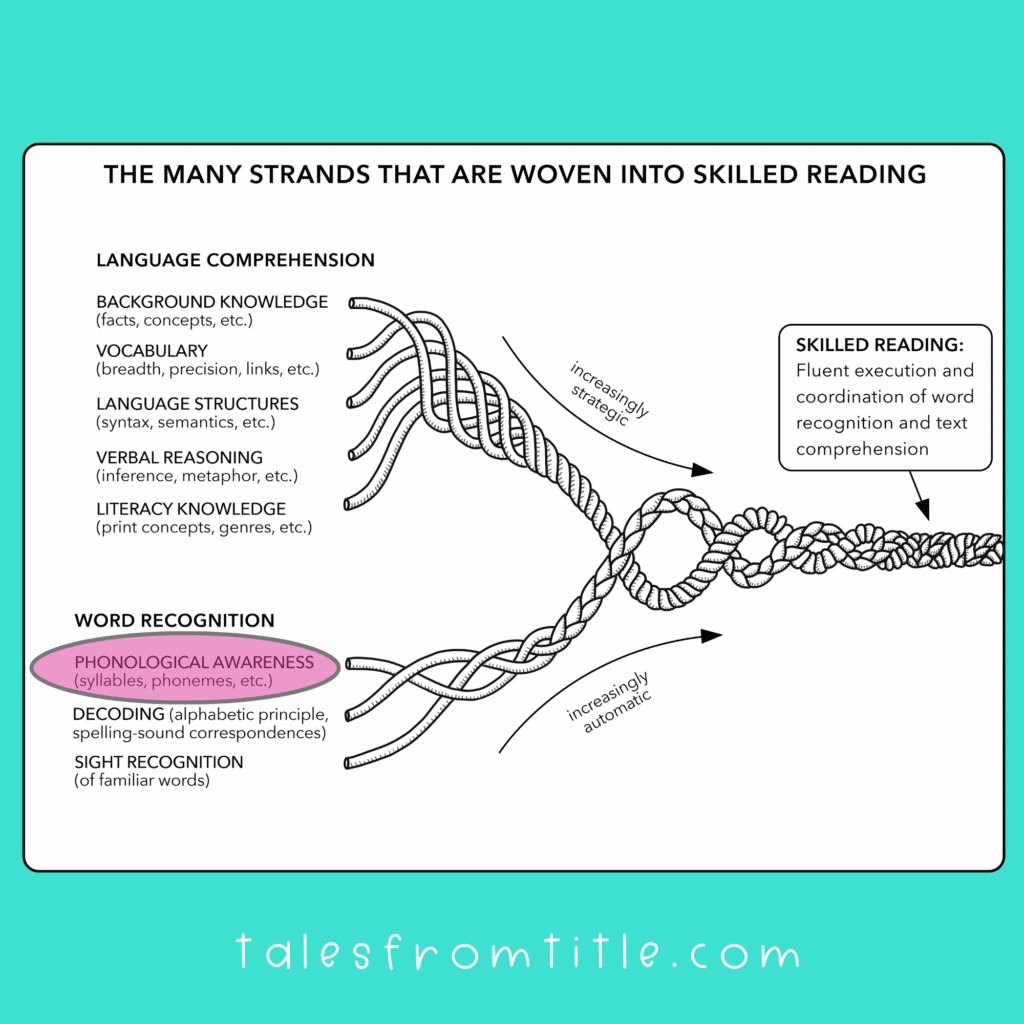
Phonological awareness is the ability to listen to and work with the sounds and parts of spoken language.
For preschoolers, this can look very simple.
A child might:
- Recognize that two words rhyme
- Listen for the first sound in a word
- Blend syllables to say a whole word
- Break a word into its syllables
- Listen carefully to the individual words in a sentence
These are all listening skills. Children don’t need to read the words on a page to practice them.
That’s one reason short, oral activities work so well for early phonological awareness instruction.
Why Do Preschoolers Need Repeated Phonological Awareness Practice?
It’s tempting to think that every week of instruction should introduce a brand-new skill.
But young children often need much more repetition than that.
A child may successfully identify a rhyming pair one day and need additional practice the next time. Another child may be able to blend a familiar two-syllable word but still need support when the words change.
Repeated practice gives children more opportunities to hear the language, respond to it, and become comfortable with the task.
That’s why the Month 4 Bundle intentionally revisits familiar skills throughout the four weeks.
The goal isn’t to rush through as many skills as possible.
The goal is to give young learners consistent, developmentally appropriate practice.
4 Weeks of Preschool Phonological Awareness Activities
The Month 4 Bundle includes Weeks 13–16, with three scripted lessons each week.
That gives you:
4 weeks of instruction
12 scripted lessons
5–10 minutes per lesson
Student visual supports included
Here’s a closer look at what students practice.
Week 13: Introducing Syllable Blending and Segmenting
Week 13 begins working more intentionally with syllables while continuing to practice familiar foundational skills.
Children practice:
- Language awareness
- Alphabet knowledge
- Rhyme recognition
- Initial phoneme isolation
- Blending syllables
- Segmenting words into syllables
For example, students might hear:
rain + bow → rainbow
Or practice breaking a familiar word apart:
rabbit → rab + bit
The goal is to help children begin noticing that spoken words can be broken into smaller parts.
You can read more about the activities and instructional focus in my post:

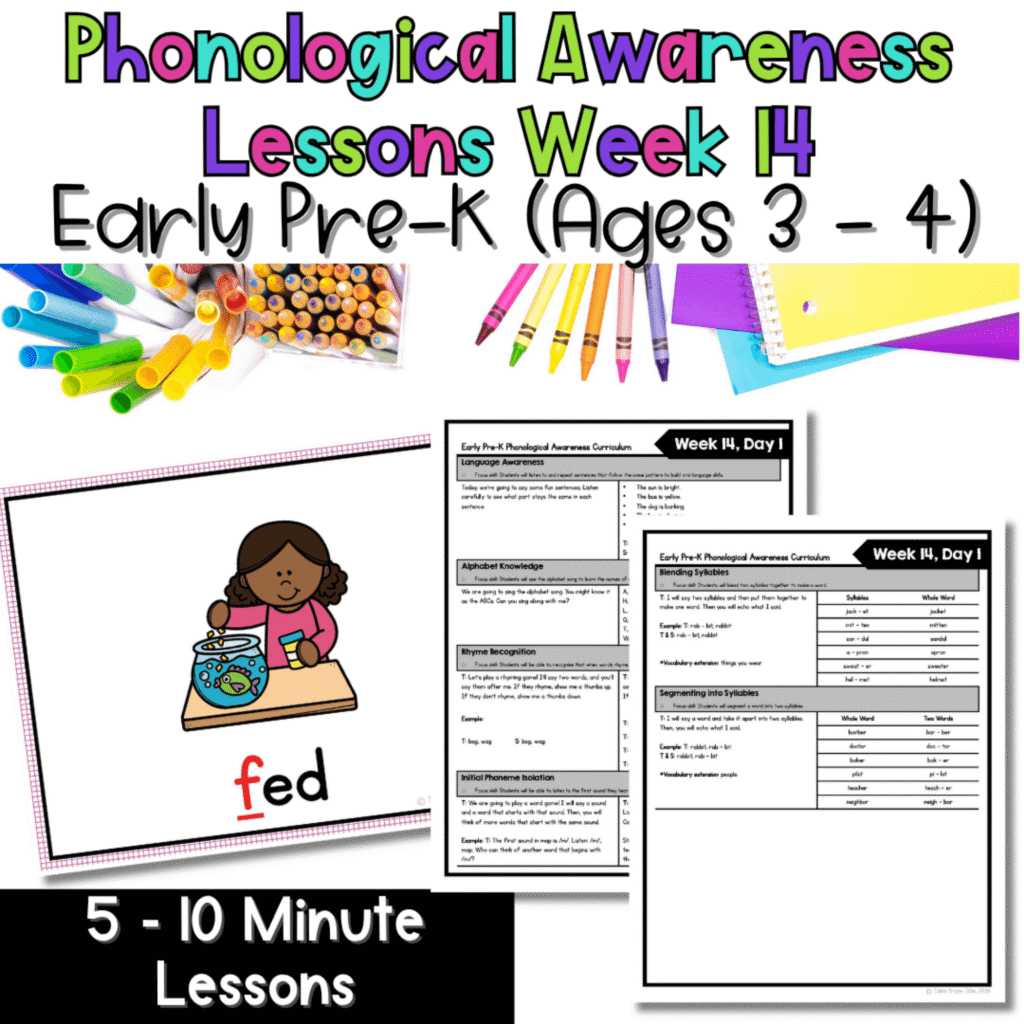
Week 14: Continued Practice With Rhyming, Sounds, and Syllables
Week 14 continues the same foundational skill areas through predictable routines.
Students continue practicing:
- Rhyming
- Initial sounds
- Syllable blending
- Segmenting words into syllables
- Language awareness
- Alphabet knowledge
This continued practice is intentional.
Rather than moving on simply because a skill was introduced the previous week, students have another opportunity to hear and work with the same types of language.
You can see the Week 14 activities in more detail here:
Week 15: Listening for Words in Spoken Sentences
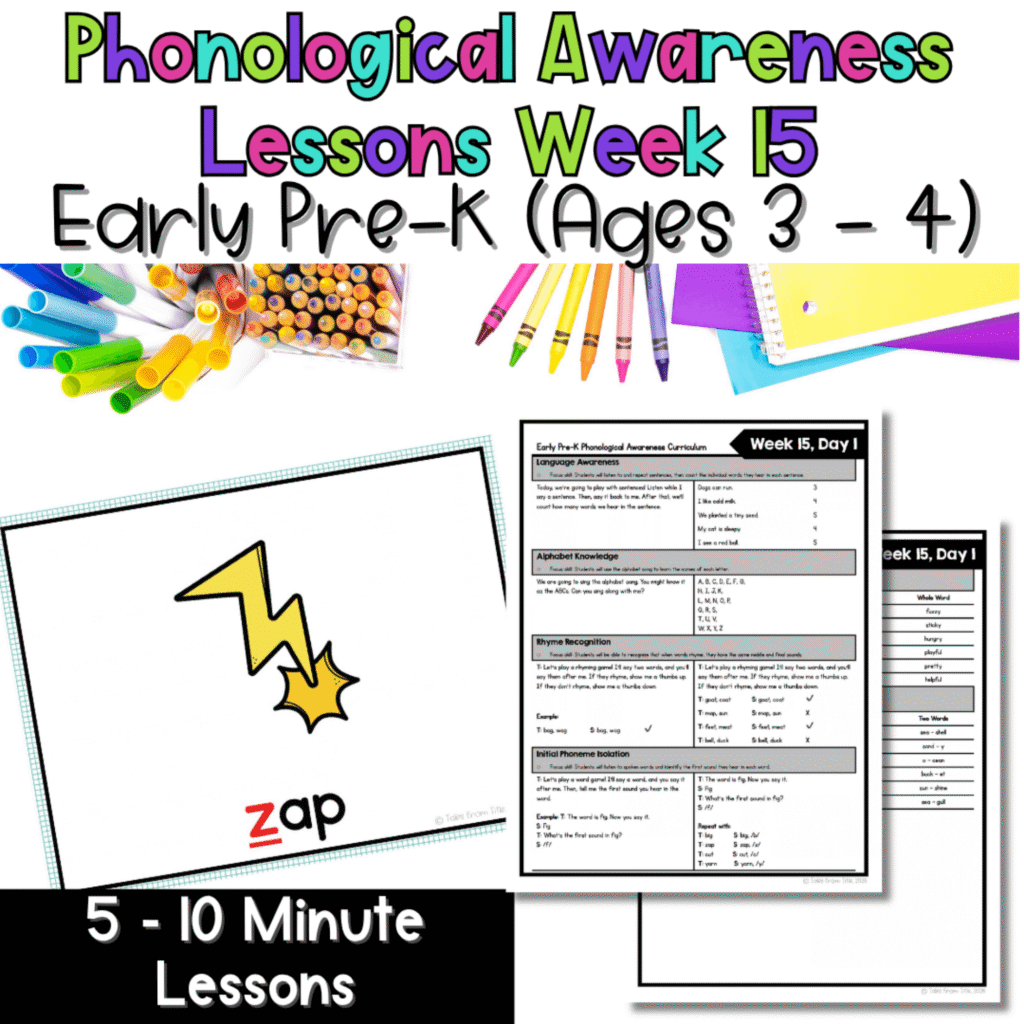
Week 15 continues the familiar rhyming, beginning sound, and syllable activities while adding a more intentional focus within language awareness.
Students begin listening to spoken sentences and counting the individual words they hear.
For example:
The dog runs.
Students repeat the sentence and then count:
The | dog | runs.
The student slideshow includes boxes underneath the sentences to provide a visual representation of each word.
This gives children a concrete way to connect the continuous stream of spoken language with individual words.
You can read more about sentence word counting and the Week 15 activities here:
Week 16: Continuing the Practice
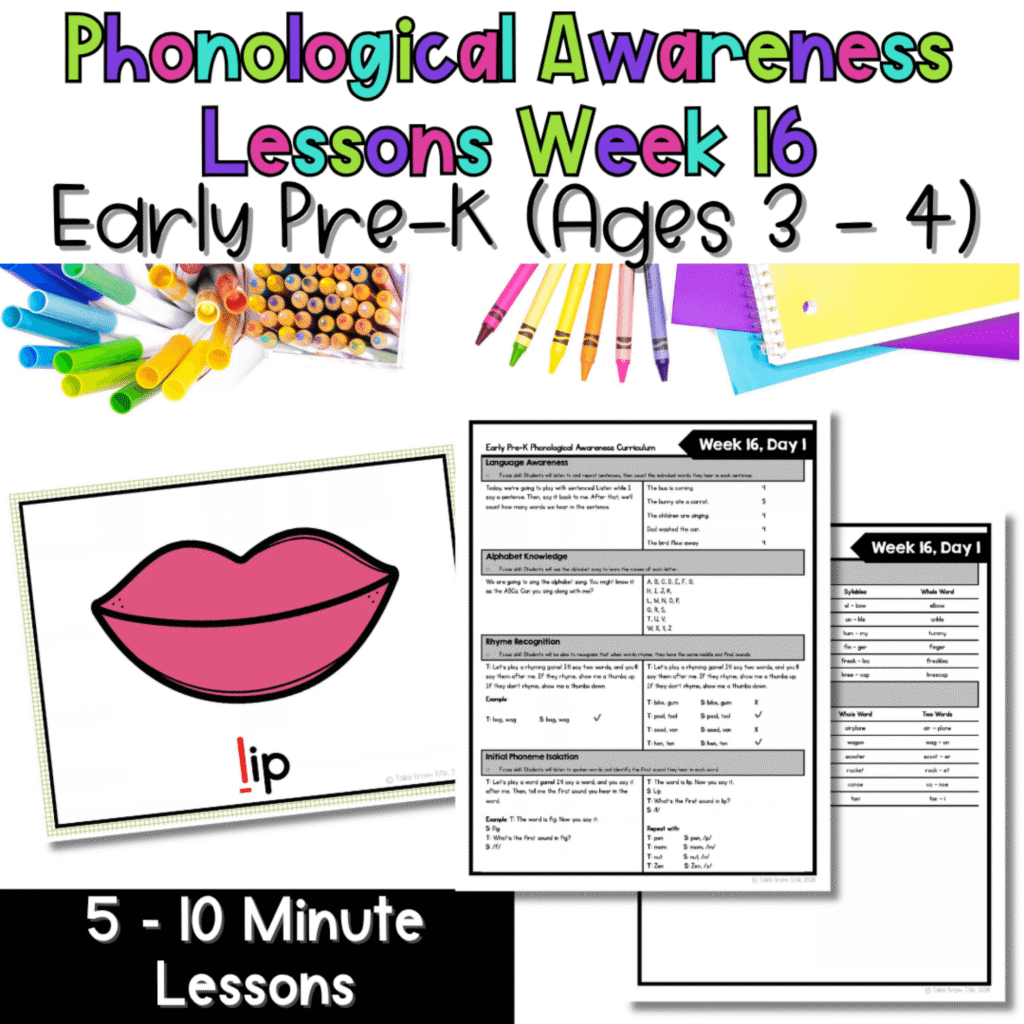
Week 16 continues the skill areas from Week 15.
Students practice:
- Listening to and counting words in spoken sentences
- Rhyming
- Initial phoneme isolation
- Syllable blending
- Segmenting words into syllables
- Alphabet knowledge
Again, the goal isn’t to introduce a completely different set of skills.
Instead, students get another opportunity to practice familiar skills through predictable routines and new examples.
You can take a closer look at Week 16 here:
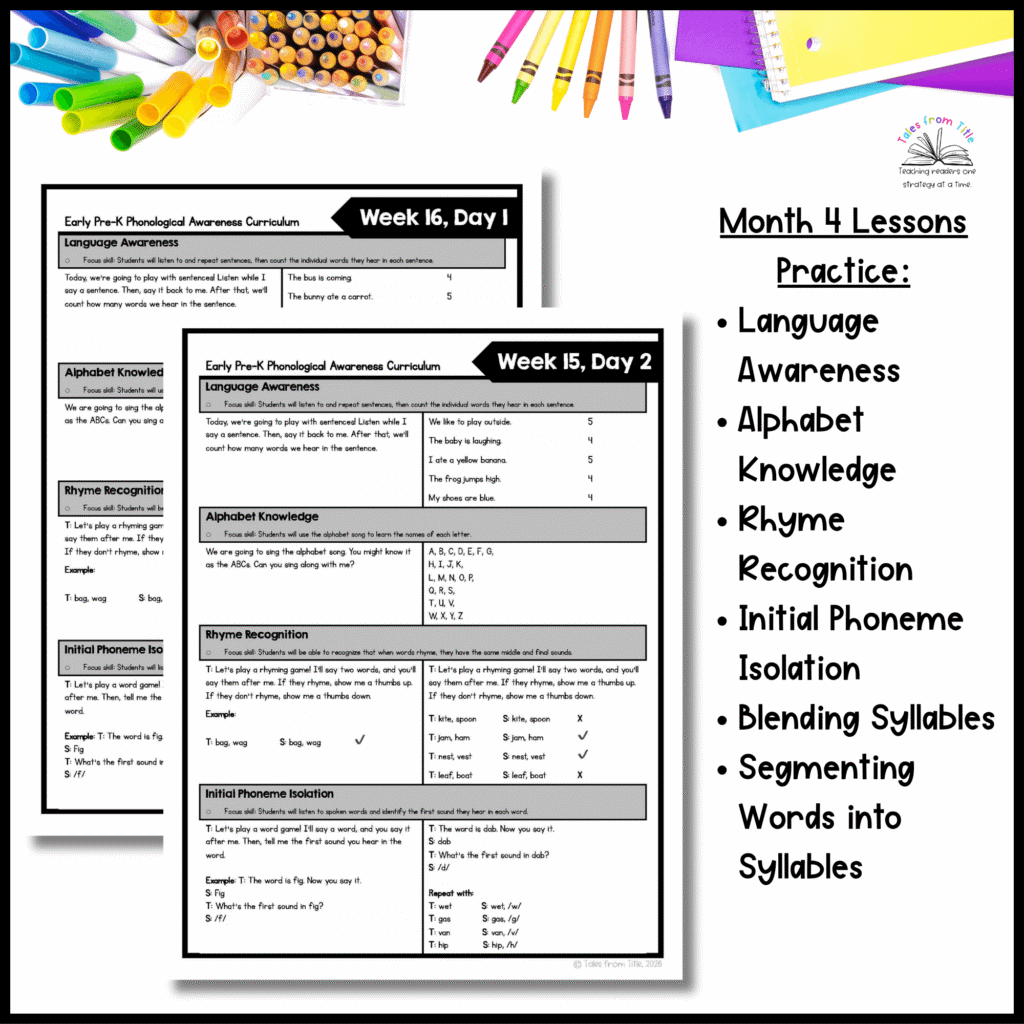
What Does a Preschool Phonological Awareness Lesson Look Like?
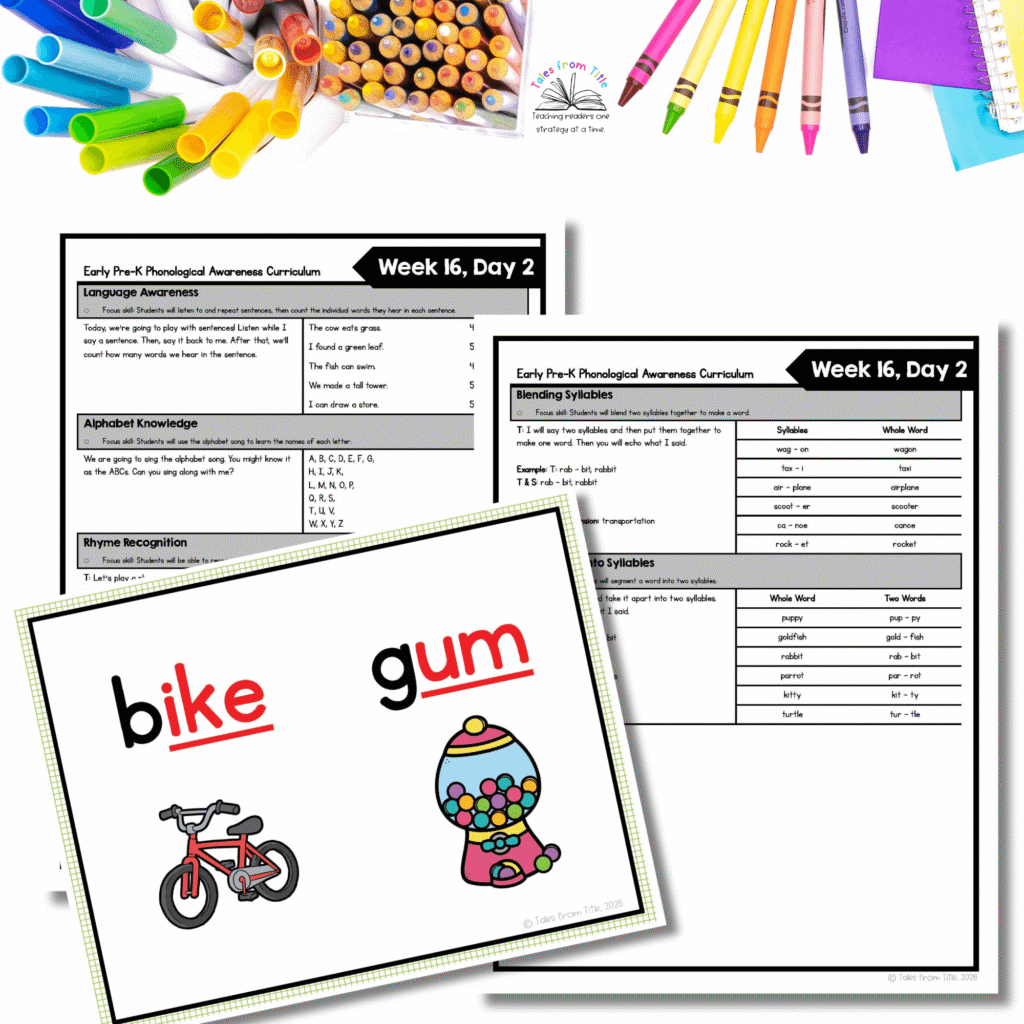
One of the things I wanted to make simple with this curriculum was the actual teaching process.
Teachers have enough to plan.
You shouldn’t have to spend your evening searching for a rhyming activity, coming up with practice words, and figuring out how to explain the activity before you can teach a five-minute lesson.
The lessons are scripted and organized so you can:
Open the lesson. Follow the script. Teach.
The activities are short, oral, and designed to fit into the preschool day.
Keep Preschool Literacy Activities Short
Preschoolers don’t need a 30-minute phonological awareness lesson to get meaningful practice.
In fact, short lessons can make it much easier to provide this type of instruction consistently.
The Month 4 lessons take approximately 5–10 minutes each.
That makes them easy to use during:
- Morning meeting
- Circle time
- Small-group instruction
- Literacy centers
- Early intervention
- Homeschool preschool
- Kindergarten readiness practice
You can complete a lesson and move on with the rest of your day.
The important thing is creating regular opportunities for children to listen to and work with spoken language.
Why Use Predictable Routines?
Predictable routines are especially helpful when you’re working with young learners.
When children know what to expect, they don’t have to spend as much energy figuring out the structure of the activity.
They can focus on the actual listening task.
That’s why the weeks in this curriculum don’t look completely different from one another.
Students become familiar with the types of activities and teacher directions while the examples and practice opportunities change.
This also makes the lessons easier for the teacher to use.
You’re not learning a brand-new instructional routine every week.
You’re building on a routine that already works.
What Is Included in the Month 4 Bundle?
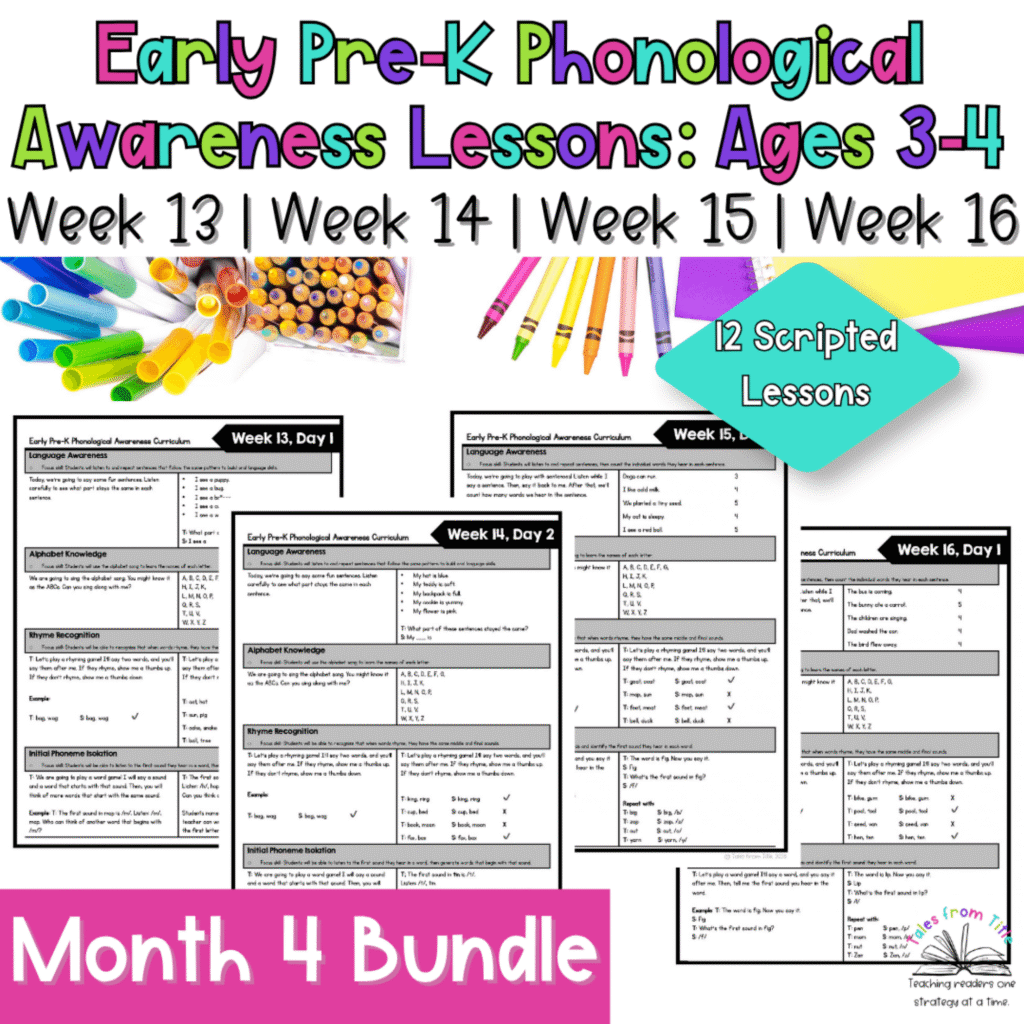
The Month 4 Bundle includes Weeks 13–16, for a total of 12 scripted phonological awareness lessons.
Each weekly resource includes:
3 Scripted Lessons
Each lesson is designed to take approximately 5–10 minutes.
Student Visuals
Optional instructional student slides are included in:
- PowerPoint
- Google Slides
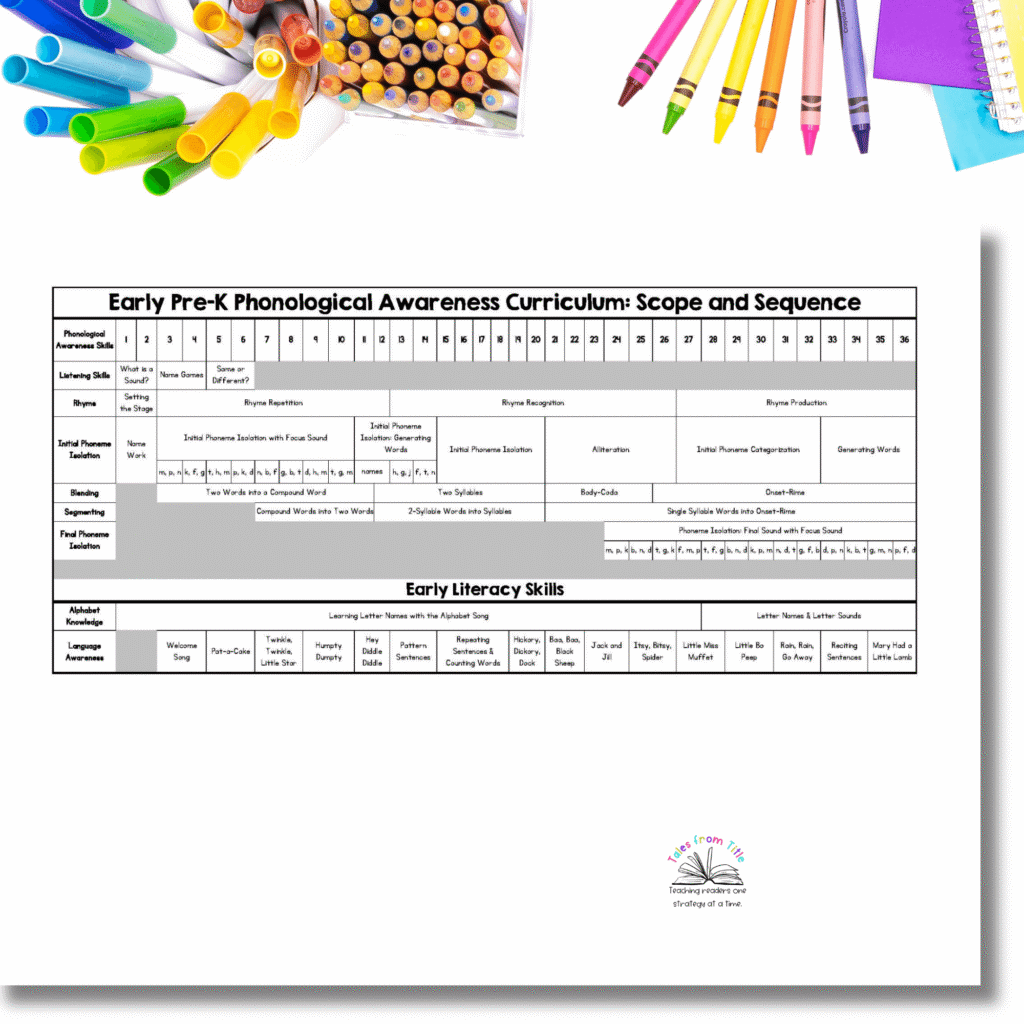
Early Pre-K Scope and Sequence
The scope and sequence helps you see where these lessons fit within the larger curriculum.
Developmentally Appropriate Practice
The activities focus on listening, speaking, repeating, identifying, blending, and segmenting rather than lengthy worksheet-based activities
Try the Early Pre-K Phonological Awareness Curriculum for Free
If you’re not sure whether a scripted phonological awareness routine will work for your students, you don’t have to jump straight into the bundle.
You can try a complete week of lessons and see how the format works with your preschoolers before purchasing additional weeks.
Ready for Four Weeks of Preschool Phonological Awareness Activities?
If you’re looking for a simple way to build phonological awareness into your preschool literacy routine, the Early Pre-K Phonological Awareness Month 4 Bundle gives you four consecutive weeks of ready-to-teach instruction.
You get:
- 12 scripted lessons
- 4 weeks of instruction
- 5–10 minutes per lesson
- Student visual supports
- PowerPoint, Google Slides, and PDF options
- 20% savings compared with purchasing the four weeks individually
The bundle includes:
Week 13 | Week 14 | Week 15 | Week 16
Continue Exploring the Early Pre-K Curriculum
Want to see what comes next or go back and explore earlier weeks?
And if you’re just discovering the curriculum, start with the Week 1 freebie to see the lesson format for yourself.