Have you ever asked a preschooler to repeat a sentence and noticed that they seem to hear the sentence as one big chunk of language?
That is completely understandable. When we speak, the spaces between words disappear. We hear a sentence as a continuous stream of speech rather than as a collection of individual words.
For young children, learning to notice those individual words is an important step in developing language awareness and phonological awareness.
That is where Week 15 comes in.
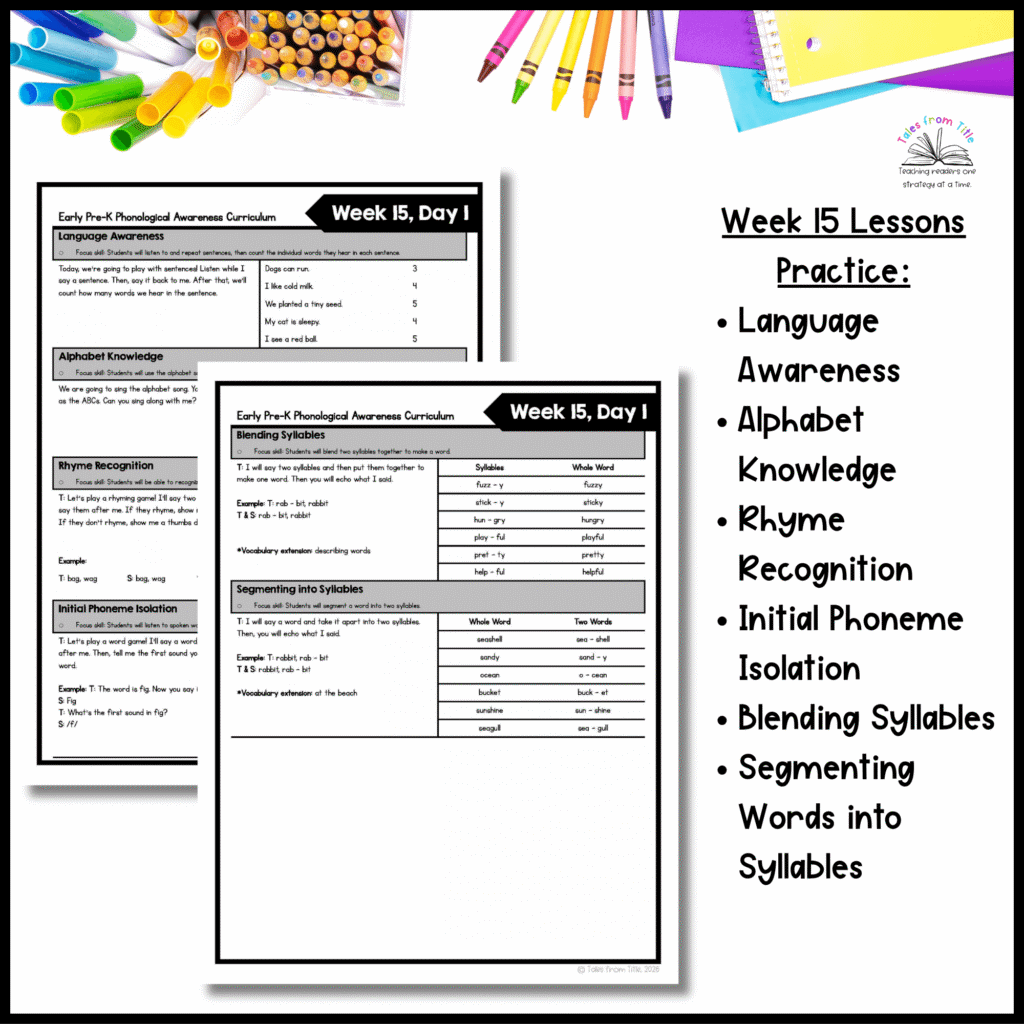
In Week 15 of the Early Pre-K Phonological Awareness Curriculum, children continue practicing familiar skills such as rhyming, beginning sounds, blending syllables, and segmenting words into syllables. This week also gives children intentional practice with listening to a sentence and counting the number of words they hear.
The lessons are short, scripted, and designed for children ages 3–4, so you can give young learners meaningful phonological awareness practice in just 5–10 minutes.
What Is Sentence Word Counting?
Sentence word counting is a simple language awareness activity that asks children to listen to a spoken sentence and identify how many words they hear.
For example, you might say:
The dog runs.
Then ask children to repeat the sentence and count the words:
The | dog | runs.
There are three words.
This may seem very simple to an adult, but preschoolers are still learning that a sentence is made up of individual words. Before children encounter spaces between words in print, they can begin developing this awareness through listening and speaking.
The activity is completely oral. Children do not need to read the sentence.
Instead, they listen carefully, repeat what they hear, and count the individual words.
A Simple Way to Practice Counting Words
When introducing sentence word counting, keep the routine consistent.
You might say:
“I’m going to say a sentence. Listen carefully and repeat it with me. Then we’ll count the words we hear.”
Read the sentence naturally.
Then have children repeat it with you.
Next, count the words together.
For example:
The cat sleeps.
Have students repeat:
The cat sleeps.
Then count:
The | cat | sleeps.
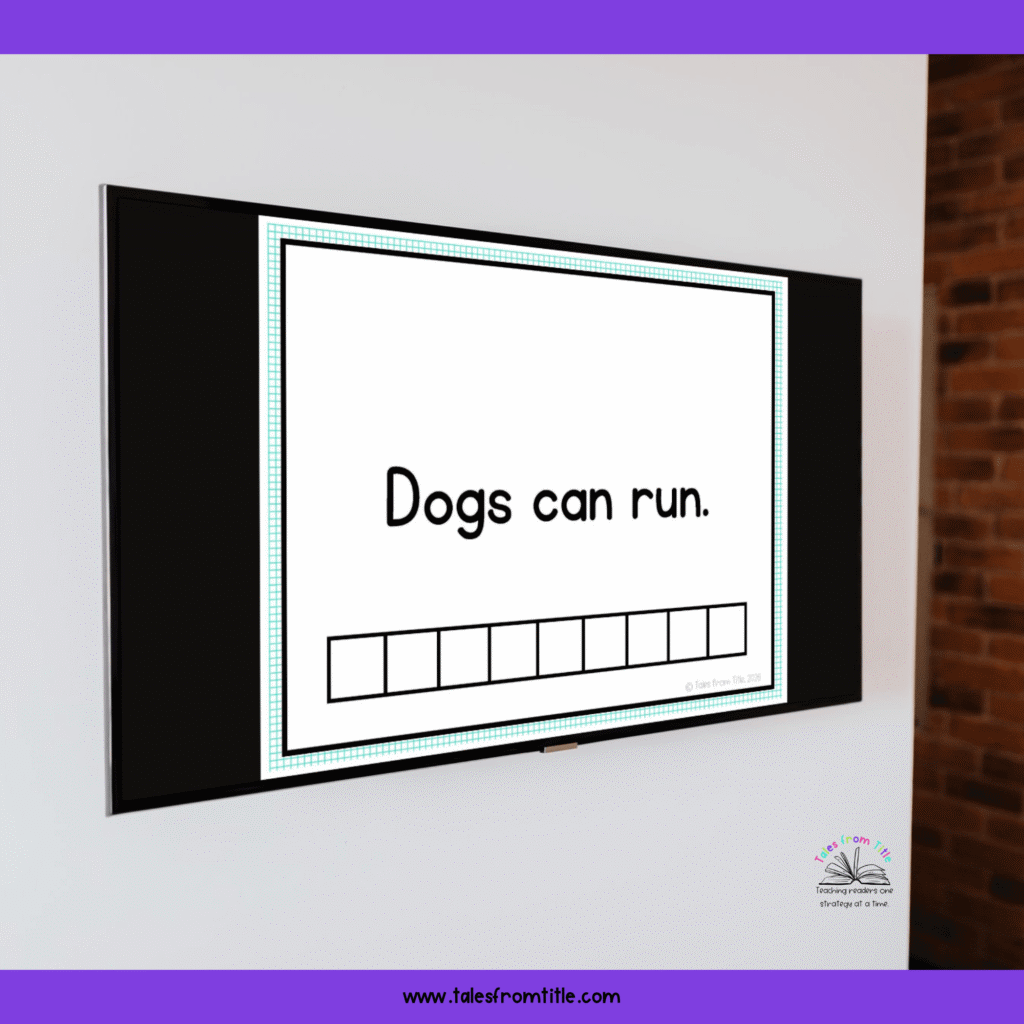
You can point to one visual box for each word as you count.
This gives children a concrete way to represent something they are hearing.
They are learning that:
The = one word
cat = one word
sleeps = one word
Even though the sentence sounds like one continuous stream when we say it, it is made up of individual words.
Using Visual Boxes to Support Sentence Word Counting
Week 15 includes a visual support specifically for counting words in a sentence.
The instructional slideshow includes boxes underneath the sentences. These boxes give you a simple way to help children count each word as they hear it.
This provides a visual connection to the oral activity without requiring children to read the sentence.
The goal is not for preschoolers to independently read the words. The goal is to help them listen closely and recognize that spoken sentences are made up of separate words.
Week 15 Preschool Phonological Awareness Activities
Counting words in sentences is one part of the Week 15 lessons. Children also continue practicing the familiar phonological awareness skills that have been part of the curriculum.
Alphabet Knowledge
Children continue building familiarity with letter names through the consistent ABC song routine.
Because this routine is familiar, children can continue practicing alphabet knowledge without taking time away from the other phonological awareness activities.
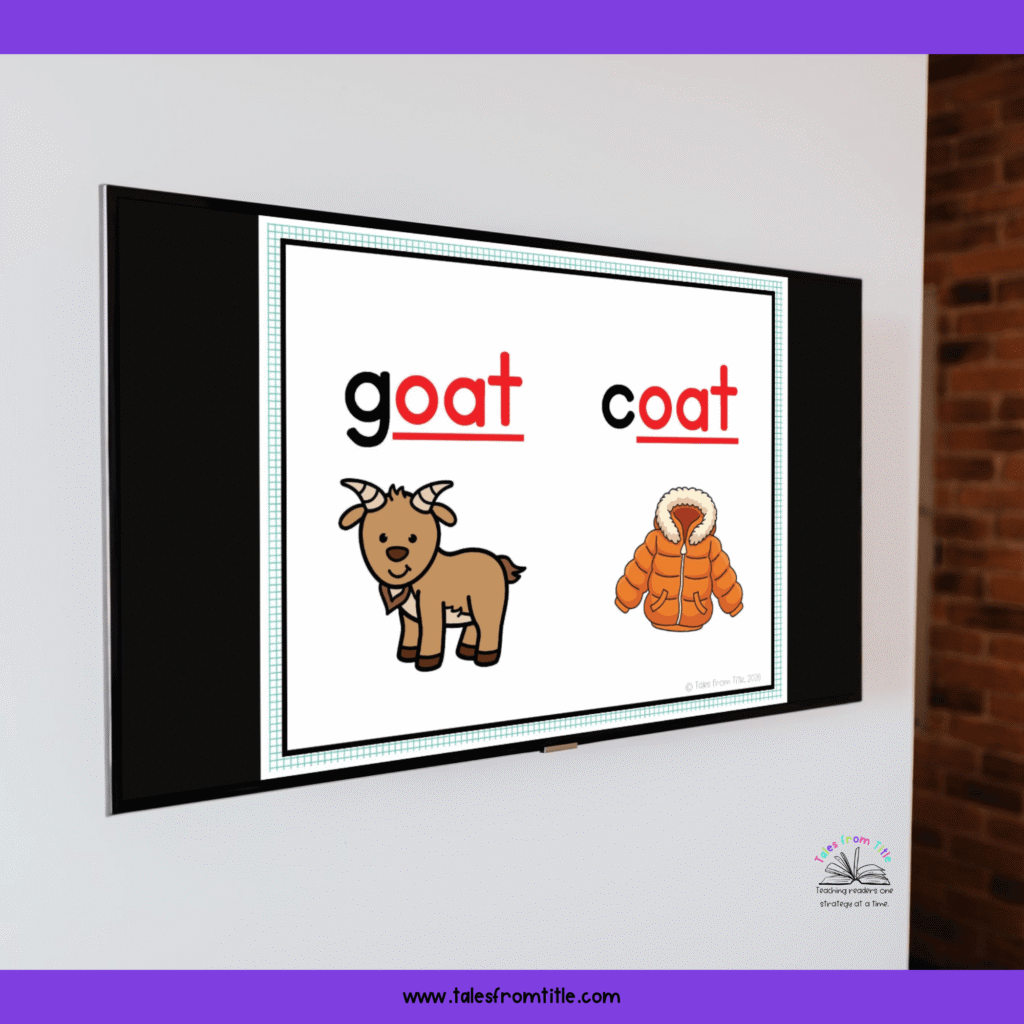
Rhyme Recognition
Children listen to pairs of spoken words and determine whether they rhyme.
For example:
cake / lake
These words rhyme.
Beginning Sound Identification
Children listen to familiar spoken words and identify the first sound they hear.
For example:
moon
The first sound is /m/.
This gives children continued practice listening closely to the sounds within spoken words.
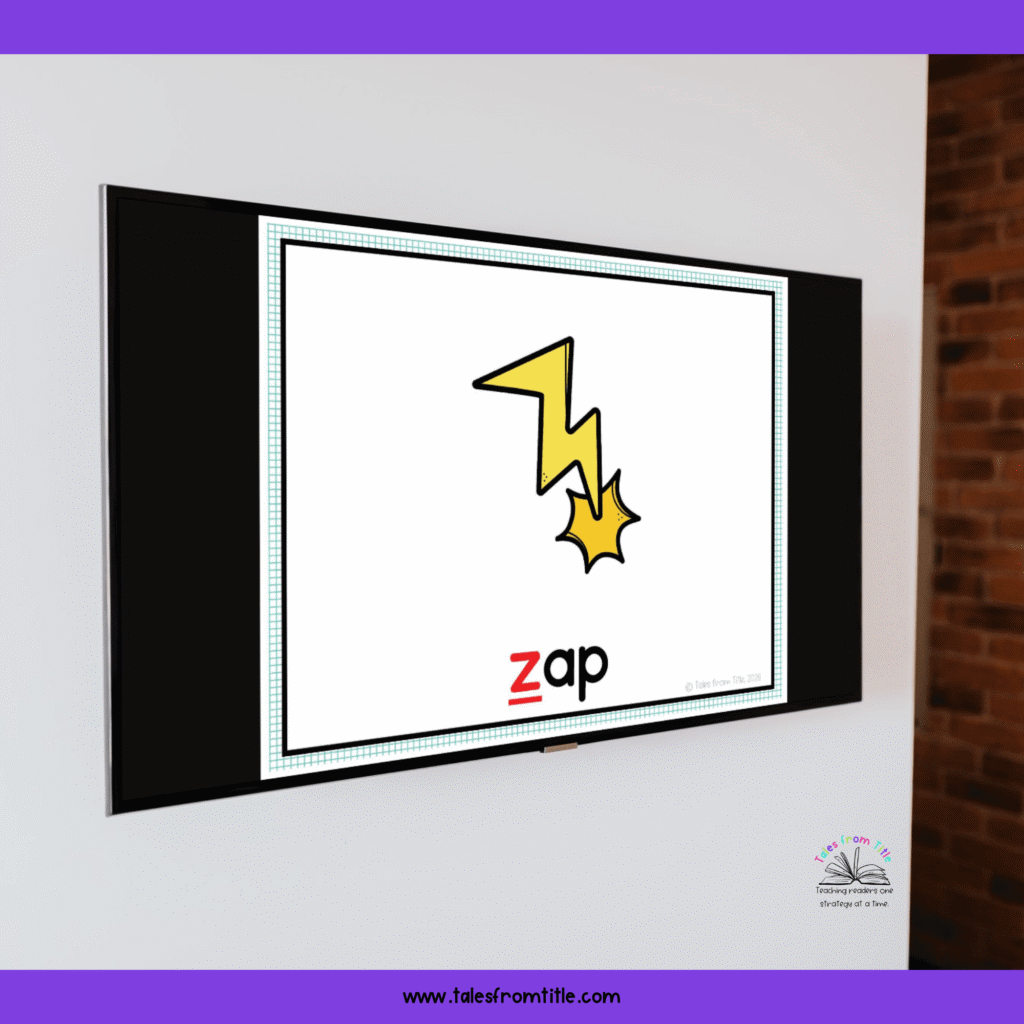
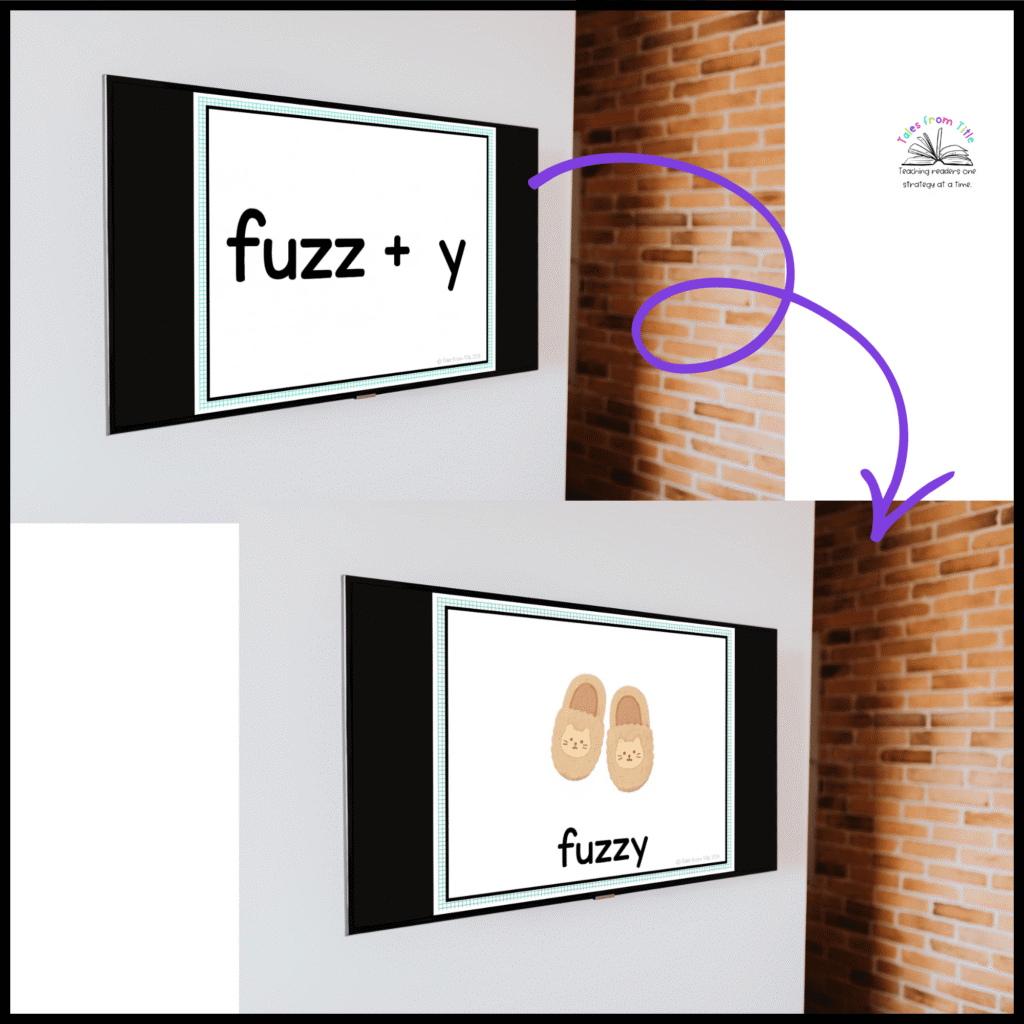
Blending Syllables
Children hear separate syllables and put them together to make a familiar word.
For example:
rain + bow → rainbow
The child listens to the two parts and blends them together to say the whole word.
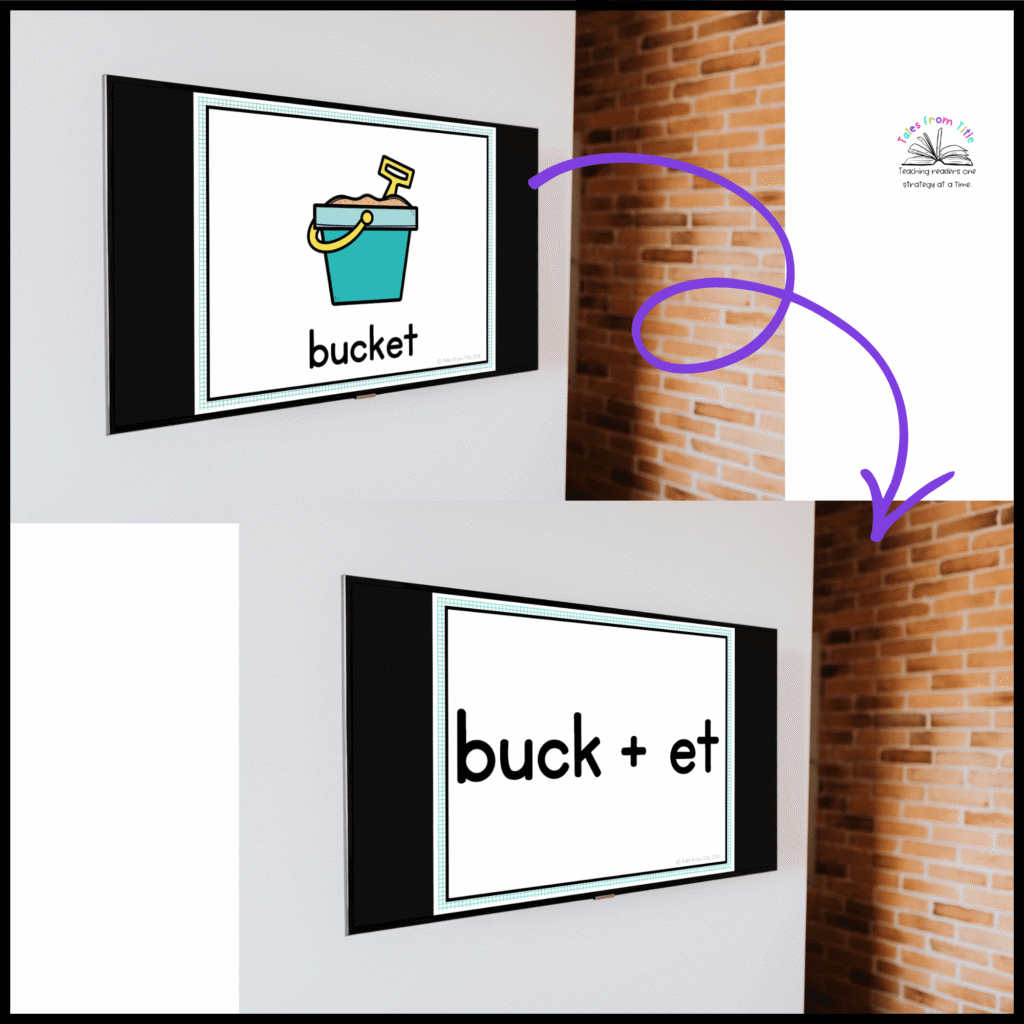
Segmenting Words into Syllables
Children also practice breaking familiar two-syllable words into their individual parts.
For example:
rabbit → rab + bit
The child begins with the whole spoken word and identifies the syllables within it.
These activities continue giving preschoolers opportunities to listen carefully to spoken language and notice that words and sentences can be broken into smaller parts.
Why Repeat the Same Phonological Awareness Skills?
Week 15 does not introduce a completely new set of phonological awareness skills.
Instead, children continue practicing familiar skills through predictable routines.
That repetition is intentional.
Young children need multiple opportunities to hear, practice, and revisit a skill. When the routine is familiar, children can spend more of their attention on the actual listening task instead of learning new directions every time.
For example, children who have already practiced identifying rhyming words do not need to learn a brand-new game each week. They can continue listening for rhymes while hearing new word pairs.
The same idea applies to syllables.
Children continue blending and segmenting familiar two-syllable words while getting additional practice with the skill.
Week 15 adds another opportunity for children to listen closely to spoken language by counting the individual words within a sentence.
The activities change enough to provide meaningful practice, while the overall structure remains predictable.
Keep Phonological Awareness Practice Short
Preschool phonological awareness activities do not need to take up a large part of your day.
The Week 15 lessons take approximately 5–10 minutes, making them easy to add to an existing preschool routine.
You might use them during:
- Circle time
- Morning meeting
- Preschool literacy instruction
- Small group instruction
- One-on-one intervention
- Homeschool preschool
- Kindergarten readiness practice
The short format also makes it easier to practice these skills consistently.
You do not need an elaborate setup or a long list of materials. The lessons are scripted, the practice words and sentences are provided, and the optional instructional slideshow gives you visual support.
Open the lesson. Follow the script. Teach.
Try This Preschool Sentence Activity
If you want to try sentence word counting with your students, start with short, familiar sentences.
For example:
Birds can fly.
Have students repeat the sentence.
Then count:
Birds | can | fly.
Three words.
Next, try a slightly longer sentence:
The little bird can fly.
Count together:
The | little | bird | can | fly.
Five words.
The goal is not to make the sentences complicated. You want children to focus on listening to the individual words.
As they become comfortable with the routine, you can use a variety of familiar sentences and topics.
The Week 15 slideshow makes this practice easier by providing boxes underneath the sentences. Children can see a visual space for each word while they listen and count.
Try Week 1 FREE
If you are new to the Early Pre-K Phonological Awareness Curriculum, you can try Week 1 for free before purchasing additional weeks.
The free Week 1 resource includes three complete scripted lessons and supporting visuals, so you can see how the short, predictable lesson format works with your students.
Enter your email above to get the free Week 1 lessons delivered to your inbox.
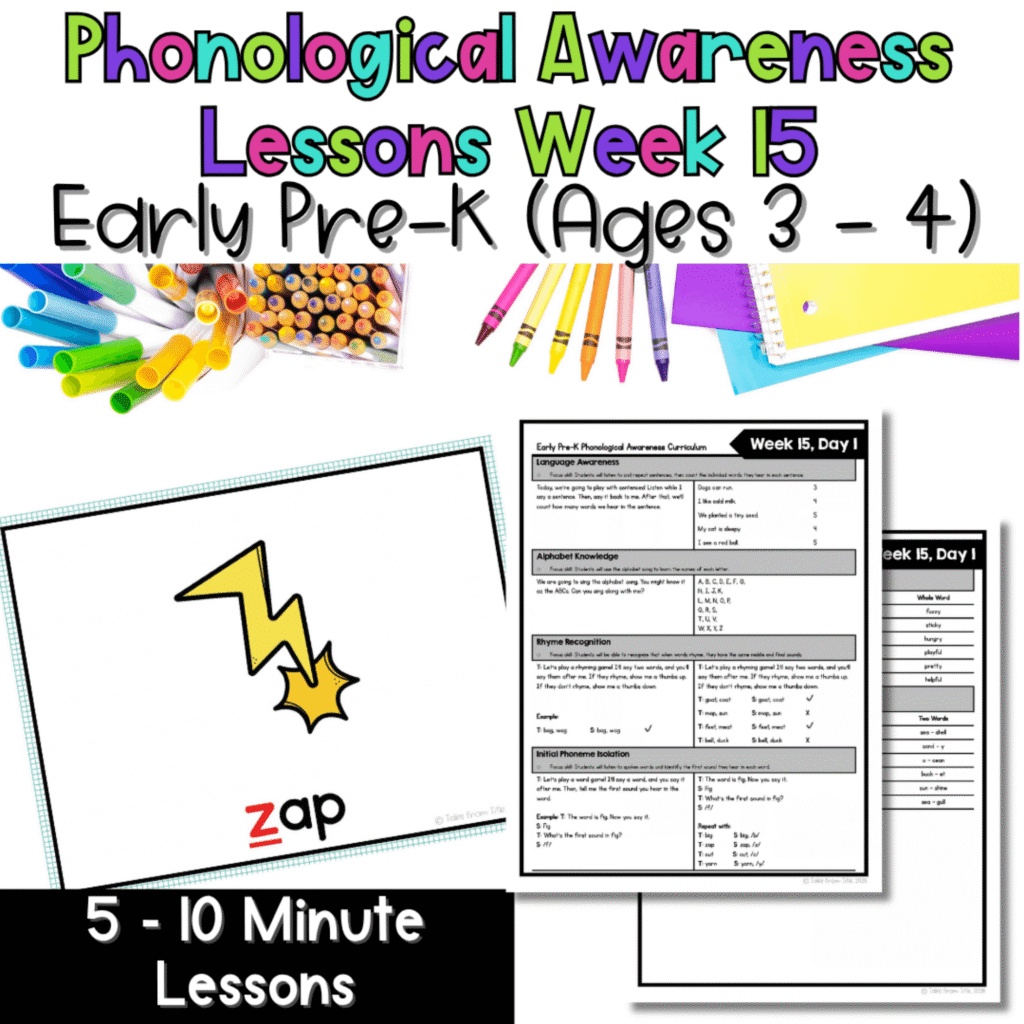
Explore Week 15
If you are looking for preschool phonological awareness activities for ages 3–4, Week 15 provides three short, ready-to-teach lessons with continued practice in:
- Sentence and word awareness
- Rhyming
- Beginning sounds
- Blending syllables
- Segmenting syllables
- Alphabet knowledge
The optional student instructional slideshow is included in PowerPoint, Google Slides, and PDF formats, making it easy to add visual support to your lessons.
Continue with the Early Pre-K Phonological Awareness Curriculum
Week 15 is part of a systematic Early Pre-K Phonological Awareness Curriculum for children ages 3–4.
The curriculum uses short, consistent lessons and predictable routines to give children repeated opportunities to practice foundational phonological awareness skills.
Whether you use the lessons in a preschool classroom, homeschool setting, childcare program, small group, or early intervention setting, the goal is to make phonological awareness practice manageable and consistent.
For young children, a few focused minutes of listening, repeating, and playing with language can go a long way.