If you are building a consistent preschool phonological awareness routine, Week 4 is where students begin showing real confidence with listening, rhyming, and beginning sounds.
At this stage, children benefit from repetition with small changes. They already recognize the lesson structure, so they can focus more attention on the sounds in words. That is exactly what these preschool phonological awareness activities are designed to support.
The Week 4 lesson set continues short, predictable routines that strengthen early literacy skills in just 5–10 minutes per day.

Why Preschool Phonological Awareness Activities Matter at Ages 3 & 4
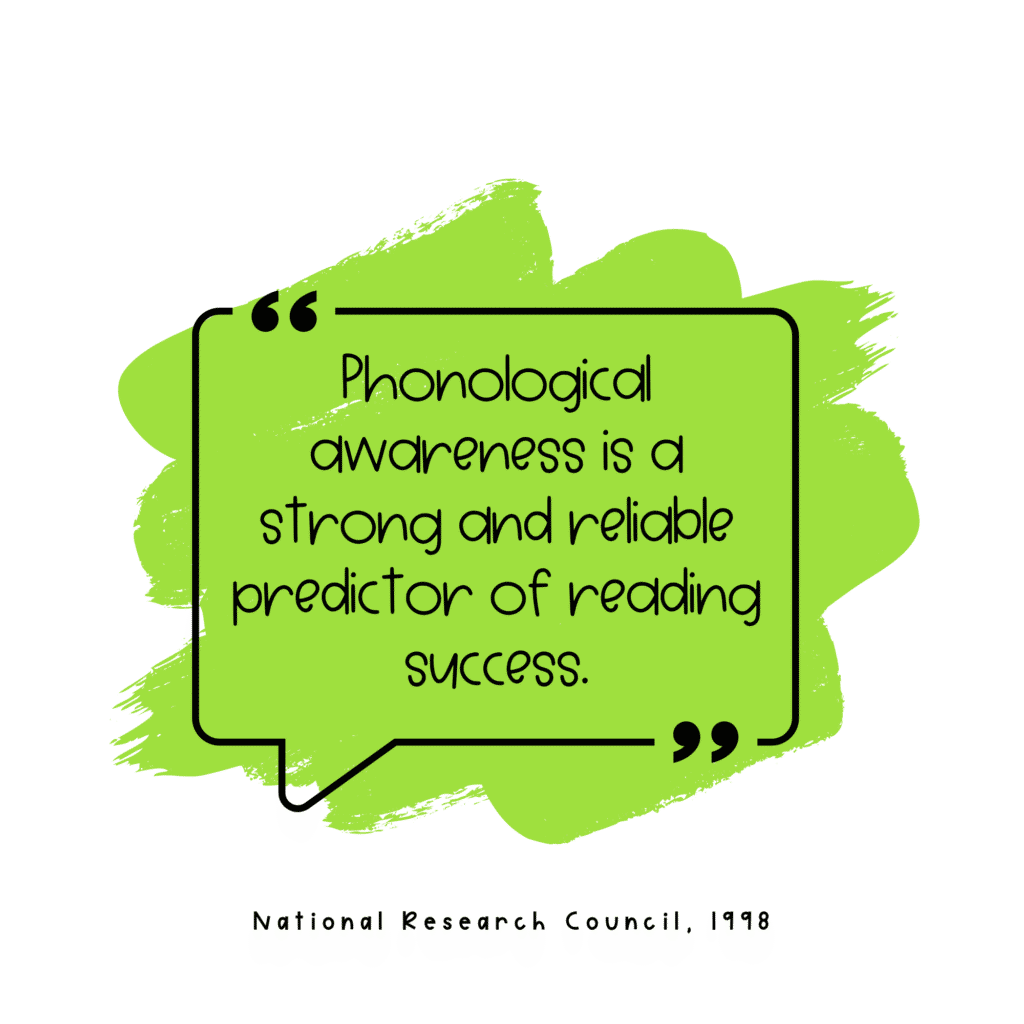
Before children learn phonics, they need opportunities to hear and play with sounds in spoken language.
Strong phonological awareness helps students:
- Listen carefully to spoken words
- Notice rhyming patterns
- Identify beginning sounds
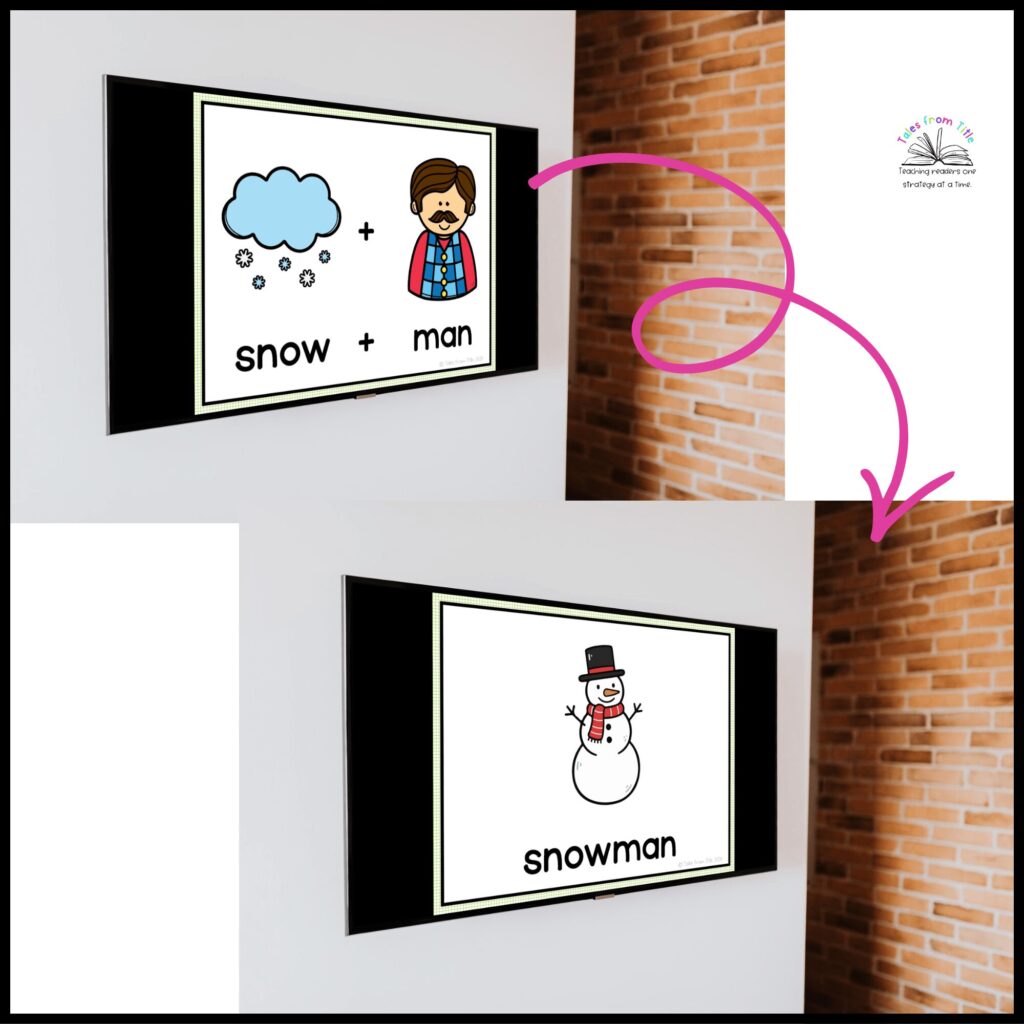
- Combine smaller words into compound words
- Build confidence during literacy instruction
Short daily routines work especially well because young learners respond best to predictable structures they can follow successfully.
Week 4 continues this routine with new rhyme patterns and beginning sound practice while keeping the same lesson format students already understand.
What Students Practice in Week 4 Phonological Awareness Lessons
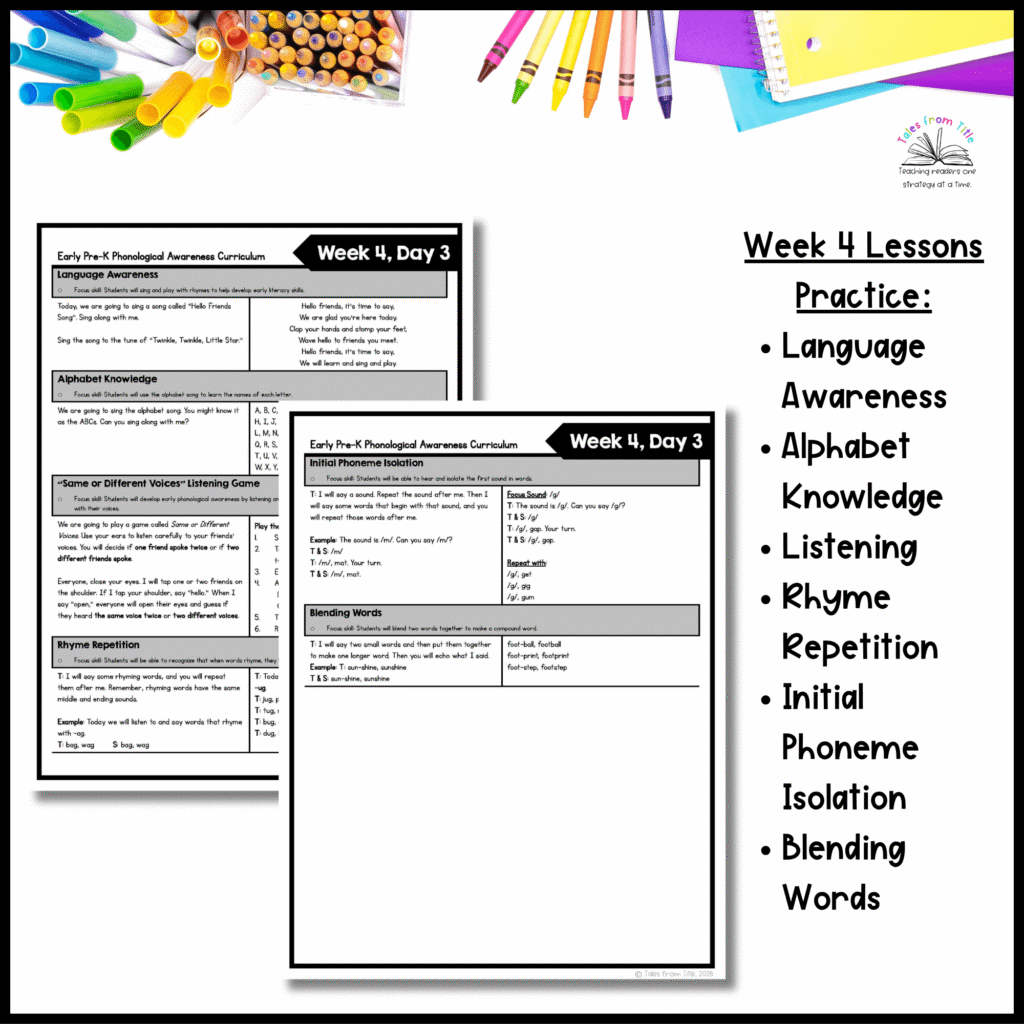
These lessons strengthen several early literacy foundations through developmentally appropriate activities.
Listening Skills
Students practice identifying voices and sounds they hear during structured listening games. These activities help children focus attention on spoken language.
Rhyming Practice
Children repeat rhyming word patterns to notice how words sound alike. Rhyming repetition builds awareness that words can share ending sounds.
Beginning Sound Identification
Students listen for the first sound they hear in familiar words. This skill prepares children for later phonics instruction.
Compound Word Blending
Children combine two small words into one longer word. This supports early word awareness and vocabulary development.
Together, these skills form the foundation for kindergarten readiness.
Alphabet Knowledge
Children learn and practice the names of letters using the Alphabet Song.
How Week 4 Builds on Previous Phonological Awareness Lessons
Week 4 does not introduce brand new routines. Instead, it strengthens the same skill structure introduced in earlier weeks.
This consistency helps students:
- Learn expectations quickly
- Participate with confidence
- Focus attention on sounds instead of procedures
- Build early literacy independence
Each lesson set builds naturally on the previous one.
What Makes These Preschool Circle Time Literacy Activities Easy to Teach
Teachers often tell me they want phonological awareness instruction that fits easily into their existing schedule.
These lessons work well because they:
- Take only 5–10 minutes per day
- Follow a predictable routine
- Include scripted instruction
- Provide student visual supports
- Work during circle time or small groups
You can use them as a daily literacy warm-up or as part of a structured preschool intervention routine.
Try the Free Week 1 Phonological Awareness Lessons First
If you are just getting started with phonological awareness instruction for ages 3 & 4, I recommend beginning with Week 1.
Those lessons introduce the routine step by step and help students become comfortable participating in listening and rhyme activities.
Many teachers use the free Week 1 lessons to introduce the structure before continuing with the rest of the weekly sequence.
Explore the Week 4 Preschool Phonological Awareness Lesson Set
The Week 4 lesson set continues this structured routine with new rhyme repetition word families and beginning sounds /k/, /f/, /g/ designed specifically for Early Pre-K learners.
You can view the complete resource here:
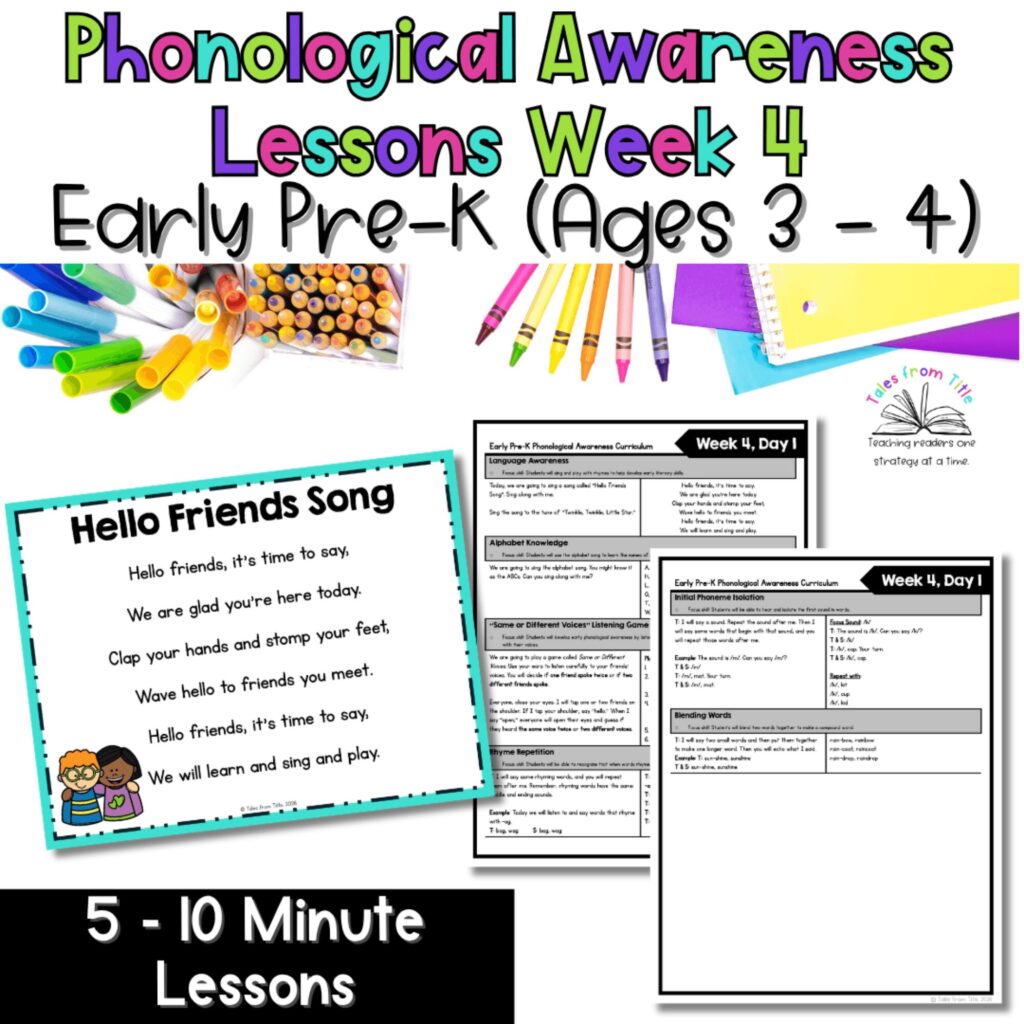
Both versions include scripted lessons and student slides that make phonological awareness instruction simple to implement during circle time or small groups.
Building a Strong Preschool Phonological Awareness Routine Across the Year
Phonological awareness develops gradually through consistent exposure to sound play and structured listening activities.
That is why this weekly lesson series follows a predictable routine across multiple weeks. Students gain confidence quickly and begin recognizing sound patterns in language more easily.
Together, these lessons create a strong foundation for later phonics instruction and long-term reading success.