Teaching phonological awareness to young learners can feel tricky, especially when your students are only three or four years old. Many programs move too quickly or expect skills that younger preschoolers are not ready to practice yet. If you have ever wondered how to introduce early sound awareness in a way that feels natural, short, and developmentally appropriate, so you are building a strong foundation for future reading instruction, you are not alone.
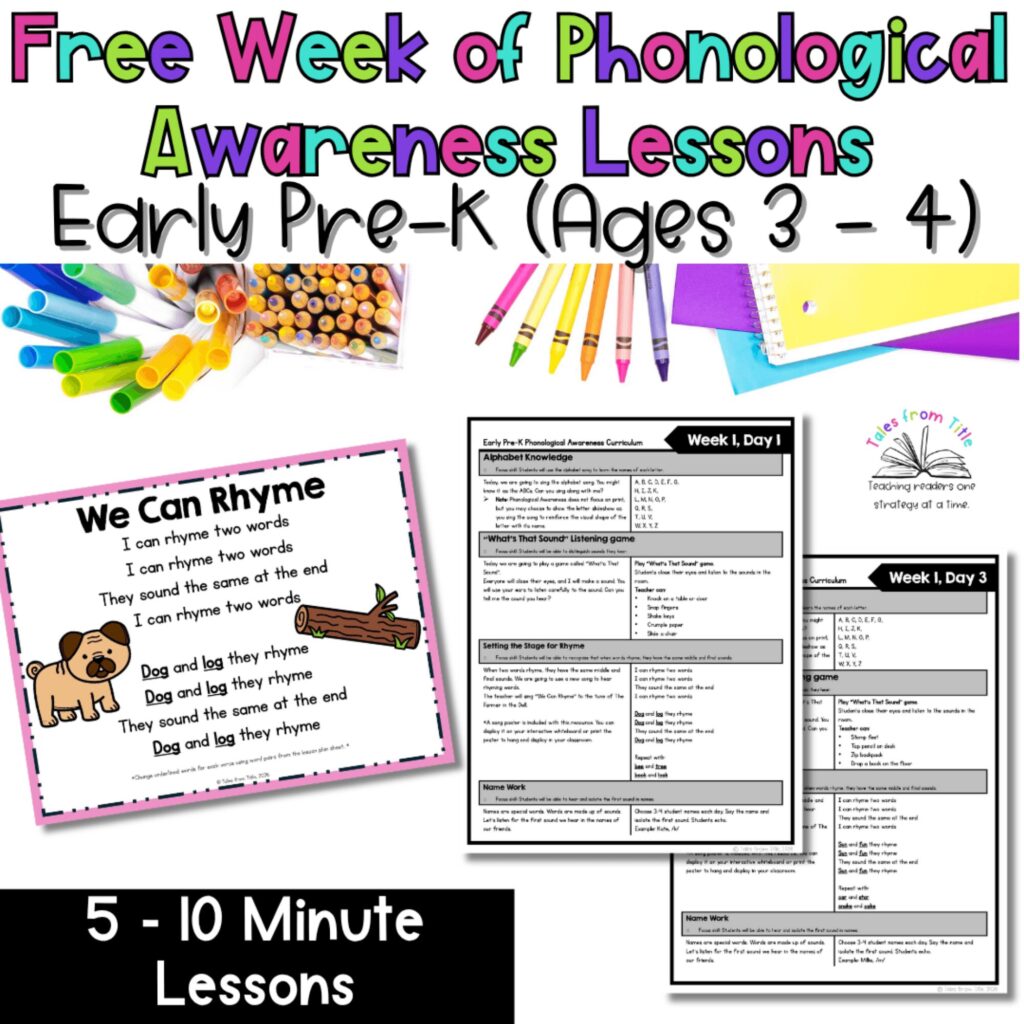
That is exactly why I created this free week of phonological awareness lessons for Early Pre-K students. These lessons take just 5 to 10 minutes each day and help you begin building strong listening skills that support later reading success.
Let’s take a closer look at what phonological awareness looks like at this age and how you can start teaching it right away.
What Phonological Awareness Looks Like in Early Pre-K
When we think about phonological awareness, we often picture students blending sounds or segmenting words. Those skills come later. Three- and four-year-olds need to start with simpler listening experiences first.
At this stage, students benefit from learning how to:
- listen carefully to sounds around them
- notice when words sound alike
- recognize beginning sounds in their names
- build familiarity with letters and sounds through songs and routines
These early listening skills create the foundation students need before they begin working with individual sounds in words.
Short, predictable routines will make a big difference in your classroom. Young learners respond well to repetition, movement, and songs that they can quickly learn and that make learning feel more like play.
Why Short Lessons Work Best for Preschoolers
Preschool attention spans are short, and that is completely developmentally appropriate. Instead of long literacy blocks, students need frequent opportunities to practice skills in small chunks.
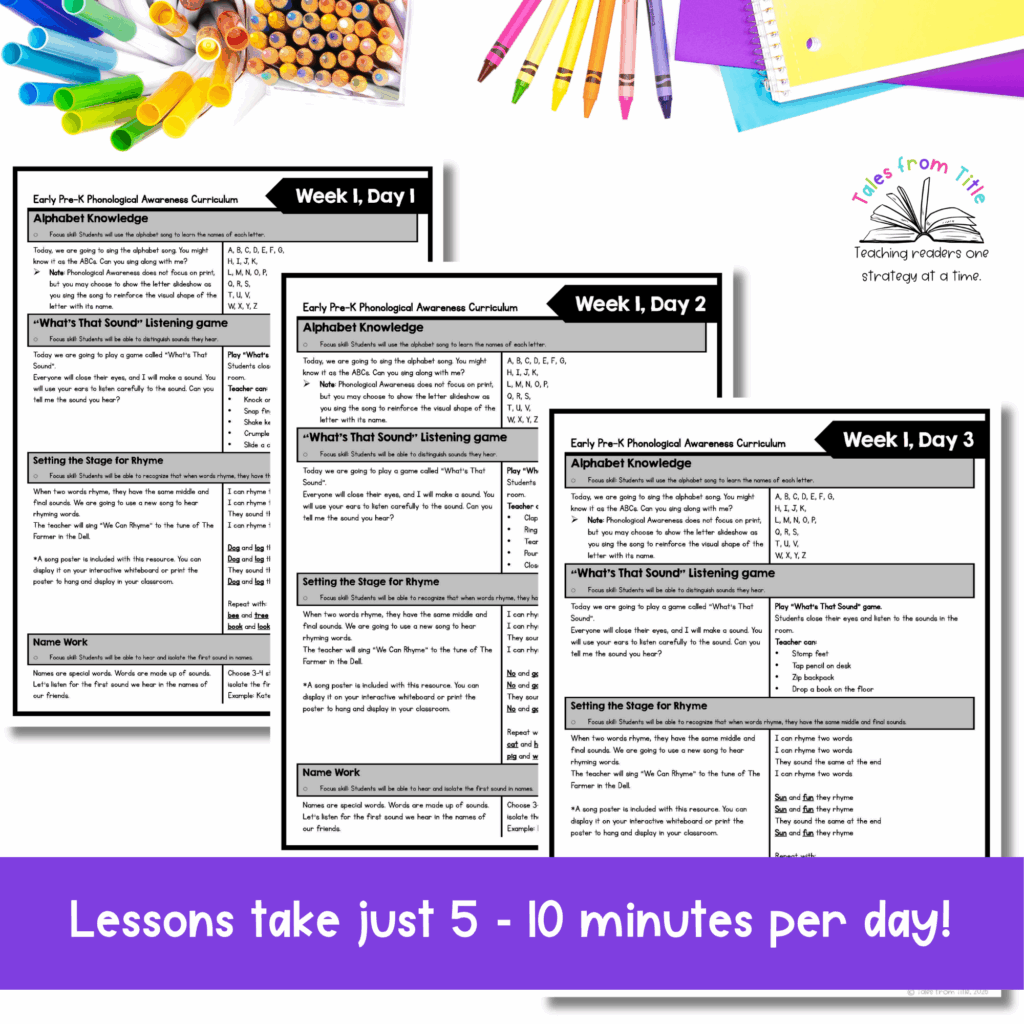
That is why each lesson in this free week takes only 5 to 10 minutes.
You can easily add these lessons to:
- circle time
- morning meeting
- small group instruction
- whole group
Even a few minutes each day can build strong listening habits over time because consistency matters more than length.
What Students Practice During This Free Week
Each lesson in this resource follows a simple routine so students quickly learn what to expect, which helps them feel confident and successful.
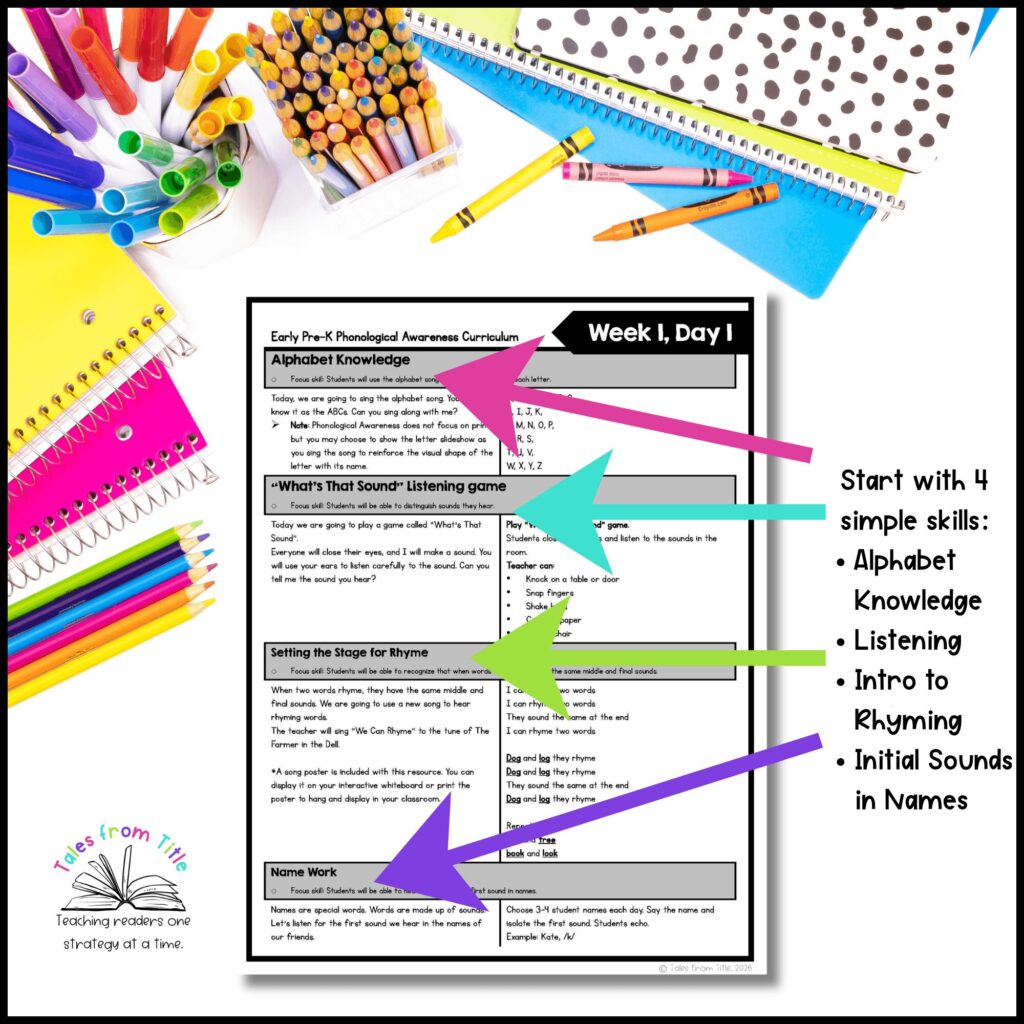
Across the three lessons in this free sample week, students practice:
- alphabet knowledge through a simple ABC song
- listening to distinguish environmental sounds
- preparing to recognize rhyming words
- identifying the beginning sound in their own names
These activities feel playful, but they build essential early literacy skills.
Visual Supports Make Instruction Easier
Young learners benefit from seeing and hearing information at the same time. Visual song displays help students follow along while they build confidence with new skills.
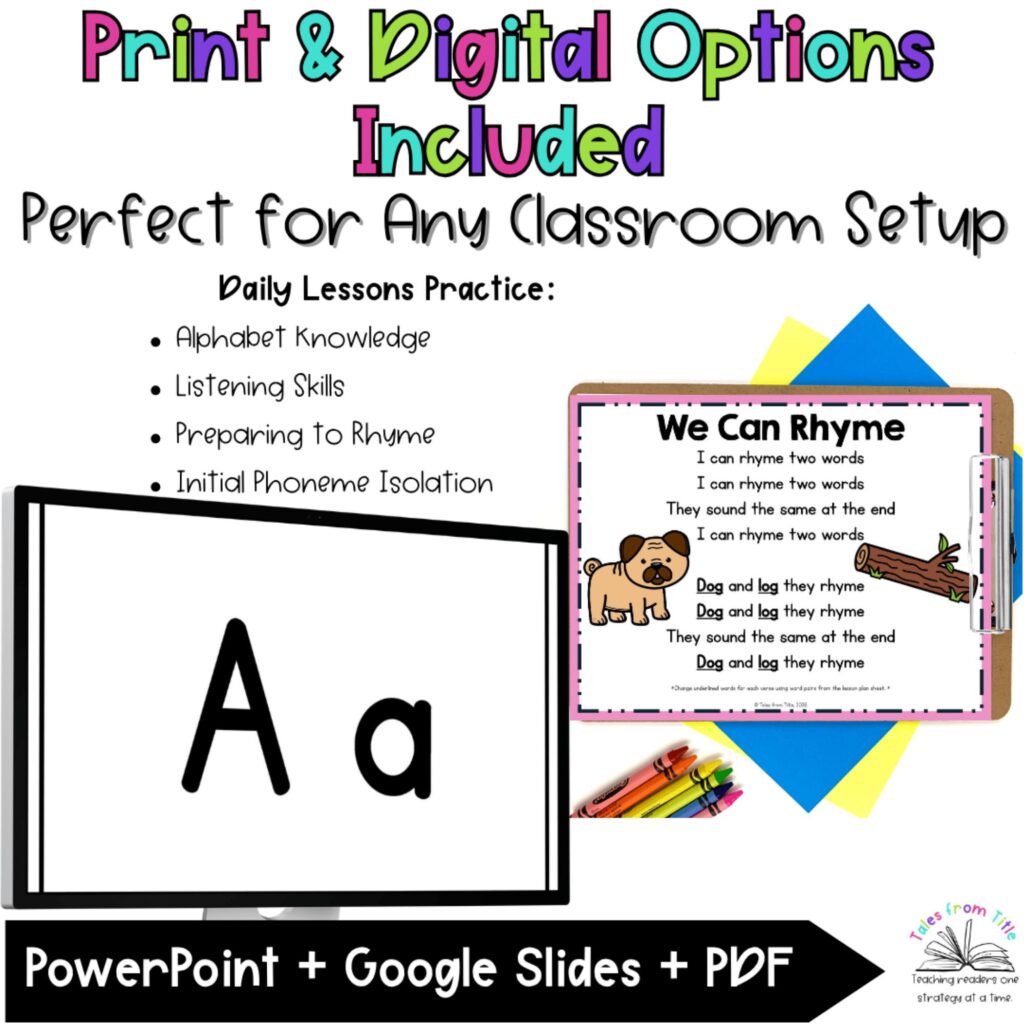
This free resource includes:
- a rhyming song poster with both print and digital versions
- an optional ABC song display to support letter name learning
- PowerPoint, Google Slides, and PDF display options to fit the diverse technology needs of most classrooms
You can project the visuals on an interactive whiteboard or print them to display. The flexible formats make it easy to use the materials in almost any classroom setup.

A Gentle Starting Point for Teaching Rhyme
Recognizing rhyme takes practice, especially for younger preschoolers. Before students can produce rhymes on their own, they need opportunities to hear words that sound alike.
This free week introduces rhyme in a simple and supportive way through:
- listening activities
- repetition
- songs
- clear modeling
Students begin noticing that some words share the same ending sounds. That awareness sets the stage for rhyme recognition and production later in the year.
Starting small helps students feel successful right away.
Try the Free Week in Your Classroom
If you have been looking for a simple place to begin phonological awareness instruction with your Early Pre-K students, this free week offers an easy starting point.
Each lesson includes full teacher scripting, predictable routines, and visual supports designed specifically for three- and four-year-olds. You can begin using the lessons right away without extra prep or planning time.
Strong early listening skills support everything that comes next in literacy development. Just a few minutes a day can make a meaningful difference for your students.