If you teach preschool or Early Pre-K, you know how important it is to build strong listening and sound awareness skills before formal phonics instruction begins. That is exactly where phonological awareness lessons and activities for preschool come in.
Week 3 of this Early Pre-K phonological awareness routine introduces new skills while keeping lessons short, predictable, and easy to teach during circle time or small group instruction.
Even better, this week now includes a student slideshow that visually walks children through each lesson.
Why Phonological Awareness Matters in Preschool
Phonological awareness is the ability to hear and work with sounds in spoken language. Children practice skills like rhyming, listening for beginning sounds, and blending words before they begin reading print.
Research consistently shows that phonological awareness is one of the strongest predictors of later reading success and helps connect oral language development to future decoding skills.
Children as young as age three can begin developing these early sound awareness skills when teachers provide structured routines with clear modeling and repetition.
That is why short daily routines make such a difference.
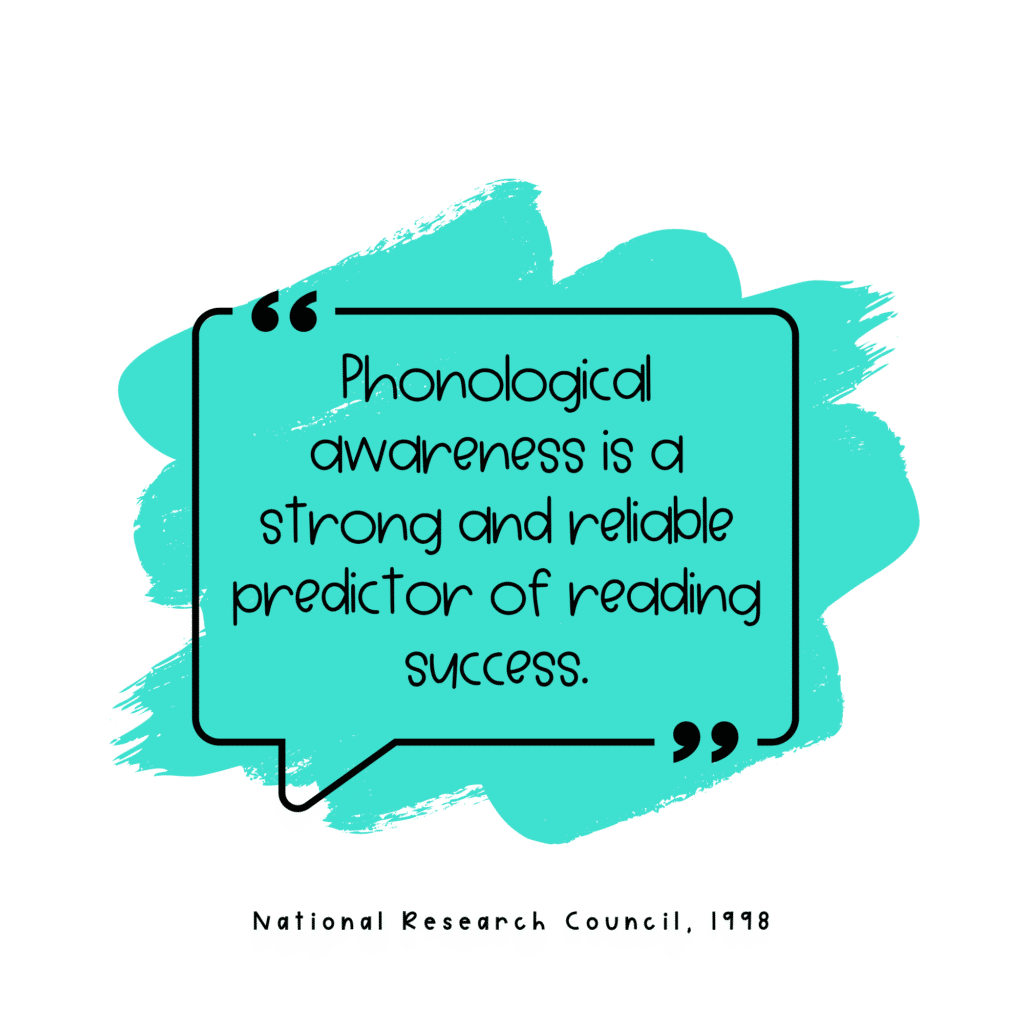
Source: National Research Council. Preventing Reading Difficulties in Young Children (1998)
What Students Practice in Week 3 Phonological Awareness Lessons
This set of preschool phonological awareness lessons builds on earlier listening routines and introduces blending compound words for the first time.
Students practice:
- Language awareness with songs
- Alphabet knowledge
- Listening skills
- Rhyme repetition
- Initial sound isolation
- Blending compound words
These are foundational early literacy activities for ages 3–4 that prepare students for later phonics instruction.

Compound Word Activities Preschool Students Love
One highlight of Week 3 is introducing compound word activities for preschool learners.
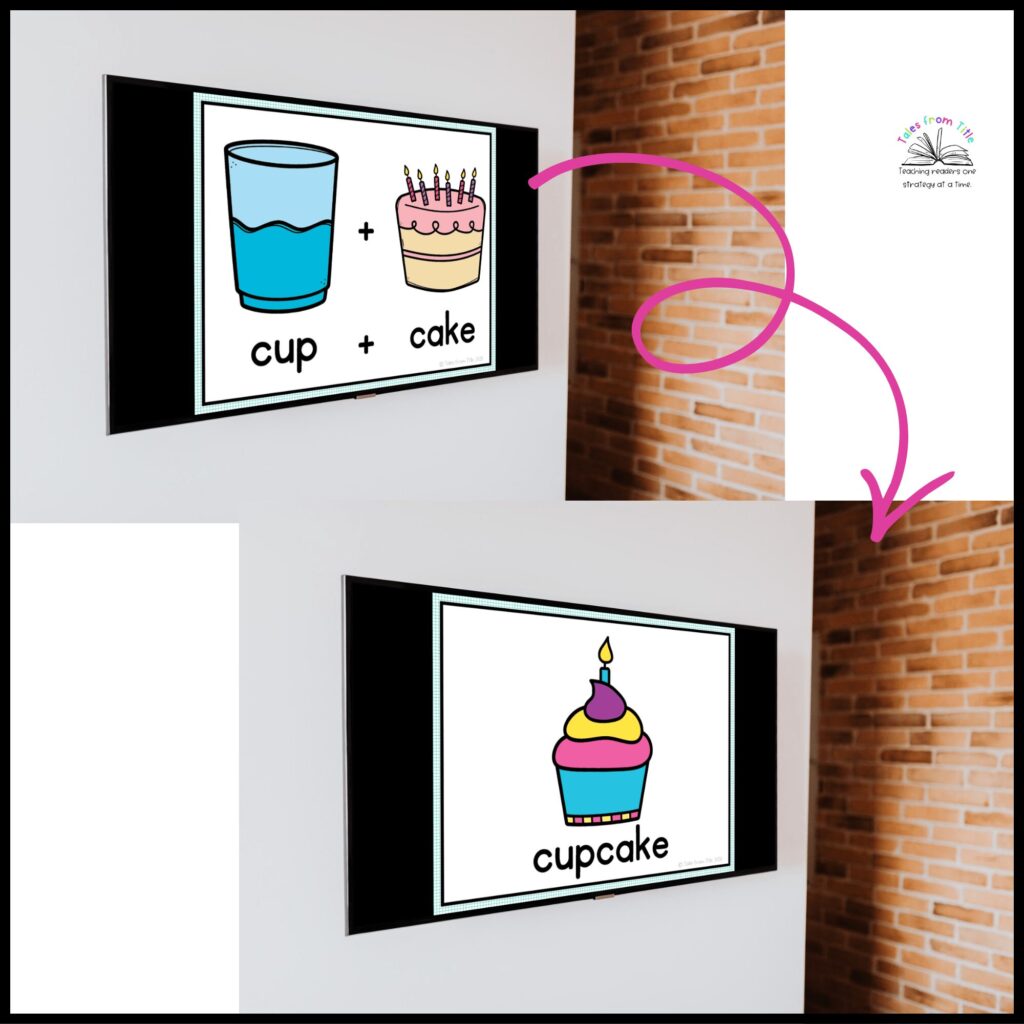
Children learn to combine two smaller words like:
cup + cake
sun + light
rain + bow
Then they blend them into one longer word.
This type of oral blending helps children understand that words are made up of smaller sound units. That understanding supports later decoding development when students begin reading printed words.
The included slideshow models this process visually so children can see exactly what happens when words combine.
Teachers often notice stronger engagement as soon as visuals support the blending routine.
A Preschool Phonological Awareness Routine That Fits Into Your Day
One reason teachers love these lessons is the structure.
Each lesson takes only 5–10 minutes and follows a consistent routine that supports:
- Circle time instruction
- Small group intervention
- Preschool literacy centers
- Early Pre-K sound awareness routines
The student slideshow provides visual scaffolding so children can follow along while practicing new skills.
That makes these lessons especially helpful for students who benefit from extra modeling and repetition.
Try the Free Week 1 Phonological Awareness Lessons
If you are building a preschool sound awareness routine, the best place to start is Week 1.
You can download the free Week 1 phonological awareness lesson set by joining my email list below. This free resource introduces the structure students follow each week and helps you see how the routine works in your classroom.
Where to Find the Week 3 Preschool Phonological Awareness Lessons
If you are ready to introduce compound word blending and beginning sound activities for preschool, you can explore the full Week 3 lesson set here:
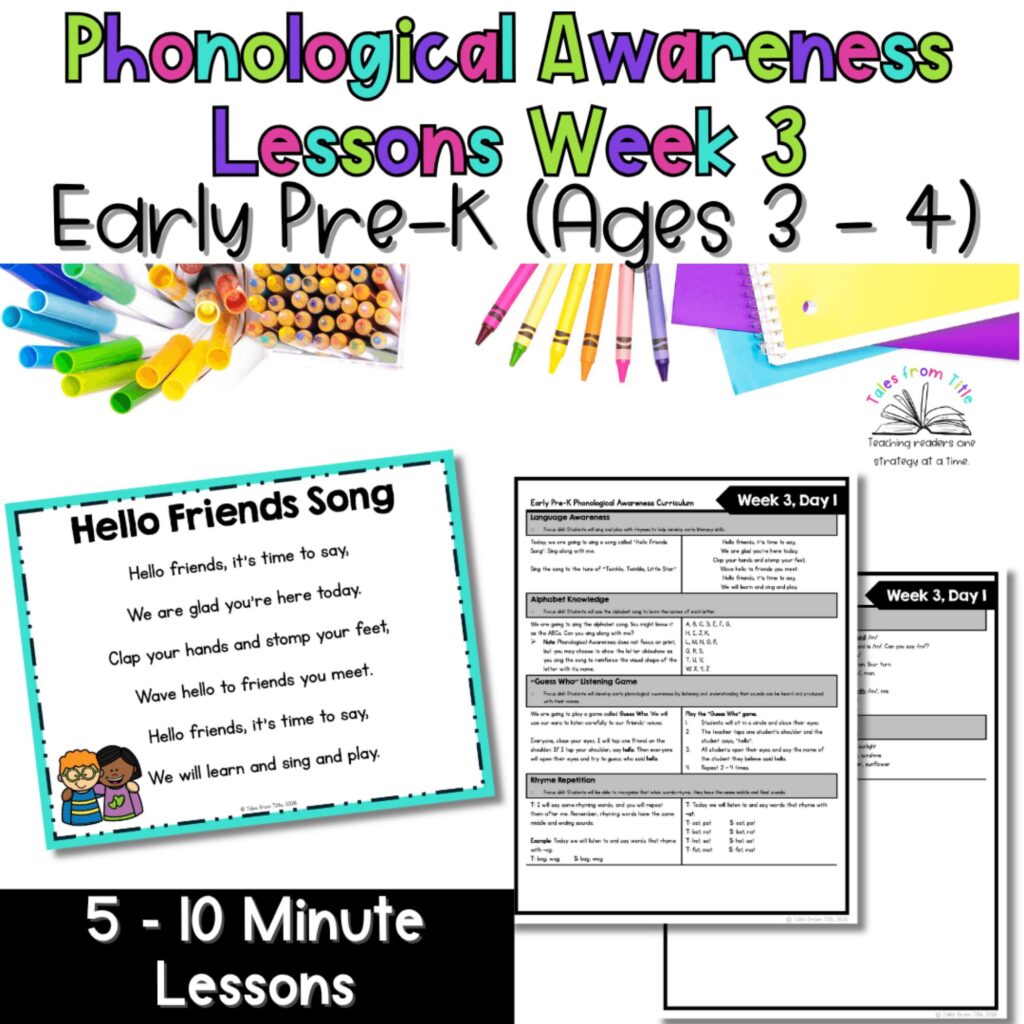
This Week 3 set includes scripted lessons plus three 50-slide instructional slideshows that visually support each phonological awareness lesson.
The lessons work well in preschool classrooms, Early Pre-K programs, intervention groups, and homeschool preschool routines.
Build Strong Early Literacy Skills One Week at a Time
Phonological awareness develops gradually through repeated exposure to listening games, rhyming practice, and word play.
Short daily routines help children notice how language works. Those early discoveries make later reading instruction much easier.
Adding structured phonological awareness activities for preschool now helps students build confidence with sounds long before they see them in print.
And that is one of the best gifts we can give early learners.