If you teach preschool or Early Pre-K, you know how important phonological awareness preschool activities are for building strong reading foundations. The challenge is finding short, structured routines that actually fit into your day and match the developmental needs of three- and four-year-olds.
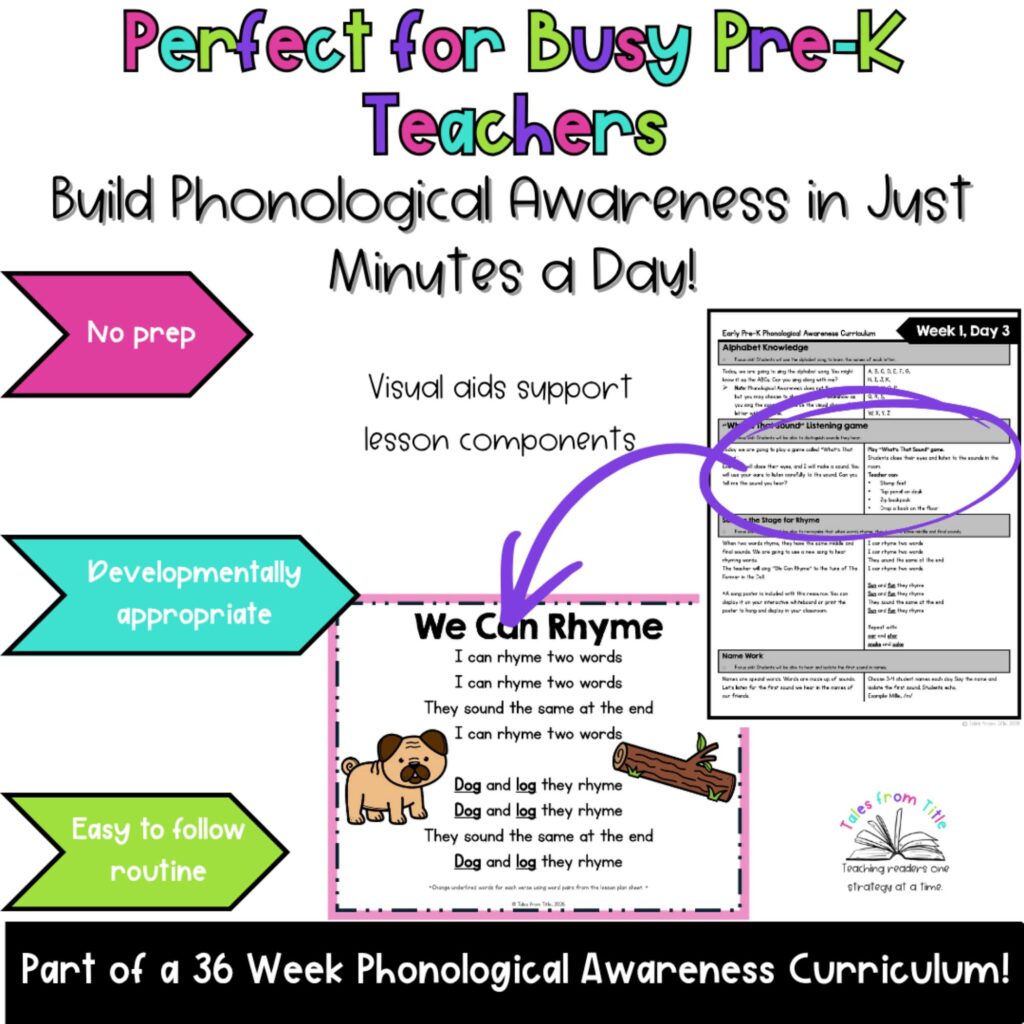
Many teachers want phonological awareness lesson plans for preschool that feel predictable, engaging, and easy to teach during circle time. That is exactly why I created these short routines that take just 5 to 10 minutes and still target the listening skills young learners need most.
These lessons help students practice:
- alphabet knowledge
- listening to distinguish sounds
- preparing to rhyme
- identifying beginning sounds in names
Research shows phonological awareness supports early reading success because students learn to hear and work with the sounds in spoken language before they begin decoding print.

What Is Phonological Awareness in Preschool?
Phonological awareness is the ability to hear and work with sounds in spoken words. Preschool students develop this skill through songs, listening games, name activities, and rhyme play.
Strong phonological awareness activities for preschool often include:
- Listening for environmental sounds
- Recognizing beginning sounds
- Noticing when words sound alike
- Learning letter names
- Practicing rhyming readiness skills
Short daily routines help students build confidence because repetition makes participation easier and more predictable.
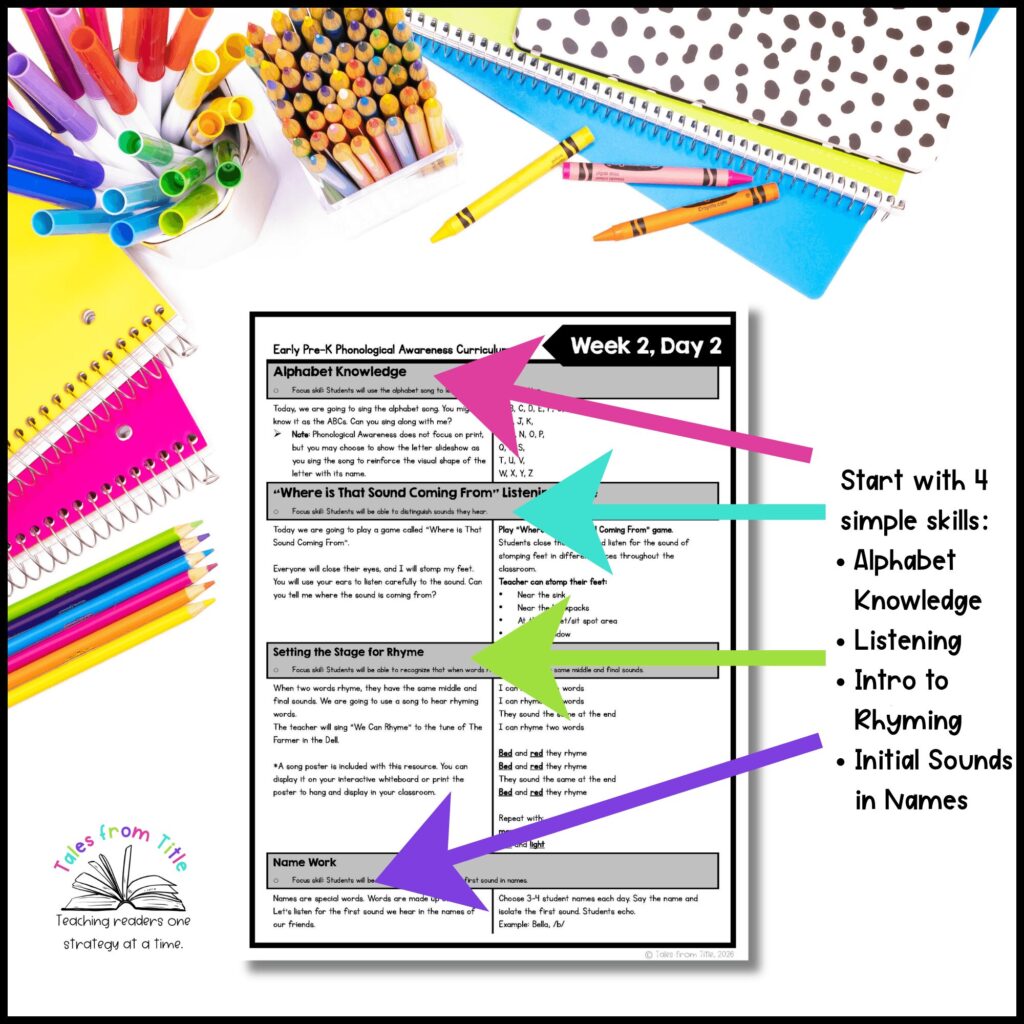
What Students Practice in These Week 2 Phonological Awareness Lessons
These phonological awareness lesson plans for preschool continue building listening skills through structured routines designed specifically for Early Pre-K classrooms.
Each lesson includes practice with:
Alphabet Knowledge
Students connect letters with their names through repeated exposure and visual supports.
Listening to Distinguish Sounds
Students identify classroom and environmental sounds as part of structured listening activities.
Preparing to Rhyme
Students begin noticing when words sound alike before producing rhymes independently.
Beginning Sounds Name Activities
Students isolate the first sound they hear in their own names and classmates’ names using guided teacher prompts.
These predictable routines make excellent incorporating these lessons into your weekly routine easy.
Try These Free Phonological Awareness Preschool Activities First
If you are new to teaching phonological awareness, the best place to start is with the free Week 1 lesson set. It introduces the instructional routine and helps students practice the same four foundational skills in a simple and engaging format.
Teachers use these phonological awareness preschool activities during circle time and in small groups. Plus, they are easy to implement because they are completely scripted and require no prep work.
Join my email list below to download the free Week 1 lessons.
How to Use Phonological Awareness Activities
These short routines work well in several classroom settings:
- Circle time literacy routines
- Early pre-K phonological awareness instruction
- Kindergarten intervention support
- Small group work
- Classrooms supporting students with limited literacy exposure at home
Because lessons only take 5 to 10 minutes, they easily fit into existing schedules without replacing other literacy instruction.
Consistent daily exposure helps students build confidence with listening skills that support future reading success.
Continue Your Preschool Phonological Awareness Lessons with Week 2
After introducing the routine with the free Week 1 lessons, teachers often continue with the Week 2 phonological awareness lesson plans for preschool to continue to strengthen early pre-reading skills..
You can find Week 2 here:
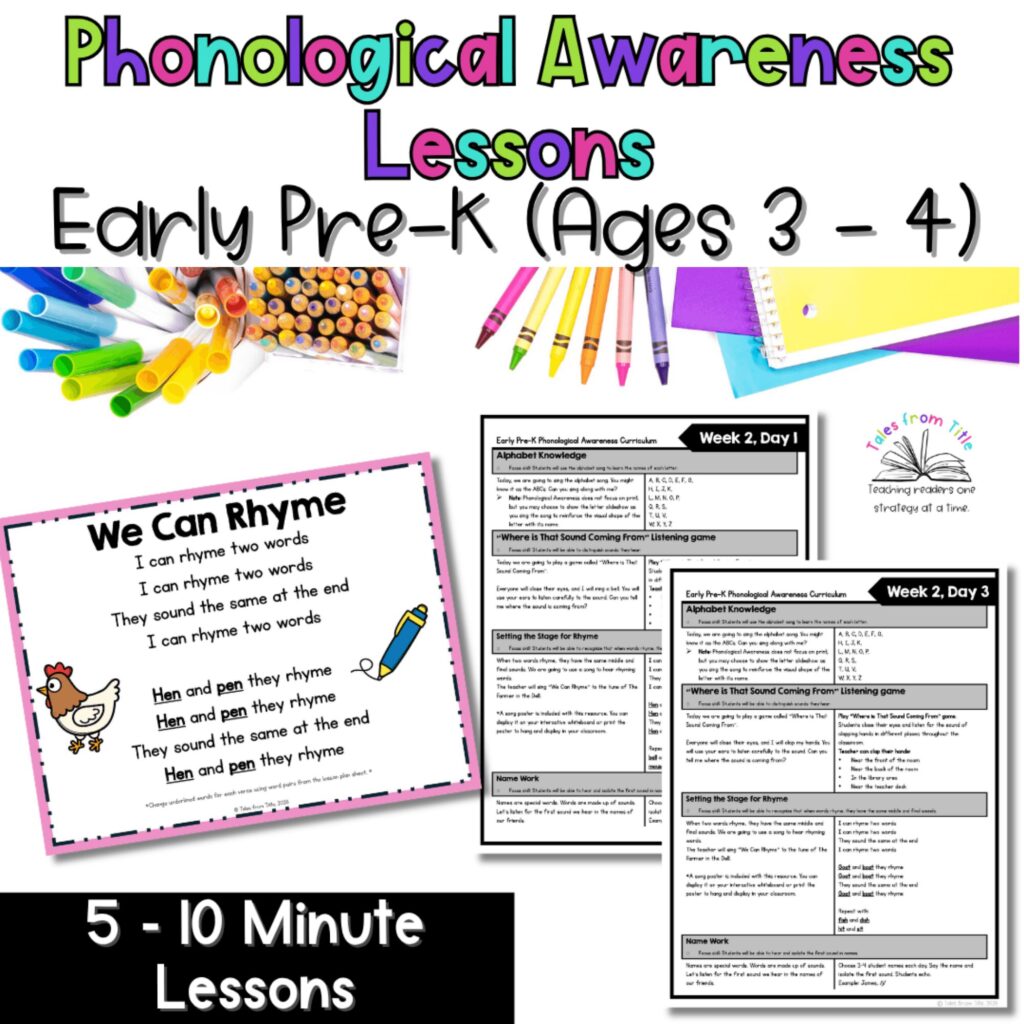
Regardless of where you purchase this resource from, you get scripted routines plus printable and digital song displays that support circle time instruction and interactive whiteboard use.
Why Short Daily Phonological Awareness Activities Work So Well
Young learners benefit most when phonological awareness becomes part of a predictable daily routine rather than an occasional activity.
Just a few minutes each day can help preschool students:
- Notice sounds in language
- Recognize beginning sounds
- Prepare for rhyming
- Connect letters with their names
- Strengthen early literacy readiness skills
If you want an easy place to begin, download the free Week 1 lessons above and try them with your students this week. Then continue building confidence with Week 2 as part of your regular preschool literacy routine.
Small daily sound awareness practice creates strong reading foundations that last.