Small group instruction can get complicated quickly.
You may have one group working on decoding, another building fluency, and another practicing comprehension skills. Some groups meet every day. Others meet two or three times a week. Before long, you’re juggling different students, skills, schedules, materials, and lesson plans for every group you teach.
That’s why one of the most helpful things I’ve found when planning small group instruction is also one of the simplest: start with a clear lesson goal.
A lesson goal gives you something to plan toward. Instead of filling a small group block with activities and hoping everything fits together, you can look at what you want students to accomplish and build your instruction around that goal.
And when you work with multiple intervention or small groups throughout the day, having that goal right on your lesson plan makes it much easier to keep each group’s instruction focused.
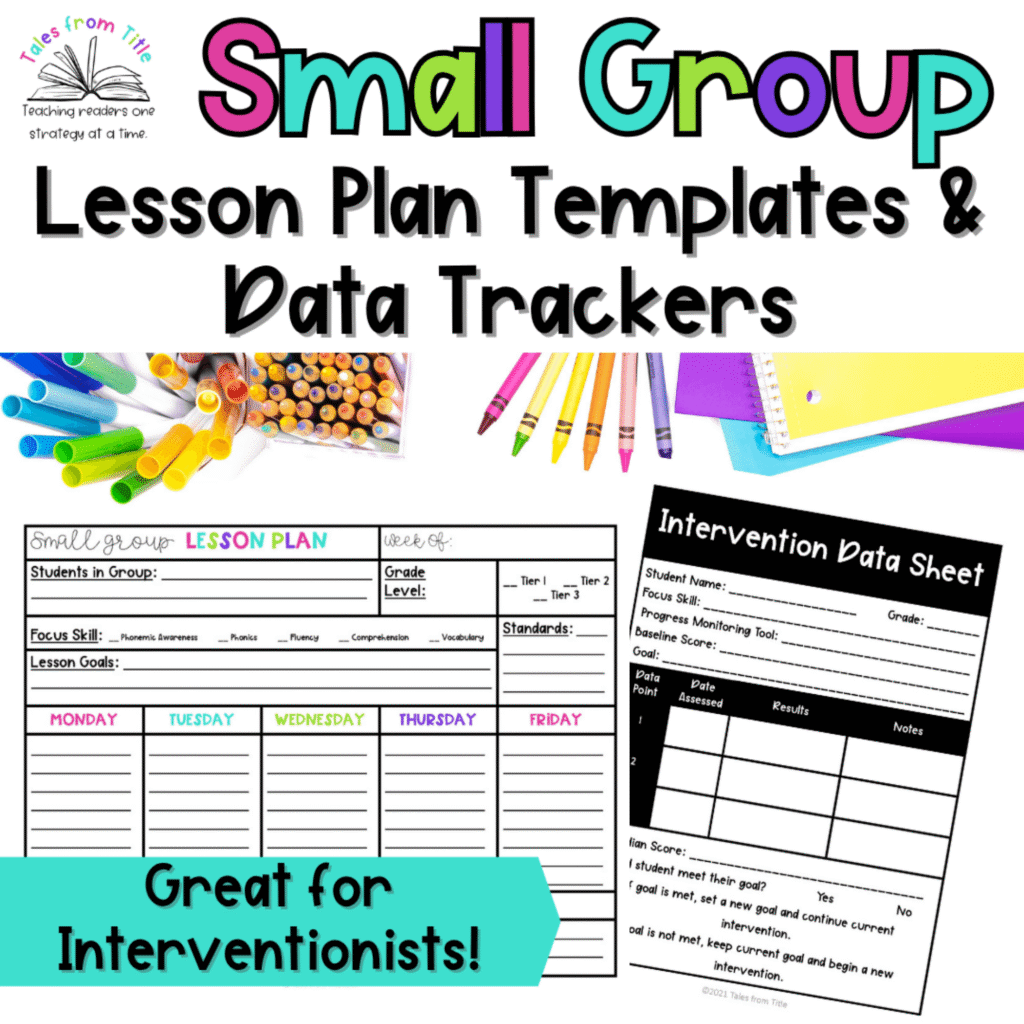
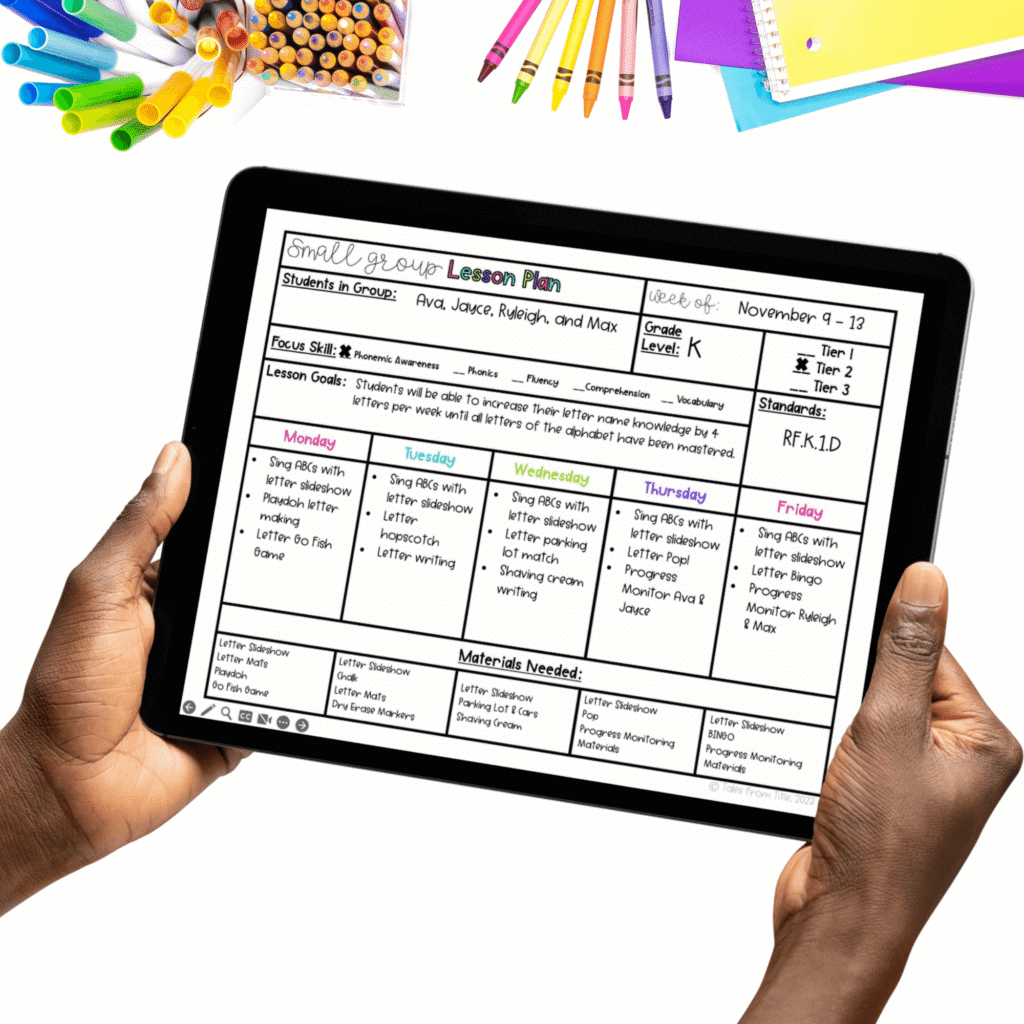
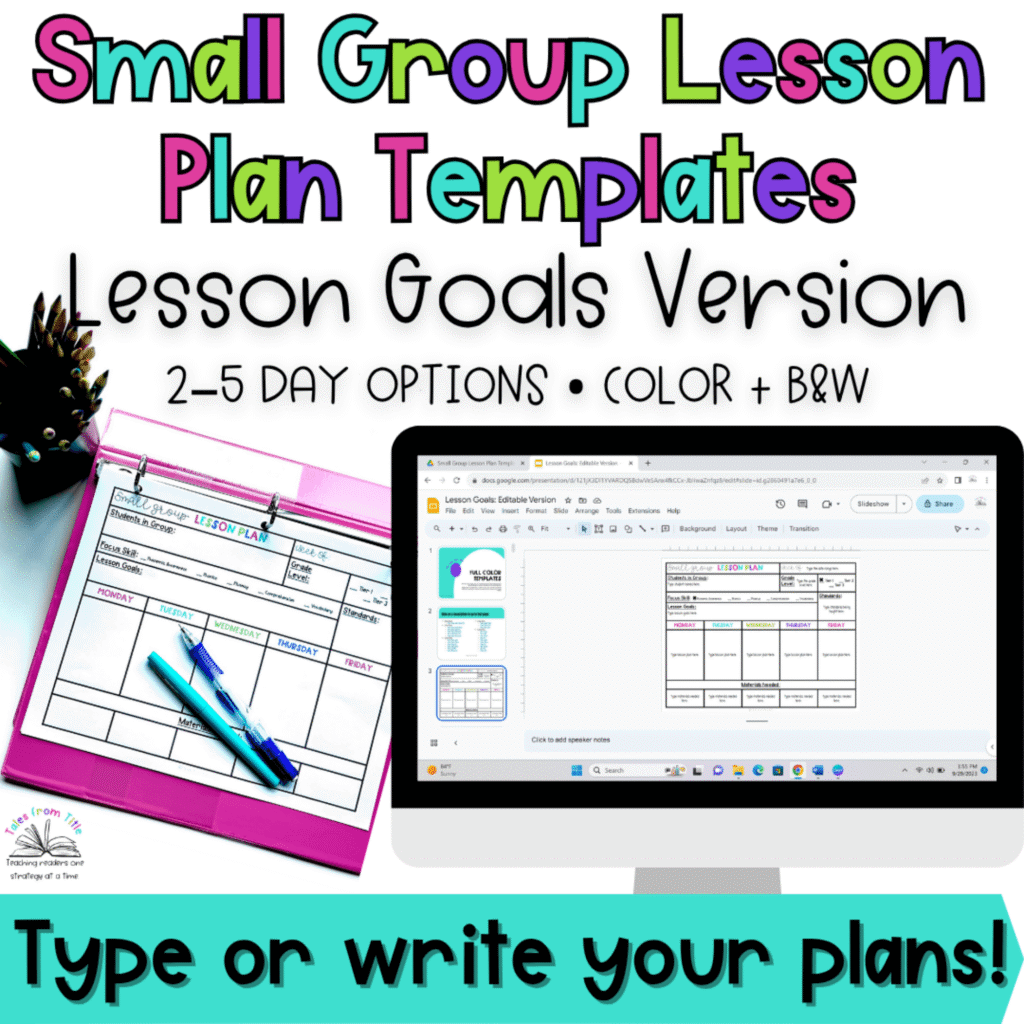
Looking for a simple way to organize your small group plans? My Lesson Goals Small Group Lesson Plan Templates give you space to keep your students, focus skill, standards, lesson goal, daily instruction, and materials together on one page.
Why Start Small Group Planning with a Lesson Goal?
When you’re responsible for several small groups, it’s easy for planning to become activity-driven.
You find a phonics activity you want to use. You grab a decodable passage. You add a fluency activity. You pull a few comprehension questions.
Individually, those might all be useful activities. But the more important question is:
What do I actually want this group to accomplish?
That’s where your lesson goal comes in.
A clear lesson goal can help you decide which activities belong in your lesson and which ones don’t. It also gives you something specific to come back to as you plan instruction across several days.
For example, instead of planning around a general skill like:
Short vowel words
you might establish a more specific lesson goal:
Students will accurately decode CVC words with the medial short a sound.
Now you have a clearer target for your instruction.
As you’re choosing word lists, activities, texts, or assessments, you can ask yourself whether they actually support that goal.
Keep Your Lesson Goal Where You Can See It
Writing a lesson goal is helpful.
Writing it somewhere and then never looking at it again? Not so much.
I wanted my small group lesson plans to keep the goal right alongside the instruction I was planning for the week.
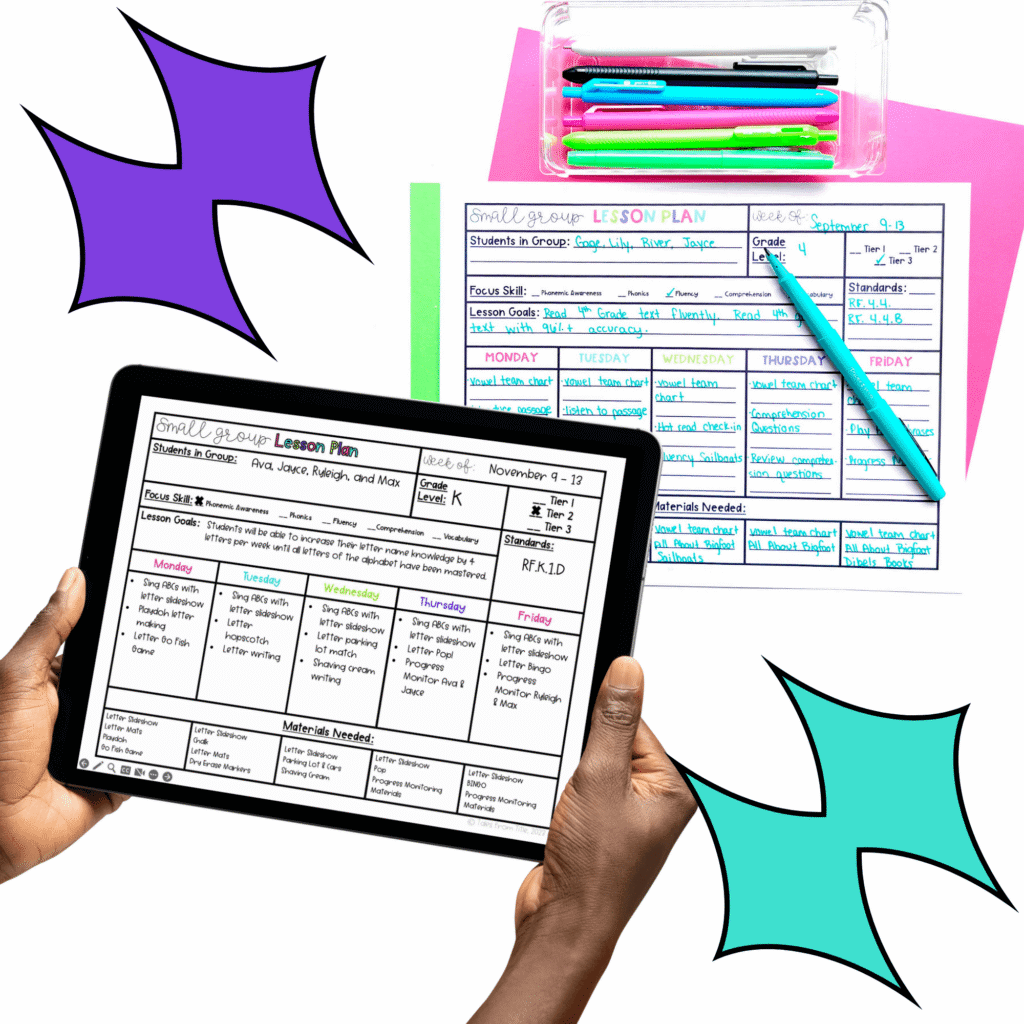
That’s why the Lesson Goals version of my Small Group Lesson Plan Templates includes dedicated space for:
- Students in the group
- Grade level
- Instructional tier (Tier 1, 2, or 3)
- Focus skill
- Standards
- Lesson goal
- Daily lesson plans
- Materials
Instead of having that information scattered across several places, you can see the instructional goal and the lessons you’ve planned to support it together.
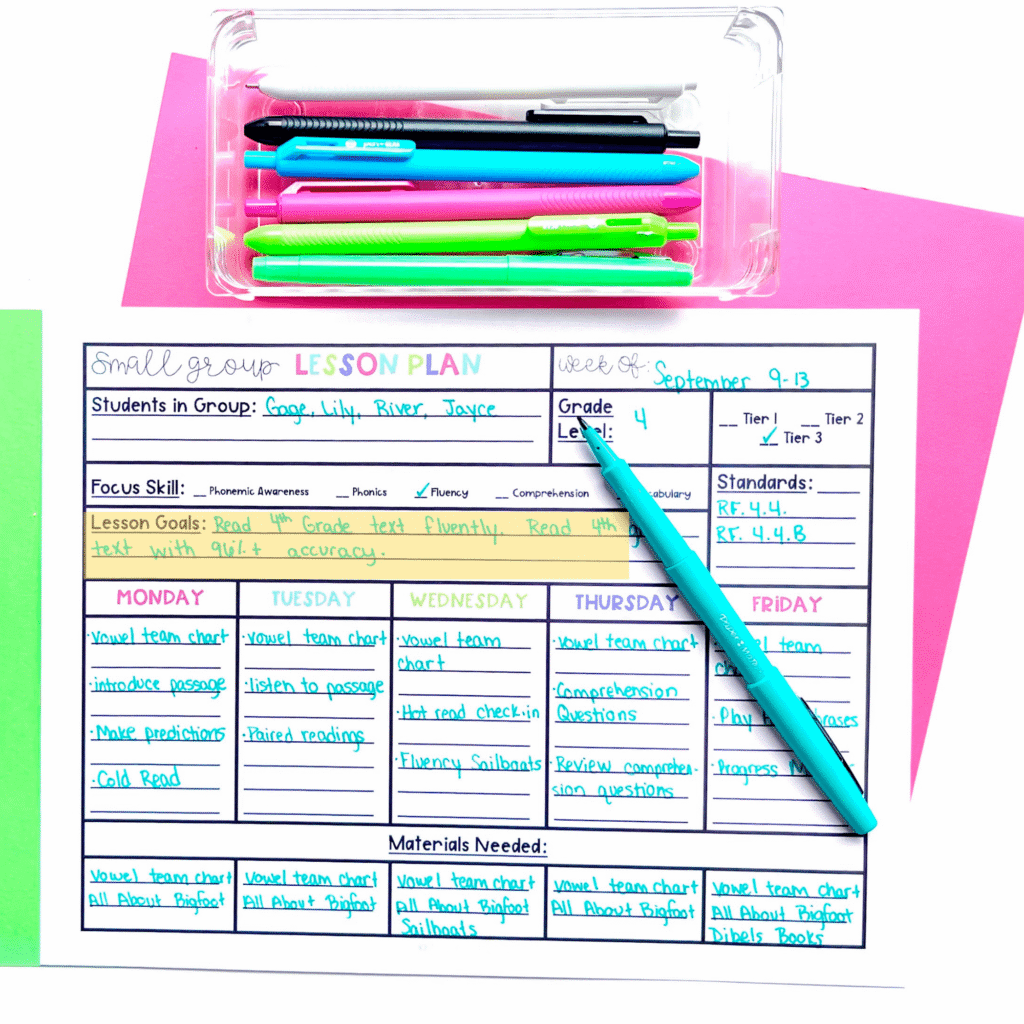
This is especially useful for intervention groups because you’re often working on a very specific skill. When you sit down to plan Tuesday or Wednesday’s instruction, you can quickly look back at the goal and make sure you’re still moving students toward the intended outcome.
Your Small Groups Don't All Need the Same Schedule
Here’s another challenge with traditional lesson plan books: they tend to assume everything happens five days a week.
Small groups don’t always work that way.
You might meet with one intervention group Monday through Friday, another Monday, Wednesday, and Friday, and another only twice during the week.
Trying to make all three fit into the same lesson plan format either leaves you with unused boxes or forces you to create a planning system that doesn’t really match your schedule.
Your planner should fit your groups, not the other way around.
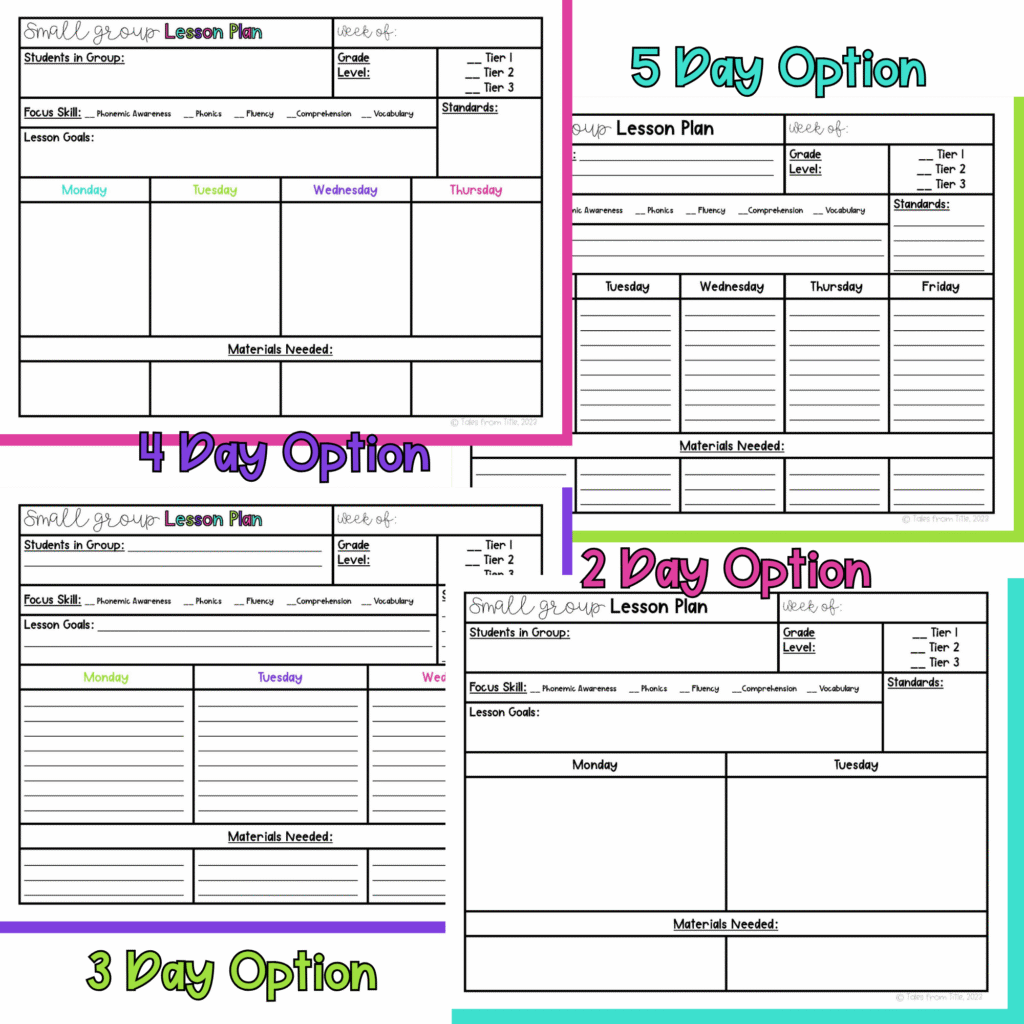
The Lesson Goals templates include separate layouts for groups meeting:
2 days • 3 days • 4 days • 5 days per week
That means you can choose a different template for each group based on how often you actually meet.
Type Your Small Group Plans or Write Them by Hand
There’s another planning preference that isn’t the same for every teacher.
Some of us want everything typed, neat, and saved digitally.
Others would much rather grab a favorite pen and start planning.
And sometimes you want both.
That’s why I updated these templates so you don’t have to commit to just one method.
Prefer to type your lesson plans?
The unlined templates include editable text boxes so you can type directly into your plans using PowerPoint or Google Slides.
You can save your plans digitally or print the completed page when you’re finished.
Prefer to write your plans?
Print one of the lined or unlined versions and fill it in by hand.
Both options are included, so you can use whichever planning method works better for you.
See the Lesson Goals Small Group Lesson Plans in Action
If you’re wondering what the different options look like or how the editable templates work, you can see them in the video below.
The resource includes both color and black-and-white versions, along with all four weekly schedule options.
That gives you quite a few combinations without requiring you to create your own planning pages or continually adjust a template that wasn’t designed for small group instruction in the first place.
What Could a Week of Goal-Focused Small Group Instruction Look Like?
Let’s say you’re planning for a reading intervention group working on CVC words.
Your plan might begin with:
Focus Skill: Decoding CVC Words
Lesson Goal: Students will accurately decode CVC words with the medial short a sound.
From there, you can build the week around that goal.
Day 1: Introduce/review the short /a/ sound and blend CVC words.
Day 2: Practice reading short-a words in isolation and sort words by medial vowel sound.
Day 3: Read short-a words in connected text and provide corrective feedback as needed.
Day 4: Continue connected-text practice and review words that caused difficulty.
Day 5: Check students’ progress toward the lesson goal and use the results to determine what comes next.
The exact activities will depend on your students and your instructional approach, of course. The important part is that the goal gives the week a clear direction.
You’re not choosing five unrelated activities to fill five boxes.
You’re planning a sequence of instruction around something you want students to learn.
Small Group Planning Doesn't Have to Be Complicated
A lesson plan template can’t do the instructional decision-making for you, and I don’t think it should.
What it can do is give you a simple place to organize those decisions once you’ve made them.
That’s what I wanted these templates to accomplish.
Choose the schedule that matches your group. Add the students you’re working with. Identify the focus skill and standards. Set your lesson goal. Then plan the instruction that will help students work toward it.
Your whole week stays together on one page, and when it’s time to teach, the information you need is easy to find.
If that sounds like the kind of planning system you’ve been looking for, you can take a closer look at the Lesson Goals Small Group Lesson Plan Templates below.
Need More Than Lesson Planning?
If you’re using these templates for intervention groups, planning instruction is only one piece of the puzzle. You also need a manageable way to keep track of how students are progressing.
I’ve bundled the Lesson Goals Small Group Lesson Plan Templates with my Intervention Data Tracking Sheets so you can keep your planning and intervention data organized as part of the same system.
Instead of keeping your lesson plans in one place and trying to remember where you recorded student data somewhere else, you can have tools for both sides of the intervention process.