Have you ever noticed how much preschoolers learn when they get the chance to say, listen, and play with words?
A child might clap the parts of a word, notice that two words sound alike, or repeat a silly word just because it is fun to say. These activities may feel like simple language play, but they are helping children pay closer attention to the sounds and parts of spoken language.
That kind of listening matters.
Before children can connect letters to sounds and begin decoding written words, they need opportunities to listen carefully to spoken language. Phonological awareness gives young children practice noticing and working with the sound structure of words without requiring them to read print.
That is the focus of Week 14 of my Early Pre-K Phonological Awareness Curriculum.
Week 14 continues the same foundational skills from Week 13, giving children additional opportunities to practice rhyming, beginning sounds, blending syllables, and segmenting words into syllables.
Since preschool attention spans are short, each lesson takes just 5–10 minutes.
What Is Phonological Awareness for Preschoolers?
Phonological awareness is the ability to notice and work with the sounds in spoken language.
For preschoolers, this does not need to look like formal reading instruction. In fact, much of the work can happen through simple oral activities.
Children might:
- Listen for words that rhyme
- Identify the first sound in a word
- Clap or say the parts of a word
- Put syllables together to say a whole word
- Break a word into its syllables
- Listen to and repeat sentences
- Notice words and sounds in familiar songs and routines
For example, a child might hear:
rain + bow
and put the parts together to say:
rainbow
Or they might hear:
rabbit
and break it apart:
rab + bit
The child does not need to see the word written down. The goal is to help them listen carefully to the spoken word and notice the parts they hear.
That makes these activities a natural fit for preschool and Early Pre-K instruction.
Week 14 Preschool Phonological Awareness Activities
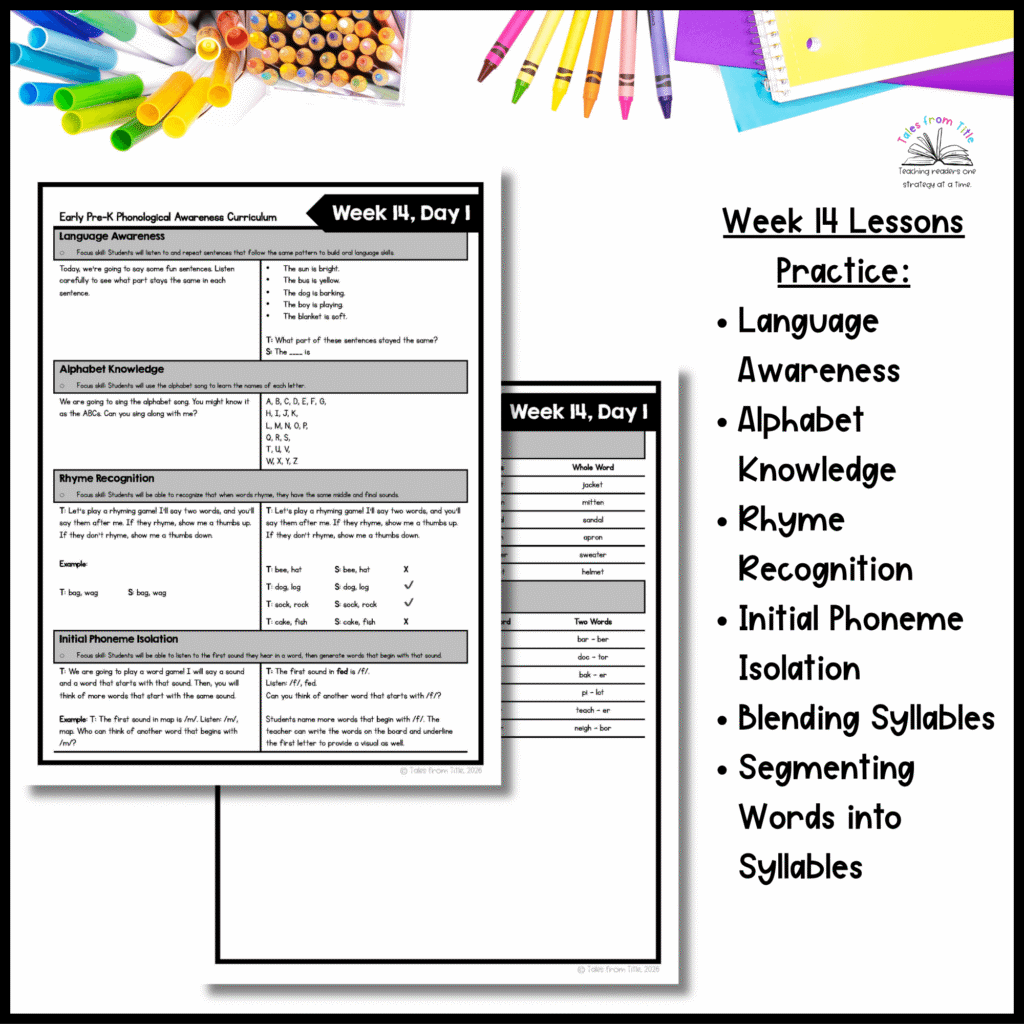
Week 14 includes three short, scripted lessons that continue building the skills introduced throughout the curriculum.
The weekly skills include:
- Language awareness
- Alphabet knowledge
- Rhyme recognition
- Beginning sound identification
- Blending syllables
- Segmenting words into syllables
The goal is not to rush children through a list of skills. Instead, Week 14 gives them another opportunity to practice familiar skills through consistent routines.
Language Awareness
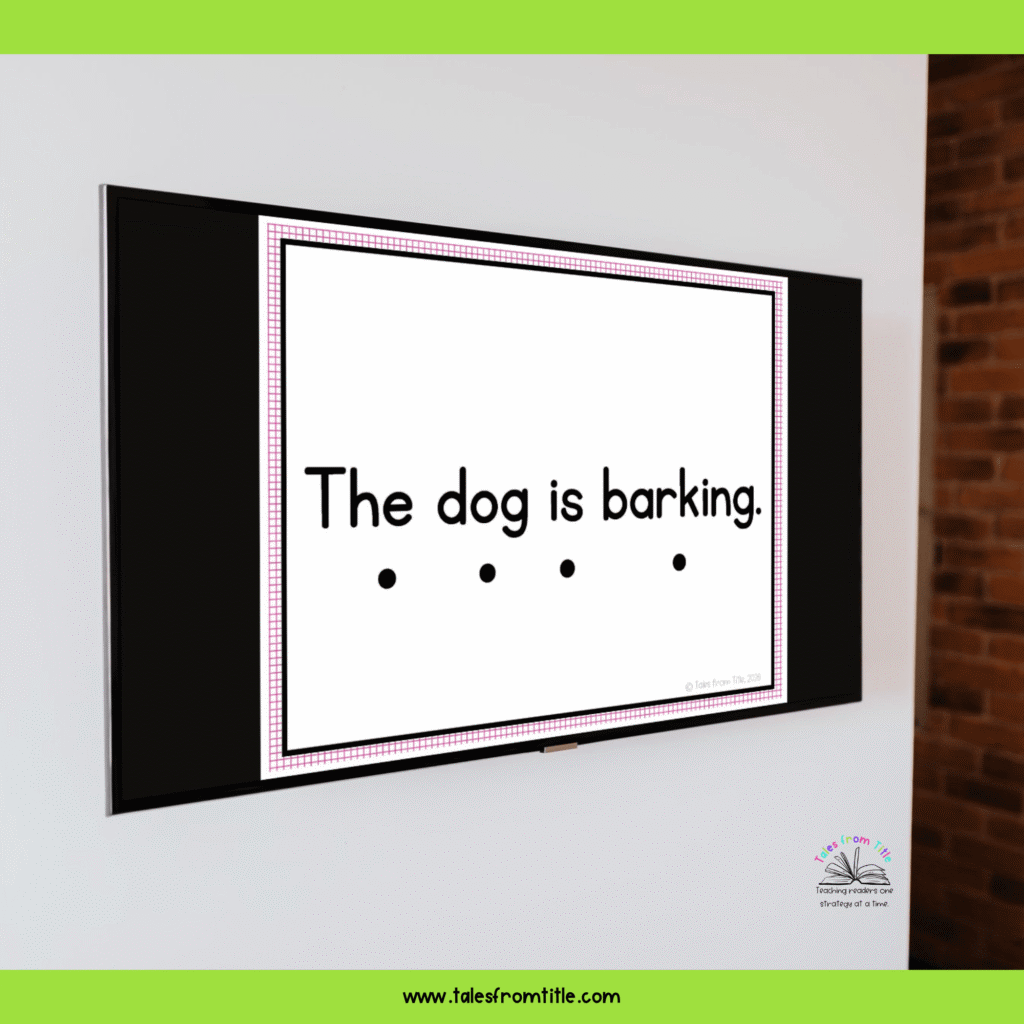
Children continue working with spoken language through work with sentences.
They listen to and repeat sentences, helping them become more aware that sentences are made up of individual words.
This type of listening activity is simple enough to fit naturally into a preschool routine. It also gives children another opportunity to pay attention to how spoken language works.
Alphabet Knowledge
Alphabet knowledge continues to be part of the familiar weekly routine.
Children practice letter names through the ABC song, giving them repeated exposure to the alphabet without drilling them with flashcards.
Rhyme Recognition
Rhyming is another skill children continue to practice in Week 14.
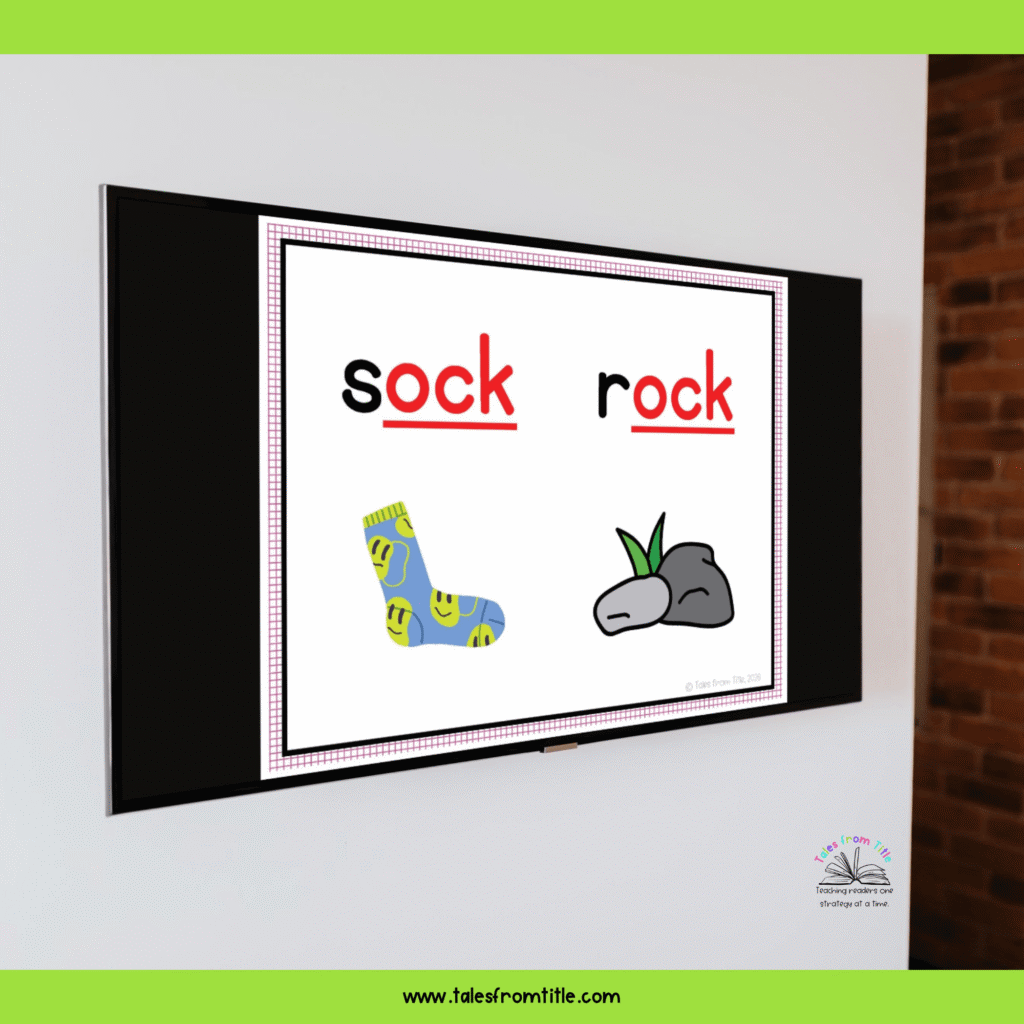
Children listen to pairs of spoken words and decide whether the words rhyme.
For example:
cat / hat
The words rhyme because they have the same ending sound pattern.
Compare that with:
cat / sun
These words do not rhyme.
At this age, the important part is the listening. Children are learning to notice similarities and differences in the sounds they hear.
Beginning Sound Identification
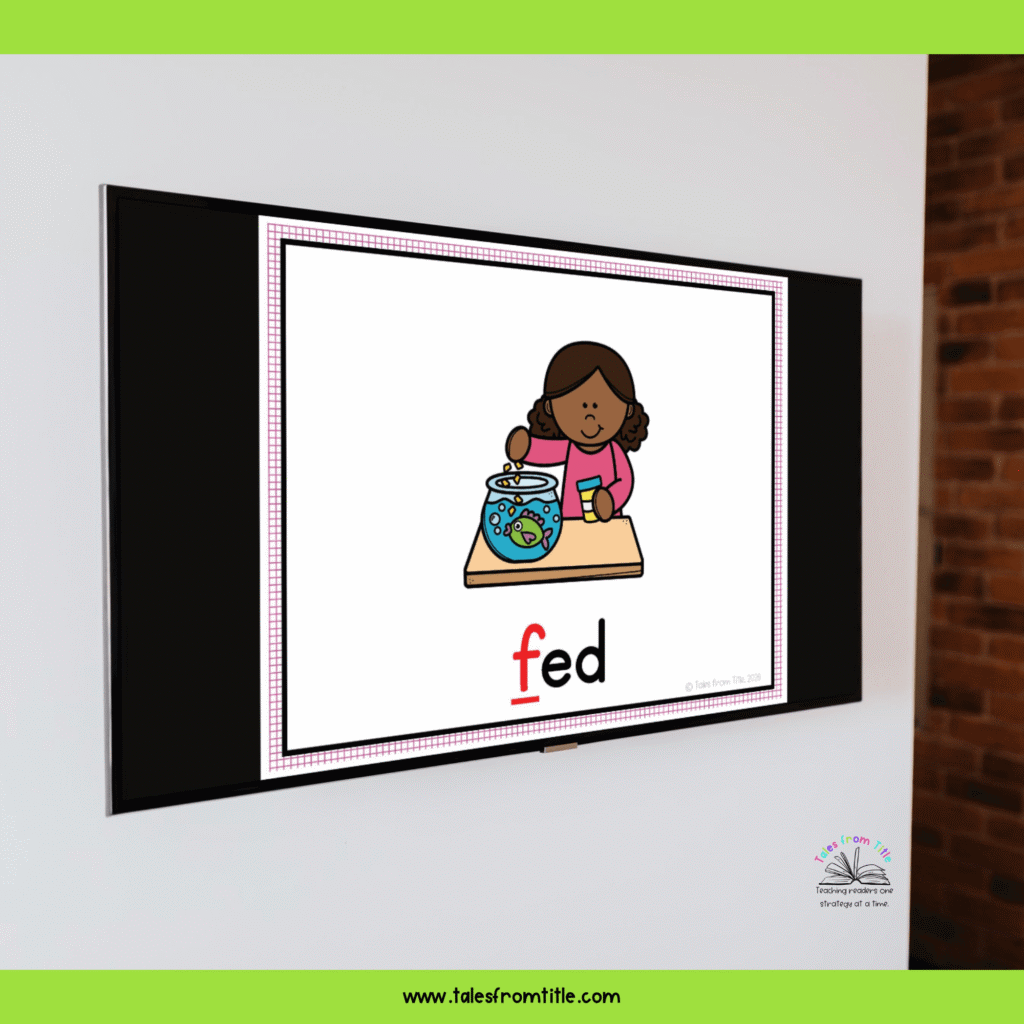
Children also continue listening for the first sound in familiar words.
For example:
hop
The first sound children hear is /h/. Then, they produce more words with the same first sound.
The activity is oral, so children are listening to the word and identifying its beginning sound rather than relying on the written letter.
This gives young learners more practice paying attention to the sounds within words.
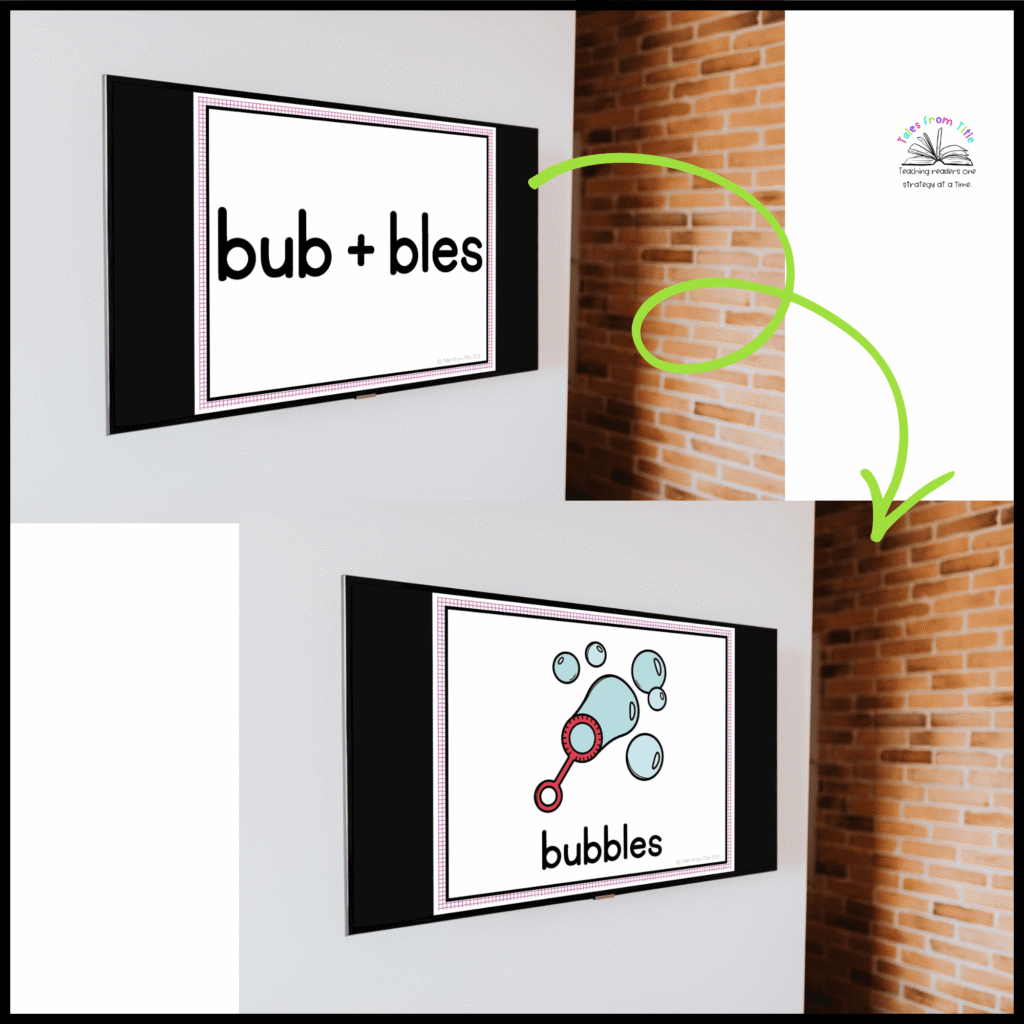
Blending Syllables
In Week 14, children continue practicing how to put syllables together to make a whole word.
For example:
sun + ny → sunny
Or:
rain + bow → rainbow
The teacher says the word parts separately, and the child blends them together.
This is a simple activity, but it asks children to hold the parts they hear in their minds and combine them into a complete word.
Segmenting Words into Syllables
Children also practice moving in the opposite direction.
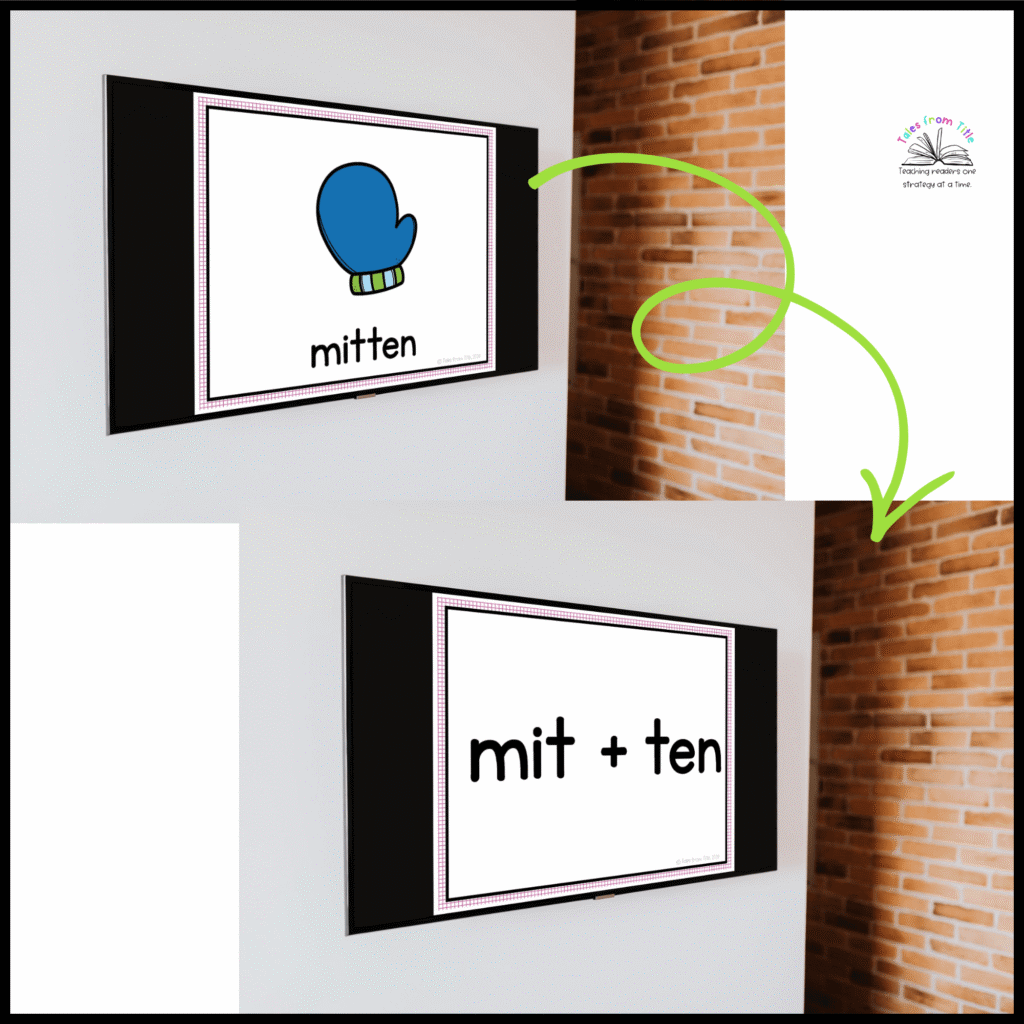
Instead of hearing separate syllables and putting them together, they hear a whole word and break it into its parts.
For example:
pencil → pen + cil
Or:
rabbit → rab + bit
Again, the activity is completely oral. Children are listening to spoken words and learning to notice the smaller parts within them.
Why Keep Practicing the Same Skills?
One of the things I intentionally built into this curriculum is repetition.
It can be tempting to think that every week needs to introduce a brand-new skill. For young children, though, repeated practice is important.
Week 14 does not introduce a completely new set of phonological awareness skills. Instead, children continue practicing the skills from Week 13 through familiar routines and new examples.
That consistency has a practical benefit, too.
When children already understand how an activity works, they do not have to spend their attention figuring out a new set of directions. They can focus more of their attention on the actual listening task.
For example, if children already know that they will hear two words and give a thumbs up when the words rhyme, you can spend less time explaining the routine and more time practicing rhyming.
The same is true for syllables.
Once children understand that rain + bow makes rainbow, you can introduce new words and continue giving them opportunities to blend and segment.
The routine stays familiar while the examples change.
That is an important part of making phonological awareness practice manageable for young learners.
Keep Preschool Phonological Awareness Lessons Short
You do not need a 30-minute literacy lesson to give preschoolers meaningful phonological awareness practice.
In fact, short lessons can be easier to fit into a real preschool day.
A 5–10 minute activity can happen during:
- Morning meeting
- Circle time
- A transition between activities
- Small-group literacy instruction
- One-on-one intervention
- Homeschool preschool
- A quick afternoon literacy routine
The goal is consistency.
A few minutes of intentional listening and sound play can become a regular part of the preschool day without taking over the rest of your schedule.
That is one reason I designed the Early Pre-K Phonological Awareness Curriculum around short, scripted lessons.
Open the lesson. Follow the script. Teach.
Try Week 1 Free
If you are curious about the Early Pre-K Phonological Awareness Curriculum but want to see how the lessons work before purchasing, you can start with Week 1 for free.
You will receive three complete scripted lessons and supporting visuals so you can try the routine with your preschoolers.
Explore Week 14
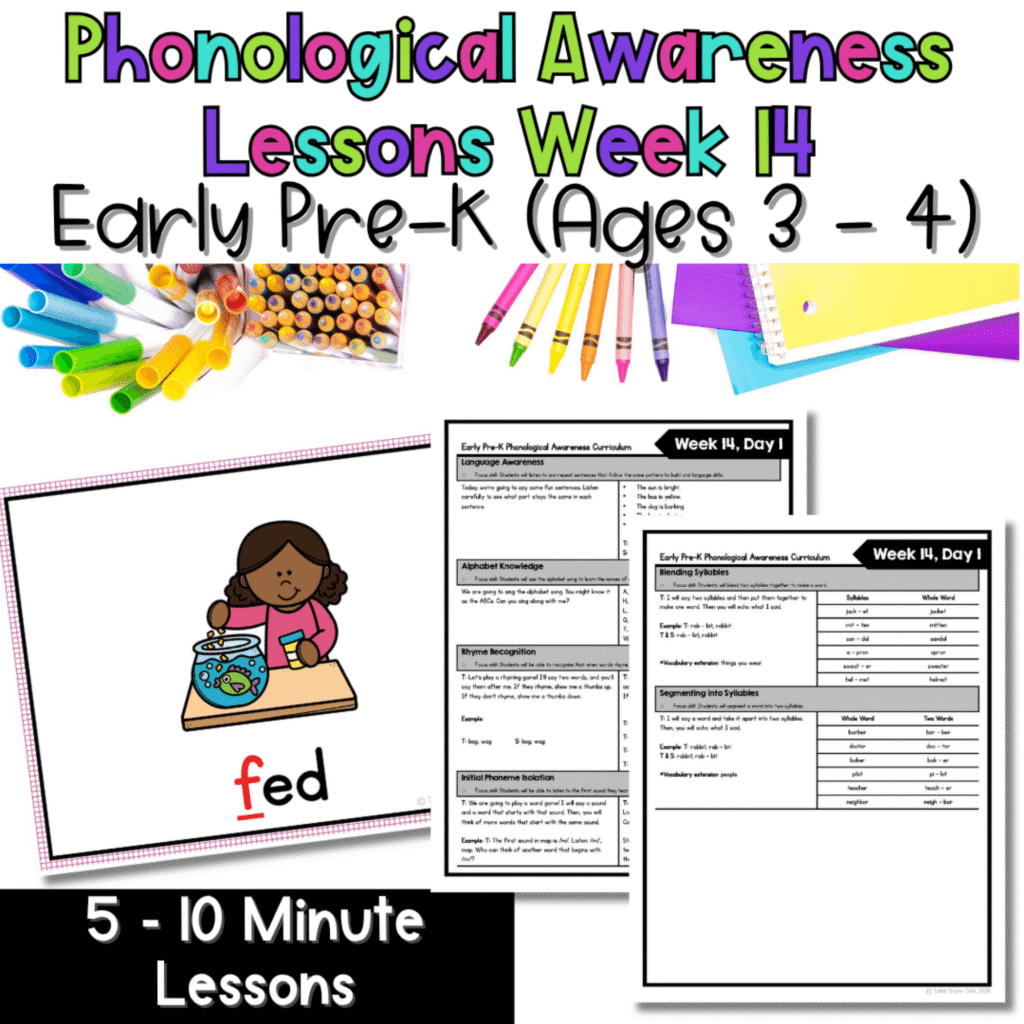
If you are looking for preschool phonological awareness activities that are short, scripted, and easy to fit into your day, Week 14 gives you three ready-to-teach lessons for children ages 3–4.
Children continue practicing:
- Rhyming
- Beginning sounds
- Blending syllables
- Segmenting syllables
- Language awareness
- Alphabet knowledge
The resource includes an optional student instructional slideshow in PowerPoint, Google Slides, and PDF formats, along with the Early Pre-K phonological awareness scope and sequence.
Continue Building the Early Pre-K Phonological Awareness Curriculum
Week 14 is part of a larger systematic Early Pre-K Phonological Awareness Curriculum designed for children ages 3–4.
Each week includes short, scripted lessons that follow familiar routines while giving children continued opportunities to practice foundational skills.
If you are working through the curriculum in order, Week 14 continues the syllable, rhyming, and beginning sound work from Week 13.
Whether you use these lessons in a preschool classroom, homeschool setting, childcare program, small group, or early intervention setting, the goal stays the same: give young children frequent, manageable opportunities to listen to and play with spoken language.
And sometimes, five focused minutes is enough to get that practice in.