Have you ever noticed how naturally preschoolers play with the parts of words?
They might clap along as they say a friend’s name, stretch out a silly word just because it sounds funny, or repeat the same part of a word over and over until everyone is laughing. To them, it’s play. But all that listening and experimenting with language is doing important work.
As children begin to notice that words have smaller parts, we can help them become even more intentional listeners.
That’s where we’re headed in Week 13 of the Early Pre-K Phonological Awareness Curriculum.
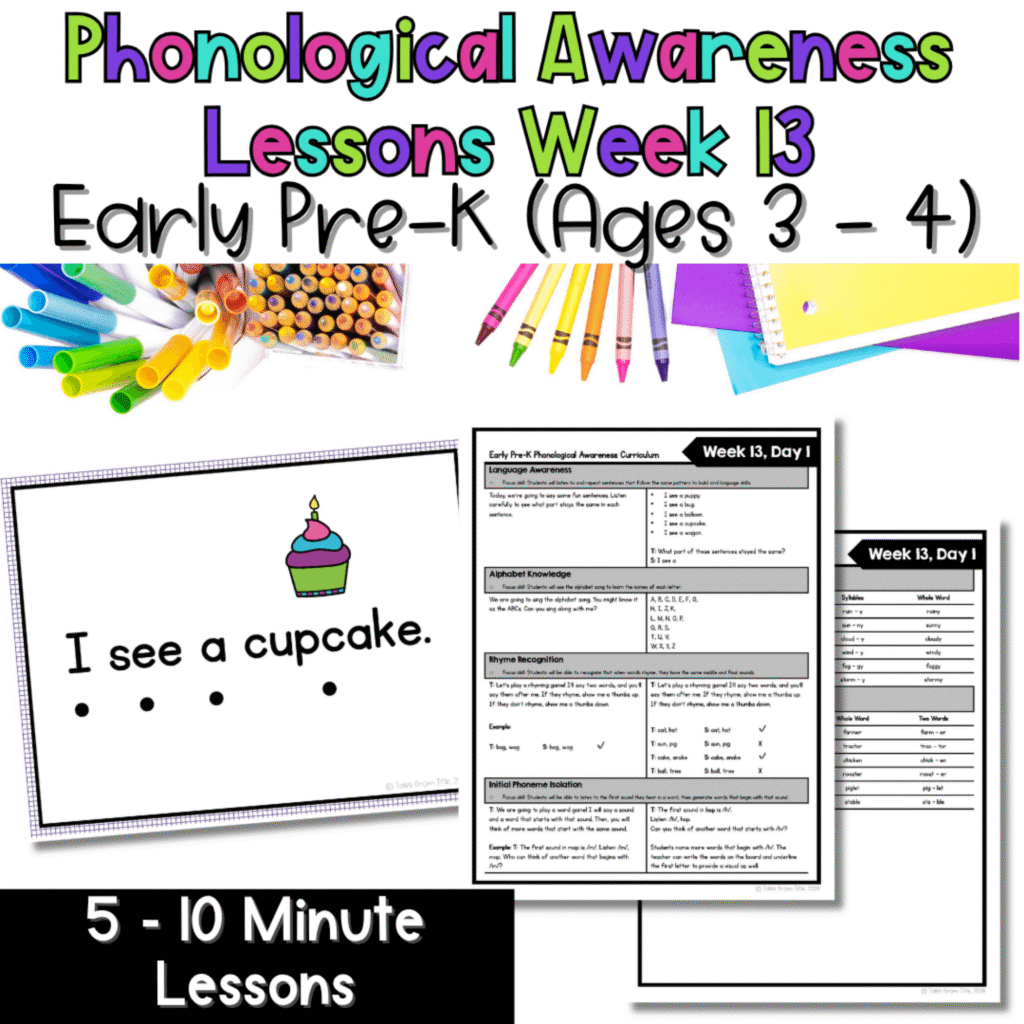
This week, we’re taking a skill children have already practiced and making it just a little more challenging. In previous lessons, children blended and separated compound words such as cup + cake = cupcake. Now, instead of listening for two whole words, they’ll begin listening for the syllables inside familiar words.
rab + bit = rabbit
ti + ger = tiger
It’s a small shift, but an important one.
Children will also continue practicing familiar skills such as rhyme recognition and identifying beginning sounds. The routines stay predictable while the phonological awareness work gradually becomes more complex.
And just like the previous weeks, we’re keeping it manageable for both the children and the adult teaching them. Three scripted lessons. Just 5–10 minutes at a time. No need to turn preschool into first grade to build a strong foundation for future reading.

Why Practice Syllables in Preschool?
Phonological awareness is the ability to recognize and work with the sound structures of spoken language. Before children are expected to decode printed words, they need opportunities to notice that spoken language can be broken into smaller parts.
Syllables give young children a developmentally appropriate way to begin doing that.
Consider the word rabbit. A preschooler does not need to know the letters in rabbit to hear that the word has two parts:
rab + bit
The same is true for familiar words such as:
ta + ble = table
sun + ny = sunny
pen + cil = pencil
Children can listen to those parts, put them together, and take them apart entirely through oral language.
Research on early literacy has consistently identified phonological awareness as an important foundation for learning to read. The National Reading Panel found that teaching children to manipulate sounds in spoken language improves reading and spelling development. Phonological awareness also prepares children to make sense of phonics instruction because they are learning to pay attention to the sound structure of words before connecting those sounds to print.
For preschoolers, this instruction does not need to look like formal reading lessons. Short oral activities, repeated consistently, can provide meaningful practice while still being appropriate for their age.
What's New in Week 13?
Week 13 marks a shift in our phonological awareness practice.
Children have already had experience blending and segmenting compound words. For example, they might hear cup + cake and blend the two words to say cupcake.
Now we make the parts smaller.
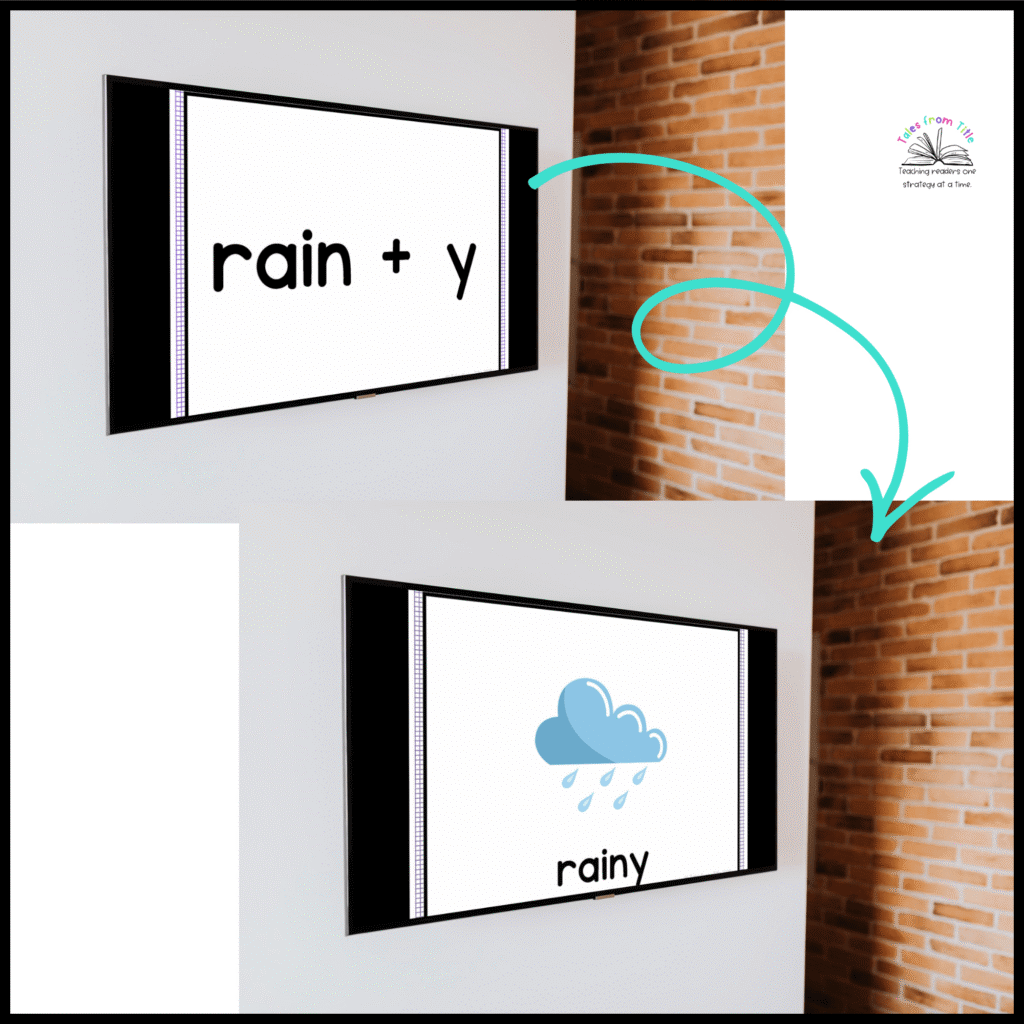
Instead of combining two complete words, children begin listening for the syllables within a word.
For example:
ti + ger = tiger
Later, we can reverse the process:
tiger = ti + ger
This progression gives children experience working with increasingly smaller parts of spoken language without jumping immediately to individual phonemes throughout a word.
What Do Children Practice in the Week 13 Phonological Awareness Lessons?
Week 13 includes six areas of early literacy practice. Some routines will already feel familiar to children, while others provide a new challenge.
Language Awareness
Our language-awareness routine also changes in Week 13.
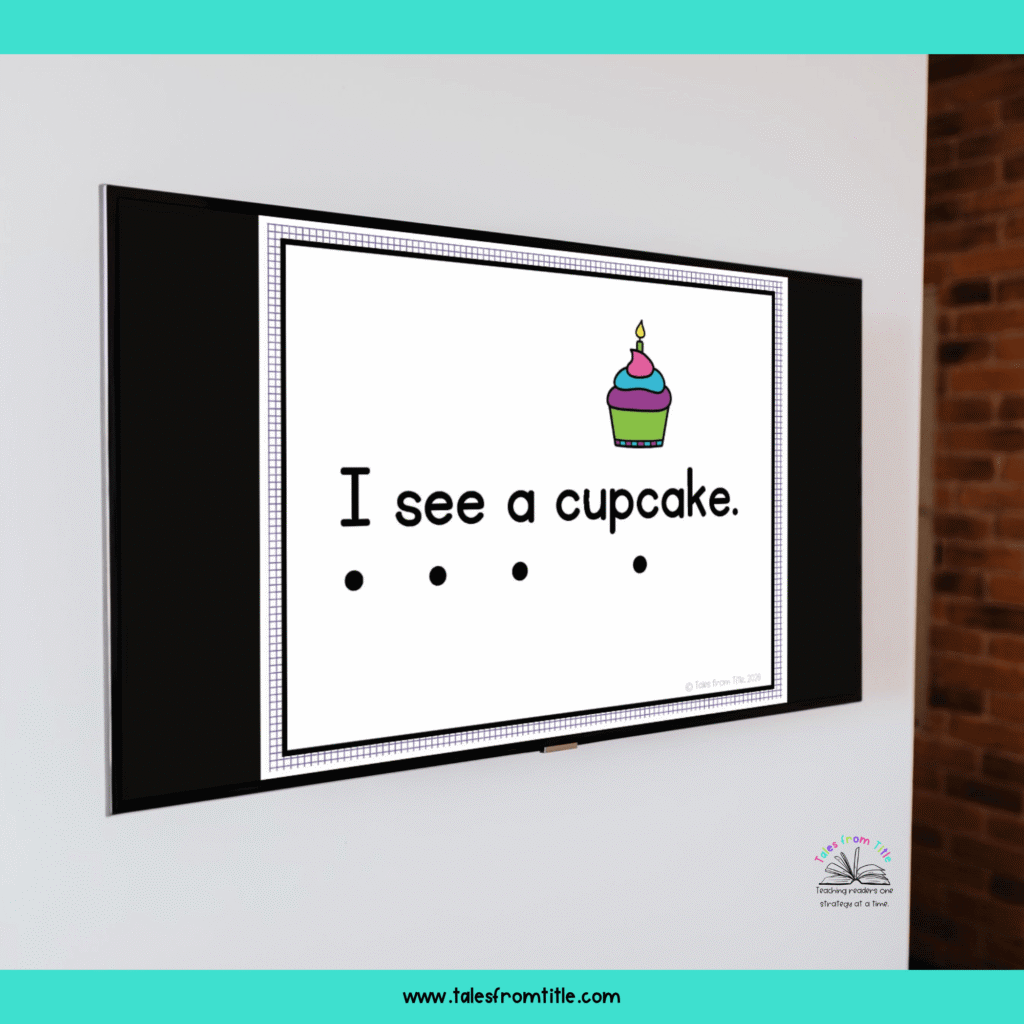
Instead of relying only on nursery rhymes, children begin listening to and repeating predictable sentence patterns.
For example:
I see a puppy.
I see a flower.
I see a rainbow.
Children listen closely and begin noticing the part of the sentence that stays the same.
These simple patterns provide opportunities to strengthen oral language, vocabulary, listening, and awareness of sentence structure. The predictable format also makes it easier for young children to join in.
Alphabet Knowledge
Children continue practicing letter names through a familiar ABC song routine.
Alphabet knowledge and phonological awareness are different skills, but both contribute to children’s early literacy development. Keeping the alphabet routine short and consistent gives children repeated exposure to letter names without turning the phonological awareness lesson into a formal phonics lesson.
Rhyme Recognition
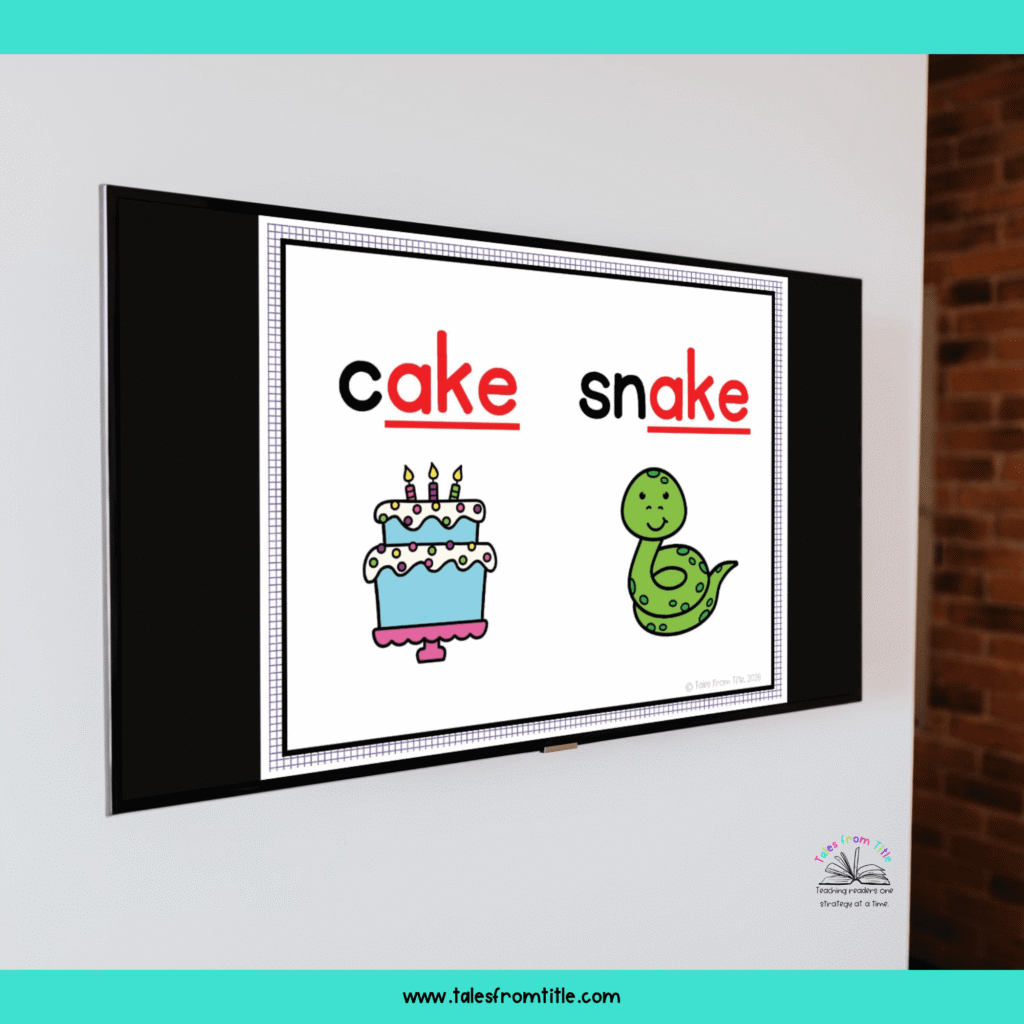
Earlier lessons provided lots of opportunities to hear and repeat rhymes. Now children listen to pairs of words and decide whether they rhyme.
For example:
goat – coat
Do they rhyme? Yes.
map – sun
Do they rhyme? No.
This requires children to do more than repeat a rhyming pattern. They have to listen, compare the words, and make a decision about what they hear.
Initial Phoneme Isolation
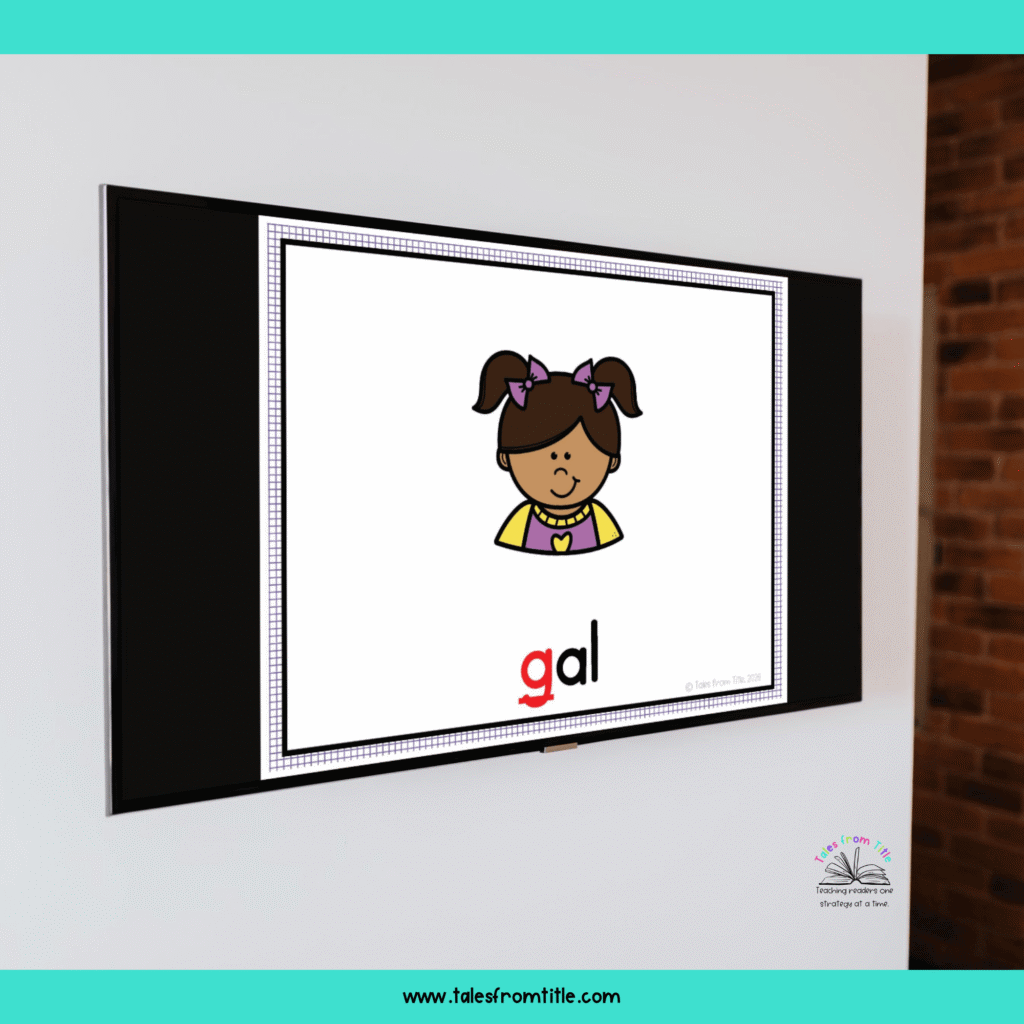
Children also continue listening for the first sound in familiar spoken words.
The teacher might say:
“The first sound in hop is /h/. Listen: /h/, hop.”
Then children can listen to additional words and identify the first sound they hear.
This practice encourages children to focus on one individual sound within a spoken word, an important step toward the phonemic awareness skills they will continue developing as they get closer to formal reading instruction.
Blending Syllables
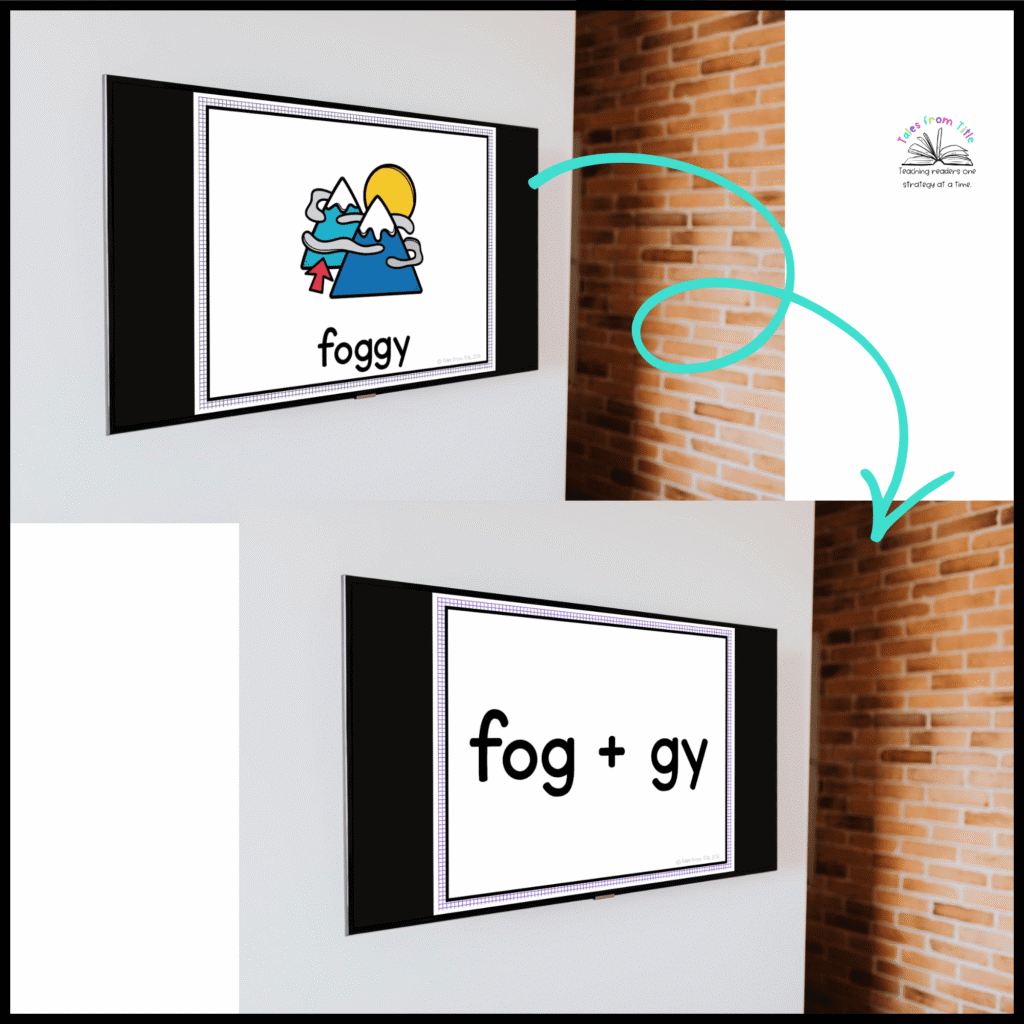
Blending syllables asks children to listen to two separately spoken parts and put them together to make a whole word.
The teacher might say:
rab + bit
Children blend the parts and say:
rabbit!
At this age, familiar vocabulary is important. Words such as rabbit, puppy, apple, and pencil allow children to concentrate on listening to and combining the syllables instead of trying to figure out an unfamiliar word.
Segmenting Words into Syllables
Children also practice doing the process in reverse.
The teacher says a familiar two-syllable word, and children separate it into its two parts.
For example:
apple → ap + ple
wagon → wag + on
cookie → cook + ie
These activities help children become more aware of the internal structure of spoken words.
What Does a Week of Preschool Phonological Awareness Look Like?
Phonological awareness instruction does not need to become another lengthy block in your preschool schedule.
Week 13 includes three fully scripted lessons, and each lesson takes approximately 5–10 minutes.
The resource also includes optional student visual slides in PowerPoint, Google Slides, and PDF formats, along with the weekly language visual and Early Pre-K scope and sequence.
You can use the lessons during:
- Circle time
- Preschool small groups
- Early intervention
- Homeschool preschool
- One-on-one instruction
- A short daily literacy routine
The scripting is intentional. You do not need to search for a new rhyming activity, come up with two-syllable practice words, or decide what skill should come next.
Open the lesson and teach.
Why Keep Practicing Familiar Skills?
Week 13 introduces syllable work, but that does not mean the skills from previous weeks disappear.
Young children need repetition.
A child who successfully identifies a rhyme on Monday has not necessarily mastered rhyme recognition forever. A child who identifies /m/ at the beginning of moon may need many more experiences listening for beginning sounds in different words.
That is why these lessons revisit skills over time.
The routine becomes familiar, but the words and examples change. Children have another opportunity to listen, respond, and become a little more independent.
Instead of racing through a checklist of phonological awareness skills, we are building them gradually.

Want to Try the Phonological Awareness Lessons for Free?
If you are new to this curriculum, you do not have to start by purchasing Week 13.
You can try Week 1 of the Early Pre-K Phonological Awareness Curriculum for FREE.
The free resource includes three complete scripted lessons and the supporting materials, so you can actually use the routine with your students before deciding whether you want to continue.
Download the FREE Week 1 Phonological Awareness Lessons here.
It is the easiest way to see whether the lesson length, scripting, and instructional style work for your preschoolers.
Ready for Week 13?
If your students are ready to begin working with syllables while continuing to strengthen rhyming and beginning sound skills, you can find the complete Week 13 Early Pre-K Phonological Awareness Lessons here.
You’ll receive three scripted lessons, optional student visuals, the weekly language display, and multiple digital formats.
Everything is ready so you can spend your 5–10 minutes teaching the lesson instead of planning it.
Small Steps Build the Foundation for Reading
It can be easy to look at an activity like saying rab + bit and wonder how something so simple connects to learning to read.
But that is exactly where the foundation begins.
Children are learning to listen closely to spoken language. They’re discovering that words have parts. They’re comparing sounds, noticing rhymes, isolating beginning phonemes, and learning that those parts can be put together and pulled apart.
Later, letters will enter the picture.
For now, 5–10 minutes of intentional listening and word play gives preschoolers an opportunity to develop the phonological awareness they’ll need when those letters and sounds eventually come together in print.
And that is plenty of important work for one short preschool lesson.