When students are first learning to read CVC words, short vowel practice needs to be clear, predictable, and repeated often. One of the most effective ways to build early decoding confidence is by helping students recognize common word family patterns.
That’s exactly why I love using short A word family sorts during phonics instruction.
Sorting activities give students structured practice reading words, noticing spelling patterns, and strengthening their understanding of how sounds and letters work together. Even better, they are easy to implement during literacy centers, intervention groups, morning work, or independent practice.
If you’re working with kindergarten students or supporting older readers who still need help with short vowels, word family sorts can make a big difference.
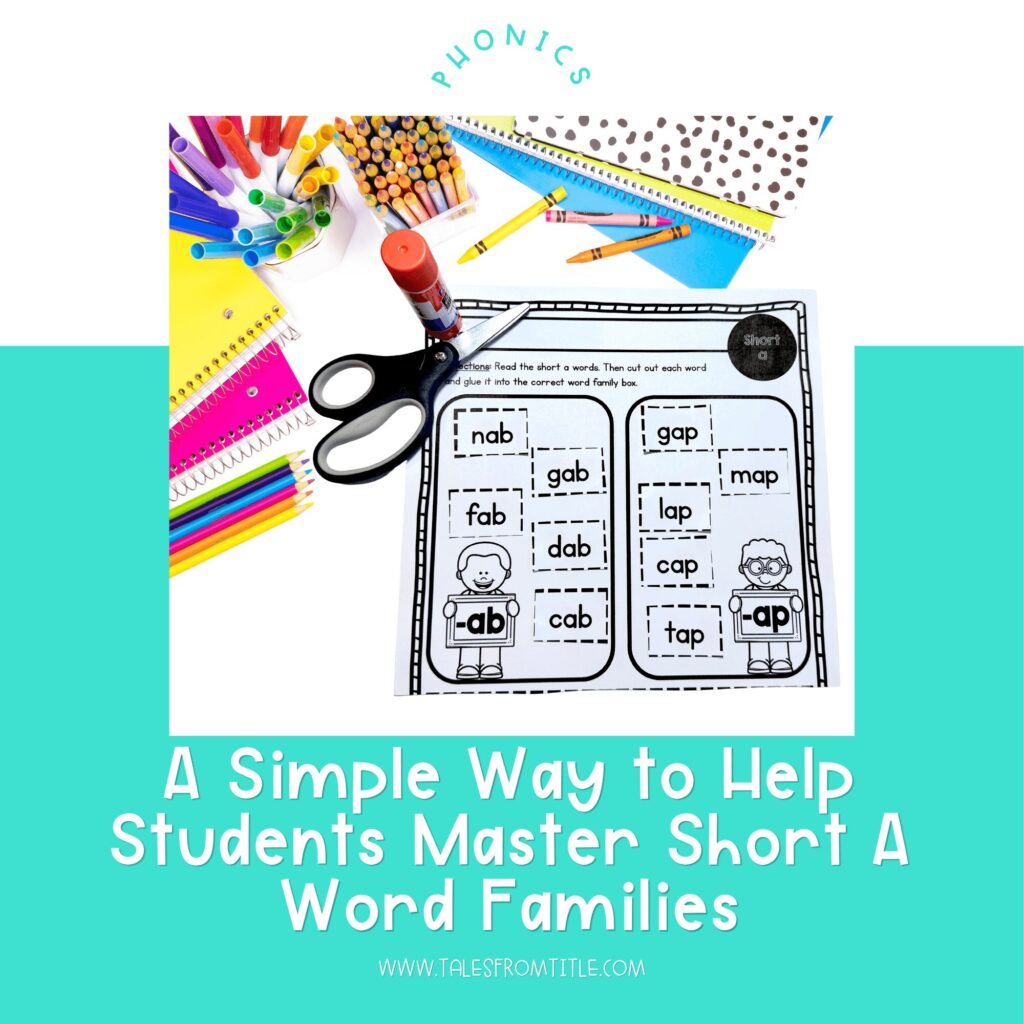
Why Word Family Practice Matters for Beginning Readers
When students recognize patterns like -at, -an, and -ap, they begin to read more efficiently. Instead of decoding every sound individually, they start recognizing chunks of words automatically.
This helps students:
- build decoding fluency
- recognize spelling patterns faster
- strengthen phonics confidence
- transition from sounding out words to reading smoothly
Short A is often one of the first vowels students learn, so giving them multiple opportunities to practice these patterns helps create a strong foundation for future reading success.
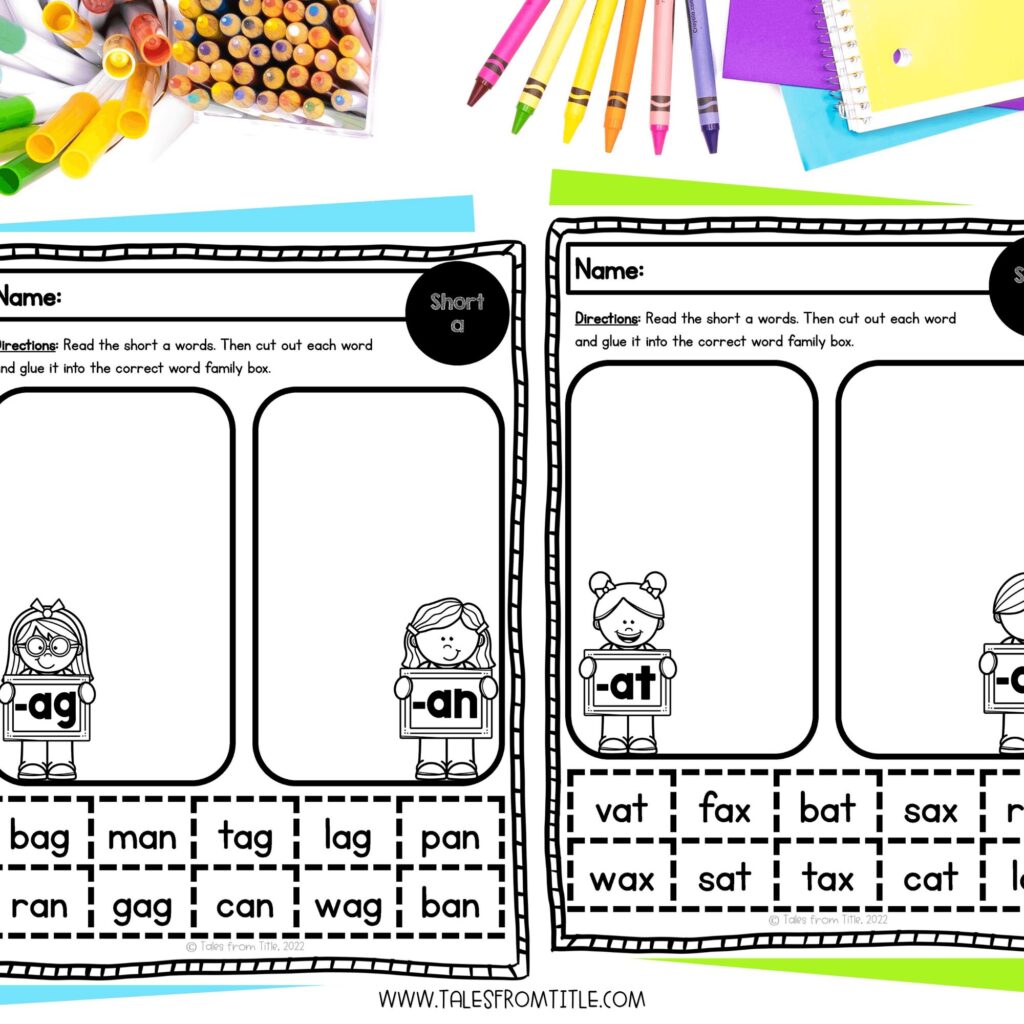
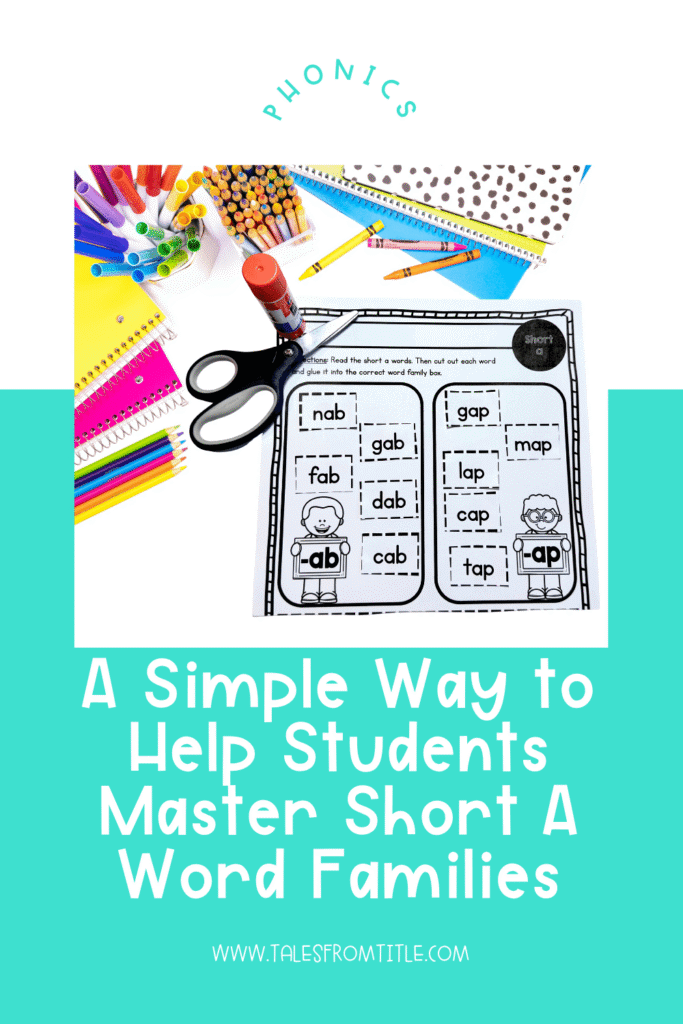
What a Short A Word Family Sort Looks Like in Action
One reason teachers love word family sorts is that they follow a simple routine students can learn quickly.
During a typical activity, students:
- Read each short A CVC word
- Cut out the word cards
- Sort them into matching word family boxes
- Glue the words into place
Because the routine stays consistent, students spend less time figuring out directions and more time focusing on decoding.
This makes word sorts especially helpful for:
- literacy centers
- small group instruction
- phonics intervention
- independent practice
- morning work
- sub tubs
They’re predictable, flexible, and easy to reuse throughout the week.
Supporting Students Who Need Extra Short Vowel Practice
Not every student masters short vowels right away. Many readers benefit from repeated exposure to word patterns across multiple days or weeks.
Word family sorts allow you to:
- introduce one pattern at a time
- revisit patterns later in centers
- reinforce skills during intervention time
- provide extra decoding support without adding prep work
This kind of structured repetition helps students feel successful instead of overwhelmed.
It’s also one reason word sorts work well for struggling first graders who need additional review of kindergarten phonics skills.

Short A Word Families Included in This Resource
To make short vowel instruction easier to plan, this printable resource includes practice with eight common short A word families:
- -ab
- -ad
- -ag
- -am
- -an
- -ap
- -at
- -ax
Together, these patterns give students meaningful exposure to some of the most common short A spelling chunks they’ll encounter as beginning readers.
Each worksheet follows the same student-friendly routine: read, cut, sort, and glue.
An answer key is also included to make checking work quick and simple.

A Flexible Print-and-Go Option for Busy Classrooms
Sometimes the most useful phonics activities are the ones that fit easily into your existing routine.
These short A word family sorts were designed to work in multiple instructional settings without requiring extra preparation. Teachers often use them during centers, intervention blocks, or independent practice time because students can complete them with minimal support.
They also work well when you need something reliable for substitute plans or early finisher activities.

A Simple Way to Strengthen Early Decoding Skills
Helping students recognize short vowel word families is an important step toward becoming confident readers.
When students repeatedly practice identifying patterns like -at, -an, and -ap, they begin to notice those same chunks in new words. Over time, this supports stronger decoding, smoother reading, and greater independence.
If you’re looking for an easy way to give your students consistent short A practice, these word family sorts can be a helpful addition to your phonics routine.