When we think about writing instruction, we usually focus on skills: organization, elaboration, grammar, text structure, and conventions.
But there’s another piece that often gets overlooked, and it can make or break student progress:
How students feel about writing.
You can have a student who understands how to write, but still avoids it.
You can have a student with great ideas who freezes when it’s time to start.
You can have a capable writer who rushes, shuts down, or refuses to revise.
In many cases, the issue isn’t ability.
It’s attitude, confidence, motivation, and mindset.
That’s why understanding your students’ writing attitude is one of the most powerful things you can do not only at the beginning of the year, but throughout it as well.
Let’s talk about what writing attitude really is, why it matters, and how you can use it to plan better instruction.
What Is Writing Attitude?
Writing attitude refers to how students think and feel about writing, including:
- Enjoyment and motivation
- Confidence as a writer
- Willingness to share and revise
- Stamina during writing time
- Comfort with different genres (narrative, informational, opinion, poetry)
Two students can receive the same writing lesson and respond completely differently because of their mindset.
One might think:
“I can try. I’m a writer.”
Another might think:
“I’m bad at this. I don’t know what to say.”
Those beliefs shape effort, risk-taking, and growth far more than we realize.
When we understand students’ attitudes, we can stop guessing and start responding intentionally.

Why Writing Attitude Is So Important
If you only look at final drafts, you miss the story behind them.
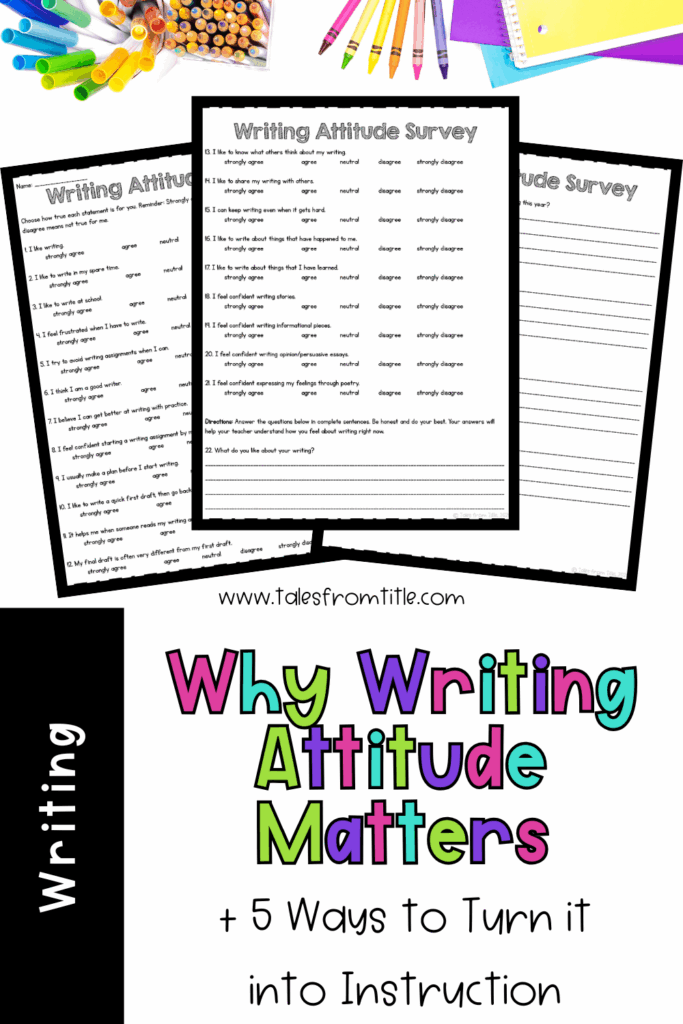
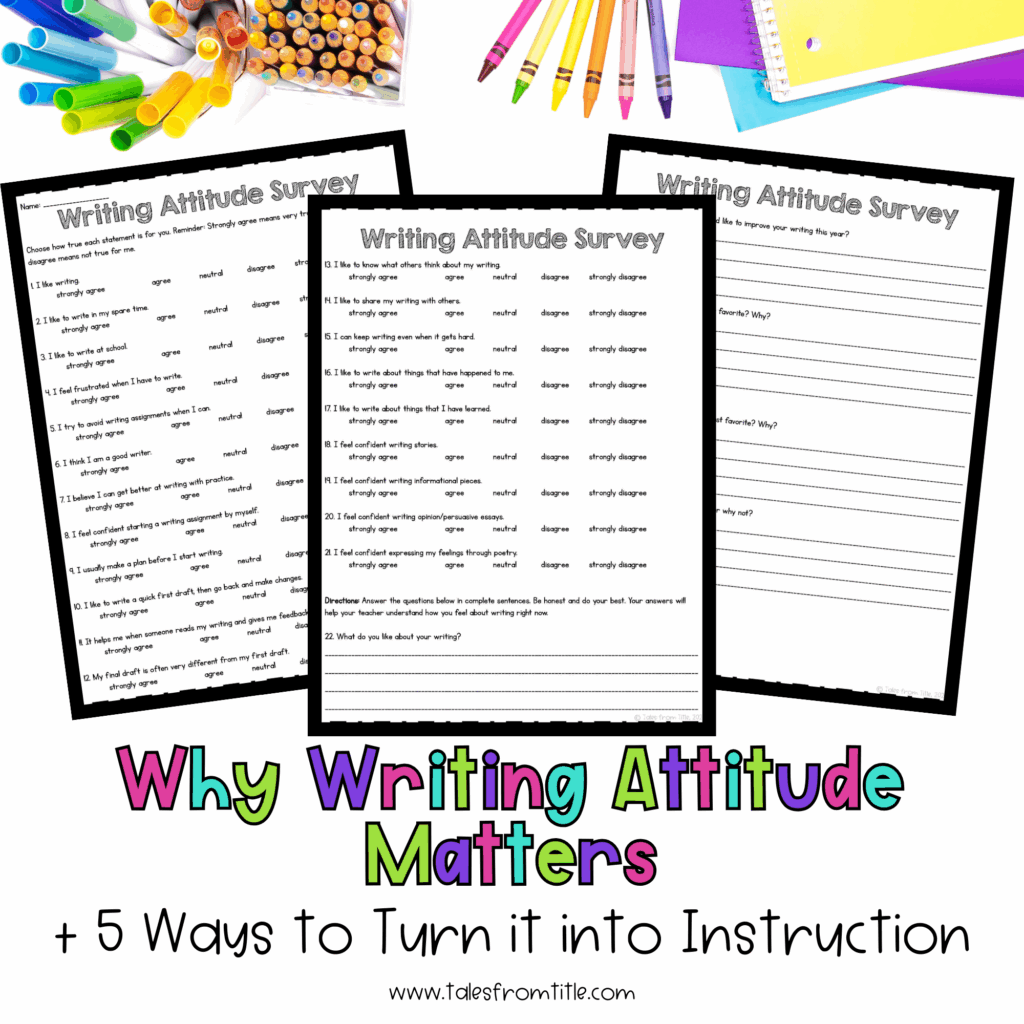
A writing attitude survey helps you uncover things like:
- Who lacks confidence even if their work looks fine
- Who avoids certain genres
- Who struggles with stamina
- Who doesn’t use the writing process
- Who feels anxious about sharing or revising
This kind of data helps you answer questions like:
✔ Why does this student rush?
✔ Why does this student shut down?
✔ Why does this student avoid opinion writing?
✔ Why does this student resist feedback?
Once you understand the why, instruction becomes much more effective.
Instead of saying, “They need more practice,” you can say:
“They need confidence, structure, and safe opportunities to try.”
How a Writing Attitude Survey Helps Teachers
A writing attitude survey gives students a voice before you ever start a unit.
It allows you to:
- Build relationships
- Learn student preferences
- Identify emotional barriers
- Track growth over time
- Plan smarter small groups
Rather than assuming what students need, you hear it directly from them.
When students reflect on writing, they also become more aware of their own strengths and areas for growth which leads to stronger ownership.

Turning Writing Attitude into Instruction
Collecting data is only helpful if you know what to do with it next.
Here are a few ways teachers can use writing attitude results:
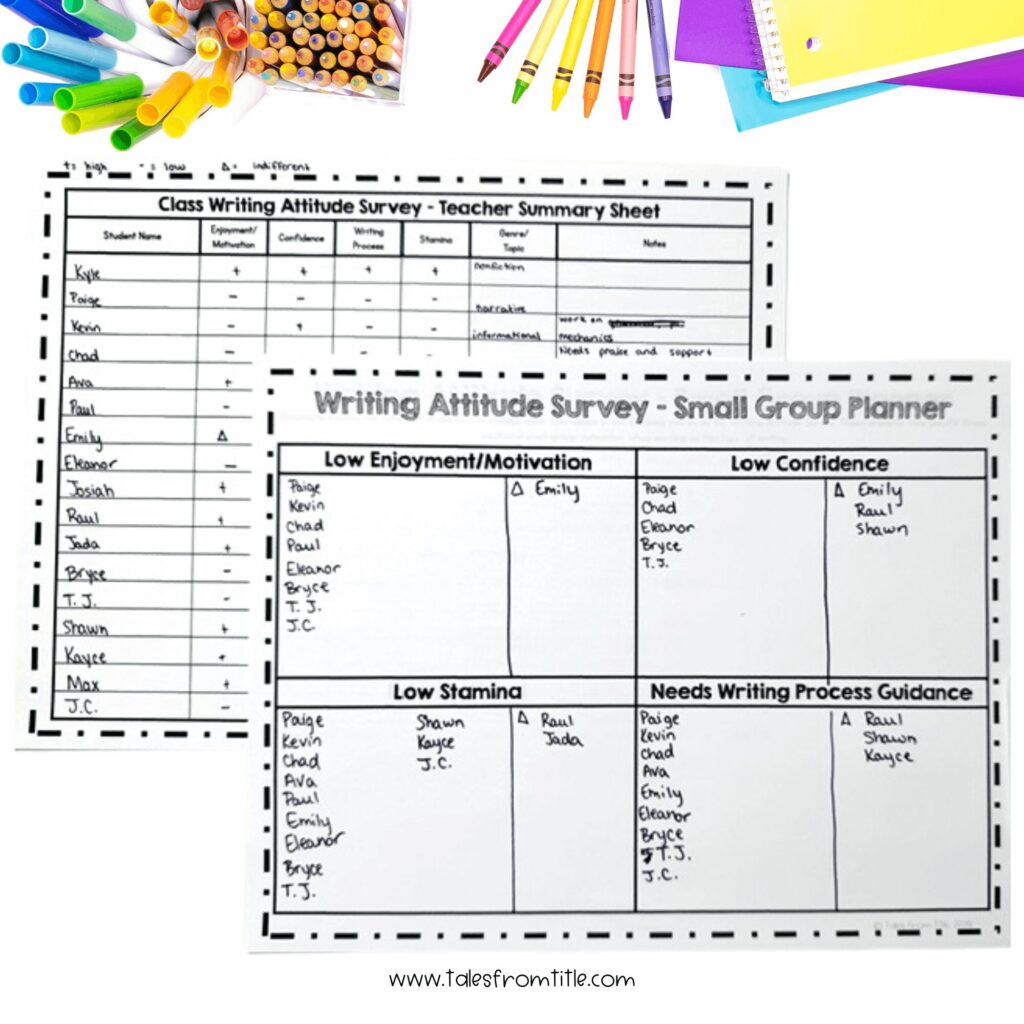
1. Plan Targeted Small Groups
If students score low in confidence with opinion writing, you know exactly where to start.
Instead of whole-class reteaching, you can:
- Model opinion structures in small groups
- Provide sentence frames
- Practice low risk drafting
- Build success before independence
2. Support Motivation and Engagement
If students report low enjoyment, you can adjust instruction by adding:
- Choice in topics
- Short, low-pressure writing
- Collaborative brainstorming
- Quick writes instead of long assignments
Sometimes students don’t hate writing, they hate feeling stuck.
3. Strengthen Writing Process Habits
If students struggle with planning, revising, or sharing, you can:
- Teach explicit routines
- Use checklists
- Model think-alouds
- Normalize messy drafts
Confidence grows when students know what to do next.
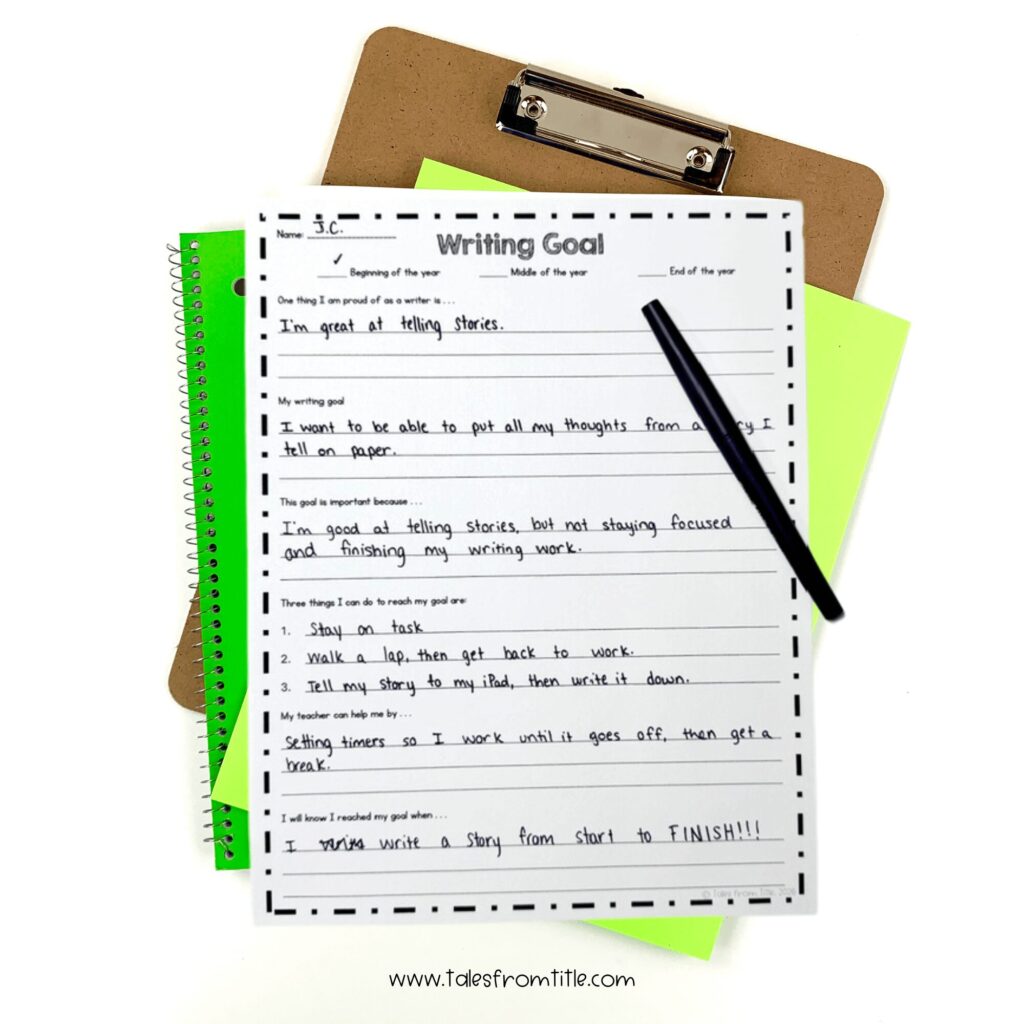
4. Set Student Writing Goals
When students see their own survey results, they can set goals like:
- “I will plan before I write.”
- “I will share my writing with a partner.”
- “I will add more details to my drafts.”
Goal setting turns attitude into action.
5. Track Growth Across the Year
Writing attitude isn’t fixed.
By collecting data at the beginning, middle, and end of the year, you can see:
- Who is gaining confidence
- Who still needs support
- Which strategies worked
- How student mindset changes
That’s powerful for instruction and student outcomes.
Introducing the Writing Attitude & Motivation Toolkit
Because so many teachers were already using my free Writing Attitude Survey, I created a complete system to help turn those results into instruction.
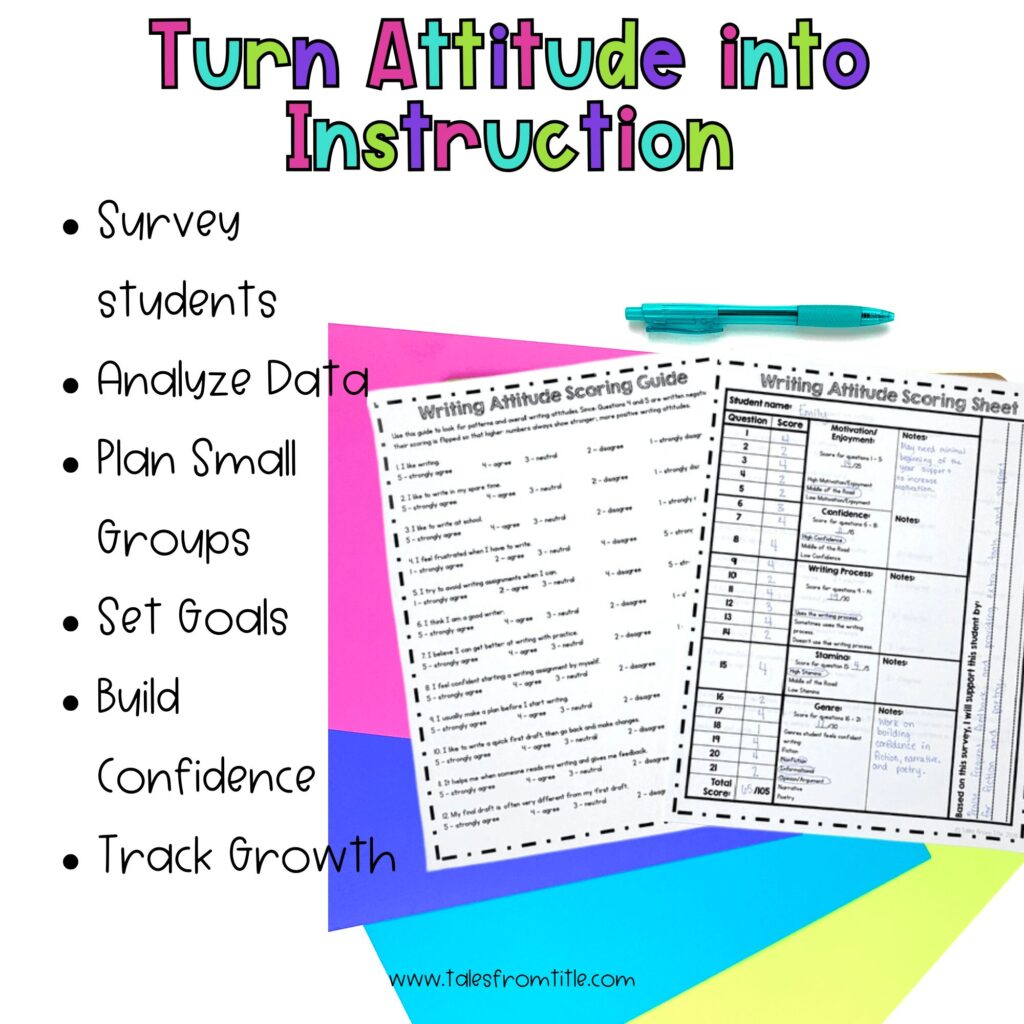
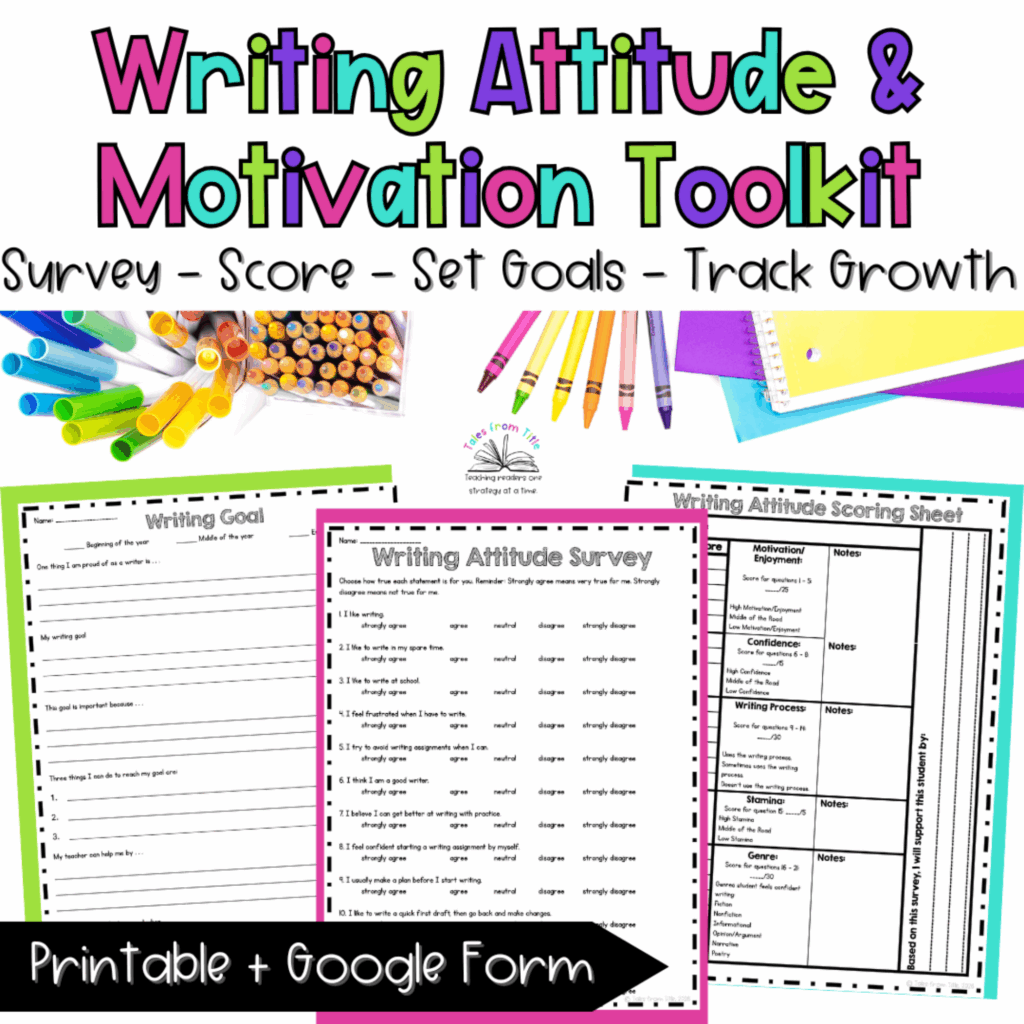
The Writing Attitude & Motivation Toolkit includes:
- Beginning, Middle, and End of Year Surveys (print + Google Forms)
- Teacher Guide
- Scoring Guide
- Individual Student Scoring Sheets
- Class Summary Sheets
- Small Group Planning Pages
- Student Writing Goal Setting Page
- If–Then Intervention Ideas
- Parent Conference Summary Forms
Instead of just collecting opinions, this toolkit helps you:
✔ Score the data
✔ Find patterns
✔ Plan instruction
✔ Set goals
✔ Support growth
✔ Share progress with parents
It becomes part of your writing routine, not just a one-day activity.
Try the Free Writing Attitude Survey First
If you’d like to see how students respond before committing, you can start with the free Beginning-of-the-Year Writing Attitude Survey.
It includes:
- Printable student survey
- Digital Google Forms version
You can use it to:
- Get to know your writers
- Build relationships
- Identify needs early
- Preview how the system works
Ready to Turn Student Voice Into Better Writing Instruction?
Writing growth doesn’t start with a rubric.
It starts with understanding how students feel about writing.
When you know their mindset, you can teach with clarity, intention, and confidence.
If you’re ready to move beyond final drafts and start supporting the whole writer, the Writing Attitude & Motivation Toolkit was built for you.