Strong letter formation skills are essential for developing fluent, confident writers. In a previous post, I shared five strategies for building students’ letter sound knowledge. Today, let’s focus on another foundational skill: letter writing. These five easy-to-implement tips will help you teach letter formation in meaningful, effective ways.

1. Use Multisensory Letter Formation Activities
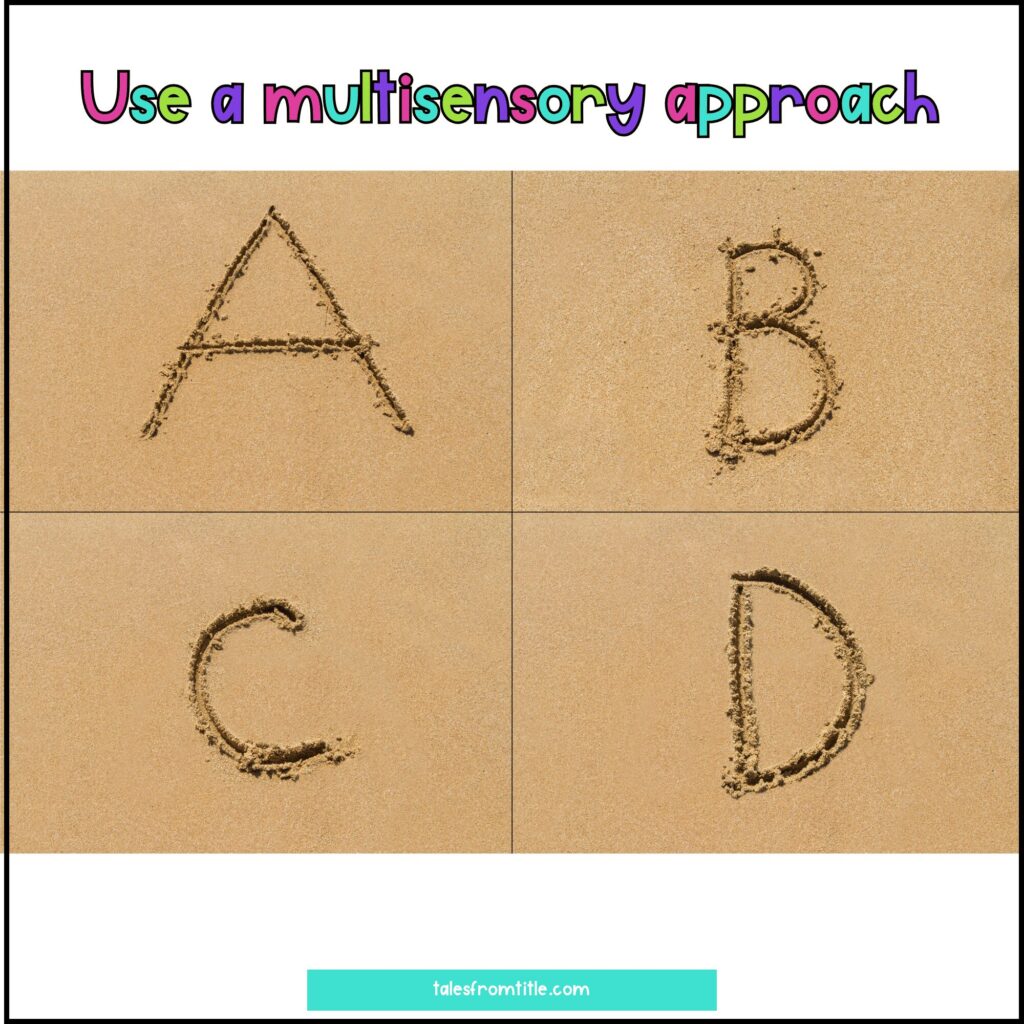
When students engage more than one sense during handwriting instruction, they form deeper connections with the shapes and movements of each letter. Multisensory learning makes letter writing feel fun and interactive.
Try these ideas:
- Have students trace letters in salt, sand, rice, or shaving cream
- Use textured letter cards or write letters on carpet squares
- Play alphabet songs or chants while students air write or finger trace
- Use sidewalk chalk or water and paintbrushes for outdoor practice
Teacher tip: Let students choose their favorite writing medium (within reason) during centers or independent practice to increase motivation.
2. Provide Daily Handwriting Practice
Frequent practice helps students build muscle memory and confidence. Set aside time each day for focused handwriting instruction that gives students a chance to slow down and form each letter with intention.
Here’s how you can make it work:
- Add a quick letter formation warm-up at the beginning of your reading block
- Use laminated handwriting strips or dry-erase boards during centers
- Start your morning with 5 minutes of handwriting review
- Send home simple practice pages for extra reinforcement
Keep in mind: It’s better to practice a few letters well than rush through the whole alphabet.

3. Teach Letter Formation in Manageable Steps
Breaking down letter formation into smaller strokes helps students feel less overwhelmed. Focus on one movement at a time and build from simple to more complex letters.
Start with:
- Straight-line letters: L, F, T, E, H
- Curved letters: C, O, Q, G
- Mixed letters: B, R, S, K, Z
Important tip:
Check your district’s phonics or handwriting program for a suggested order and verbal cues. Following that order ensures consistency across grade levels and helps students make connections between letter sounds and shapes. Once you’ve followed district expectations, feel free to add supplemental strategies for students who need extra support.

4. Support Proper Pencil Grip Early
Pencil grip matters more than most people realize. A poor grip can cause fatigue and interfere with fluid handwriting. Teaching proper grip from the start prevents bad habits that are hard to fix later.
Tips for teaching pencil grip:
- Model the tripod grip daily and let students mirror you
- Use short pencils or crayons to naturally encourage correct finger placement
- Try pencil grips or weighted pencils for students who need extra support
- Offer hand-strengthening activities like using tweezers, play dough, or hole punches
If you have access to an occupational therapist (OT):
Ask for input on students who struggle with fine motor skills. Many OTs are happy to provide classroom support or recommend tools that help with handwriting.

5. Celebrate Letter Writing Progress with Positive Reinforcement
Recognizing even small improvements builds student confidence and encourages persistence. Kids are more likely to stick with something when they feel successful.
Try these encouragement ideas:
- Use a sticker chart or “letter writing star” of the day
- Offer special pencils or pens for students who demonstrate progress
- Write a quick note home celebrating improvement
- Display student work to highlight growth over time
Keep it authentic:
Praise effort as much as accuracy, especially in the beginning stages.

Learning how to teach letter formation doesn’t require fancy programs or expensive tools. With a few simple strategies, like multisensory activities, consistent practice, step-by-step instruction, grip support, and positive reinforcement, you can help students build a strong handwriting foundation. Keep your instruction playful and focused, and you’ll see your students grow into more confident, capable writers.
Pin it for later