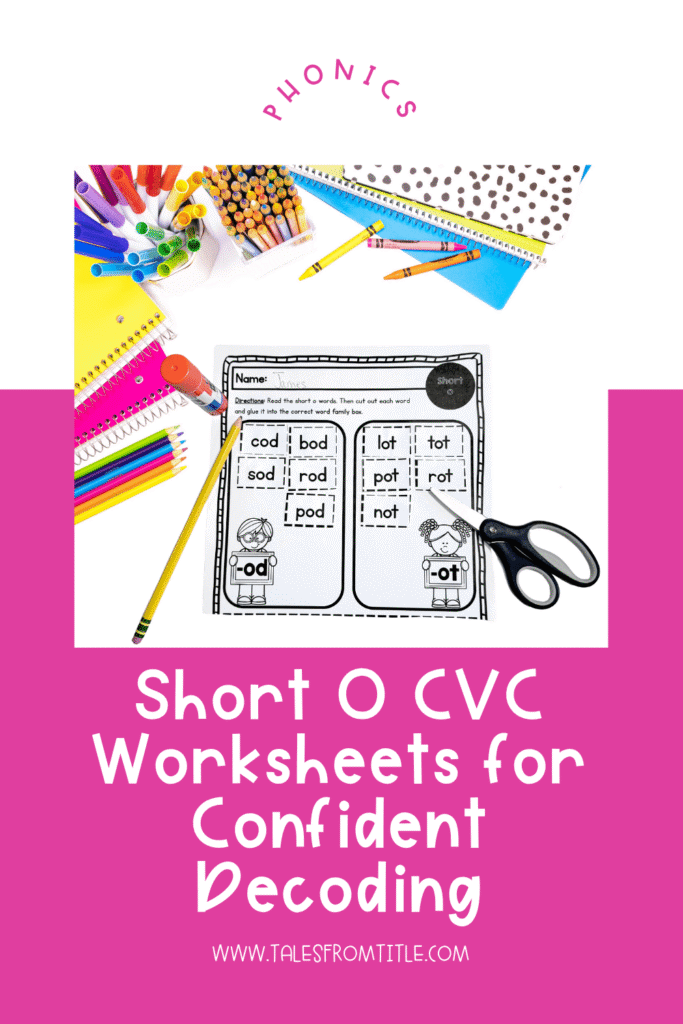
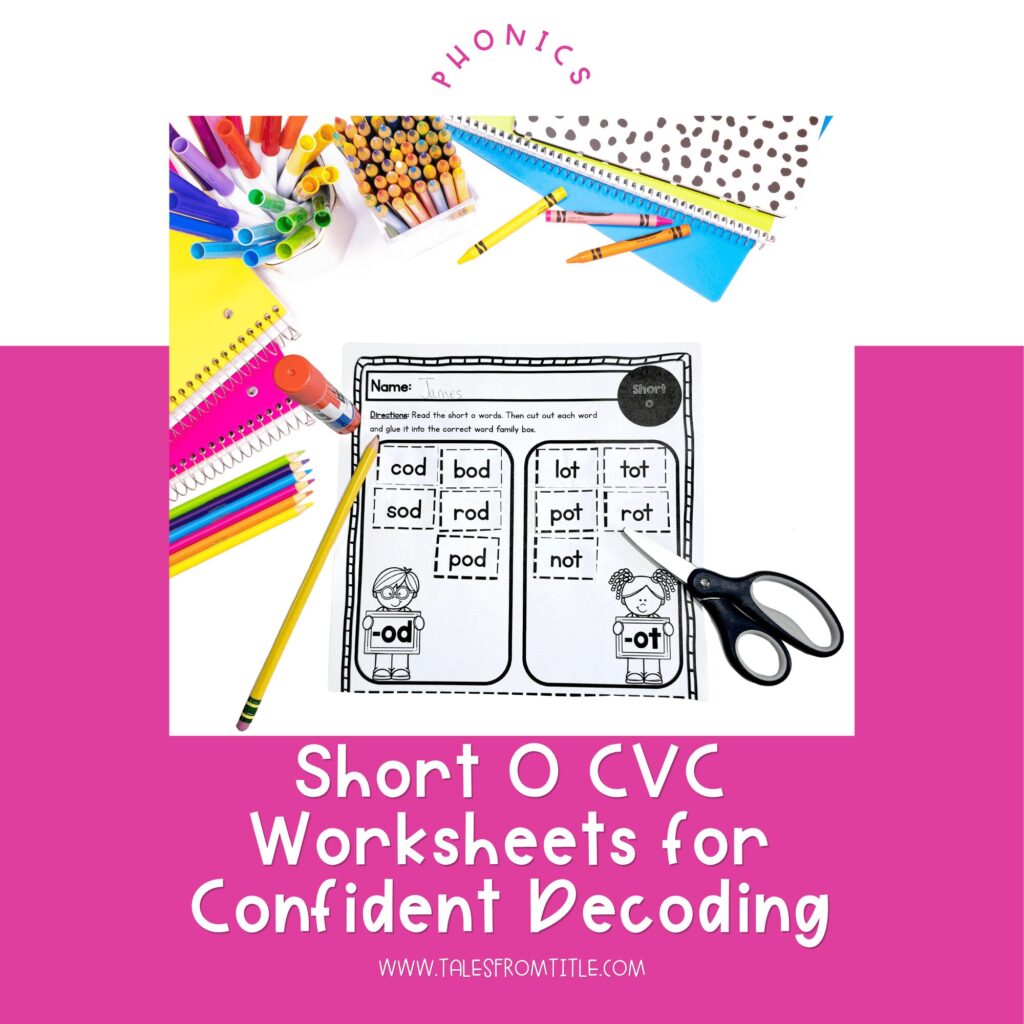
Help struggling readers master short O word families with simple, no-prep phonics practice.
Learning to decode CVC words can feel overwhelming for many beginning readers, especially when students struggle to hear and identify the medial vowel sound. If you’ve noticed students mixing up short vowels or guessing at words instead of decoding them, you’re not alone.
The good news? Focused practice with targeted word families can make a huge difference.
In this post, we’ll explore why practicing short O CVC words is so important, what the Science of Reading says about decoding instruction, and how these Short O CVC Word Family Worksheets can help students build confidence and fluency with foundational phonics skills.
Why CVC Word Reading Matters
CVC words (consonant-vowel-consonant words) are some of the first words students learn to decode. Words like dog, hop, and fox help beginning readers practice blending sounds together while reinforcing letter-sound correspondence.
Research consistently shows that decoding skills are critical for reading development. According to the Simple View of Reading, strong reading comprehension depends heavily on accurate word recognition and decoding skills (Springer Nature, What Does Research Say About the Science of Reading?).
Researchers have also found that students benefit from explicit instruction that helps them connect graphemes (letters) to phonemes (sounds) to build automatic word recognition (Ehri, Learning to Read Words: Theory, Findings, and Issues).
In other words, students need repeated opportunities to:
- Hear sounds in words
- Blend sounds together
- Practice reading decodable words
- Recognize spelling patterns
That’s exactly why targeted CVC practice matters.
Why Focus on One Medial Vowel Sound at a Time?
When students are first learning to decode, too many vowel patterns at once can create confusion.
Focusing on a single medial vowel sound, like short O, helps students:
- Hear the vowel sound more clearly
- Compare similar word patterns
- Build confidence with decoding
- Strengthen phonemic awareness
Research on decoding instruction shows that students develop stronger word recognition skills when they receive systematic phonics instruction with decodable patterns (Cheatham & Allor, The Influence of Decodability in Early Reading Text on Reading Achievement).
This is especially important for students who struggle with vowel discrimination. Short vowels are often one of the trickiest skills for early readers because the sounds can feel very similar.
By narrowing the focus to short O word families, students can practice decoding in a way that feels manageable and predictable.
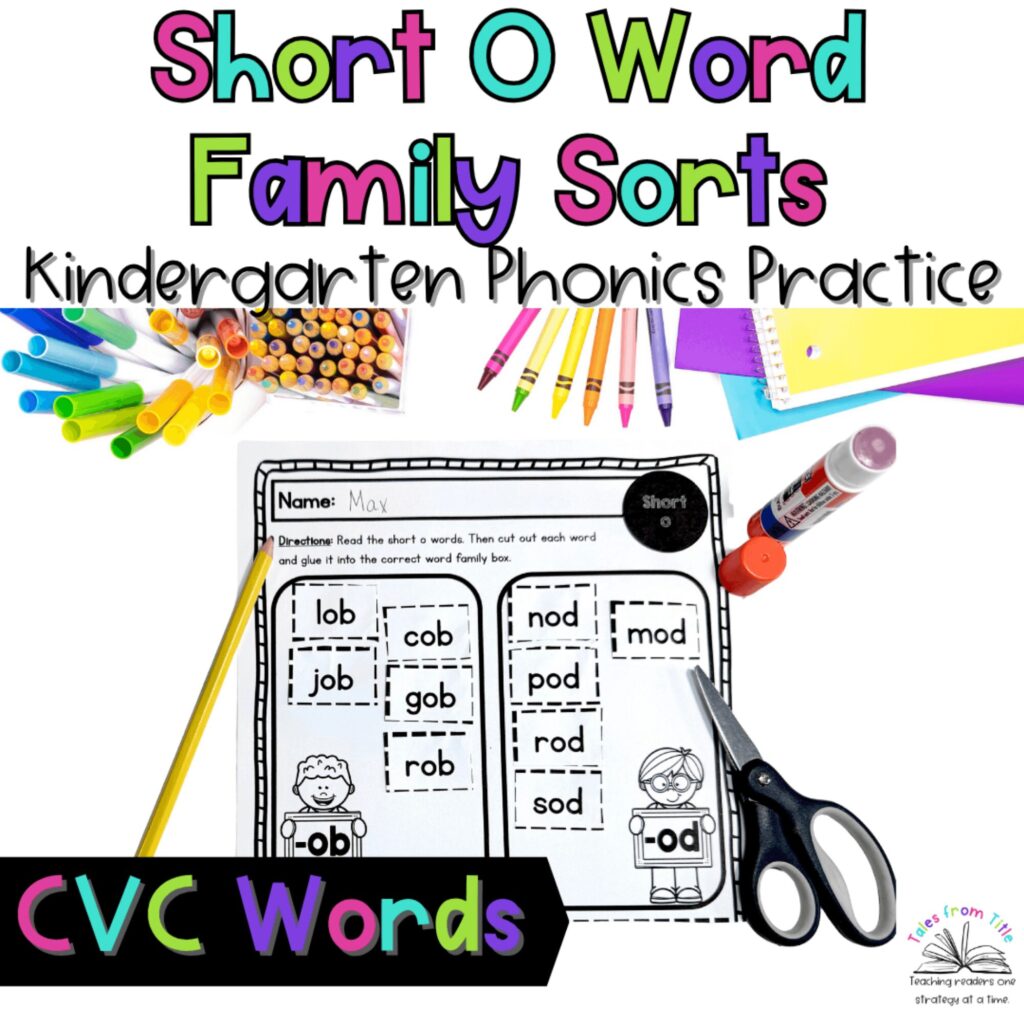
Short O CVC Word Family Worksheets
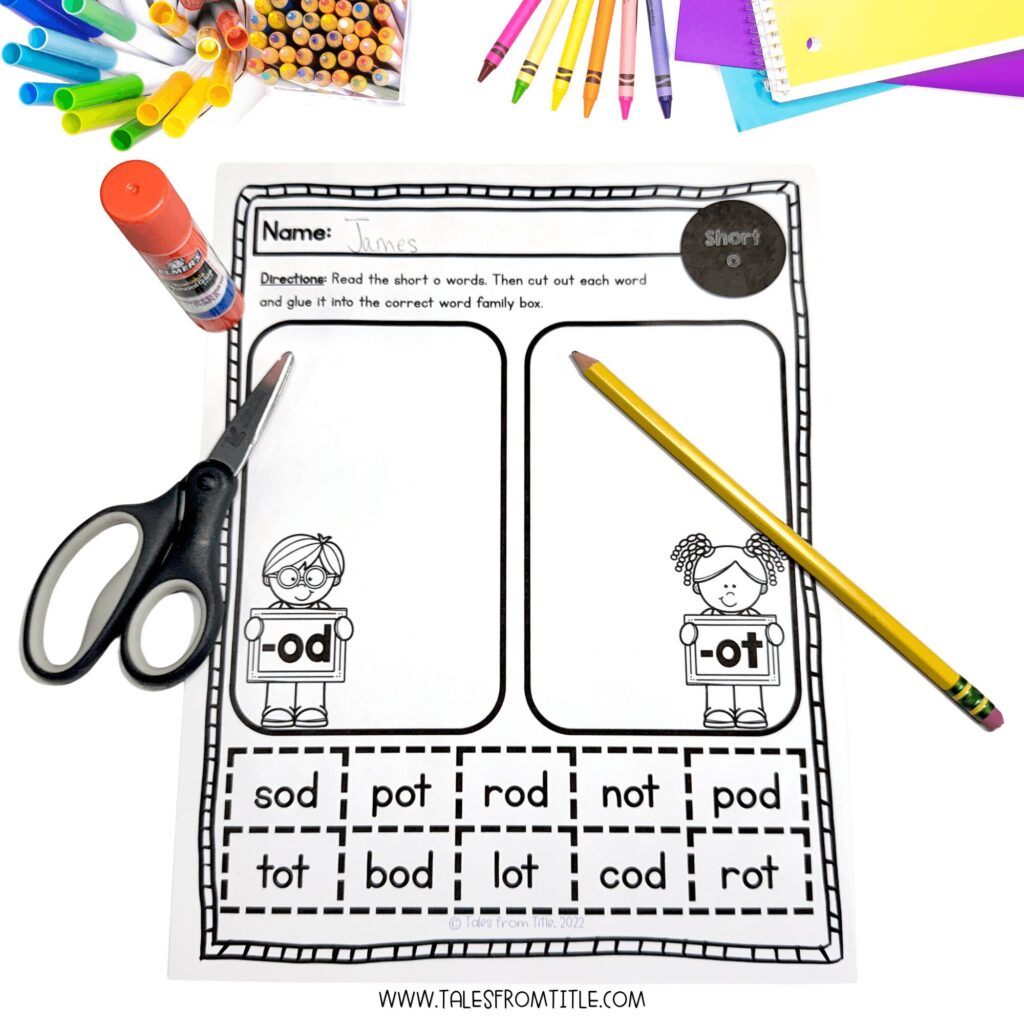
If you’re looking for a simple way to reinforce short O decoding skills, my Short O CVC Word Family Worksheets were designed specifically for that purpose.
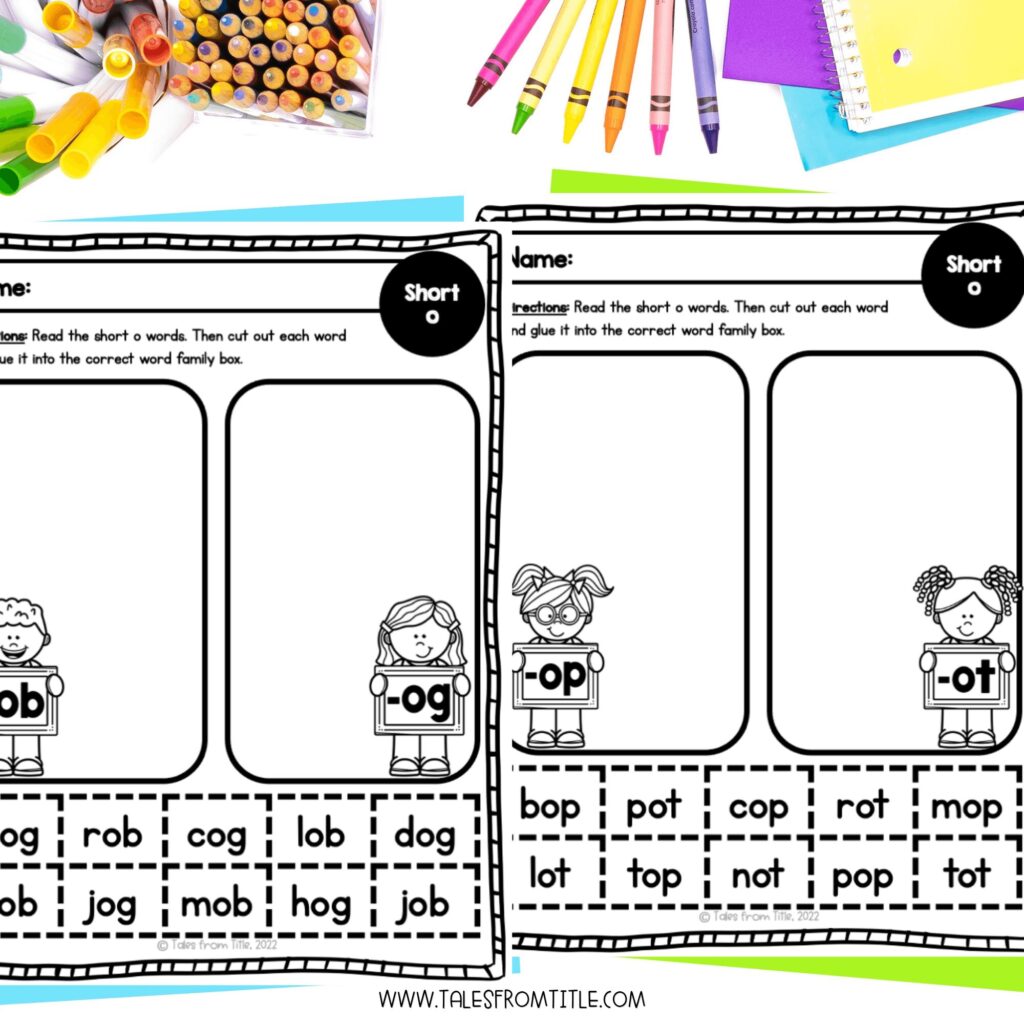
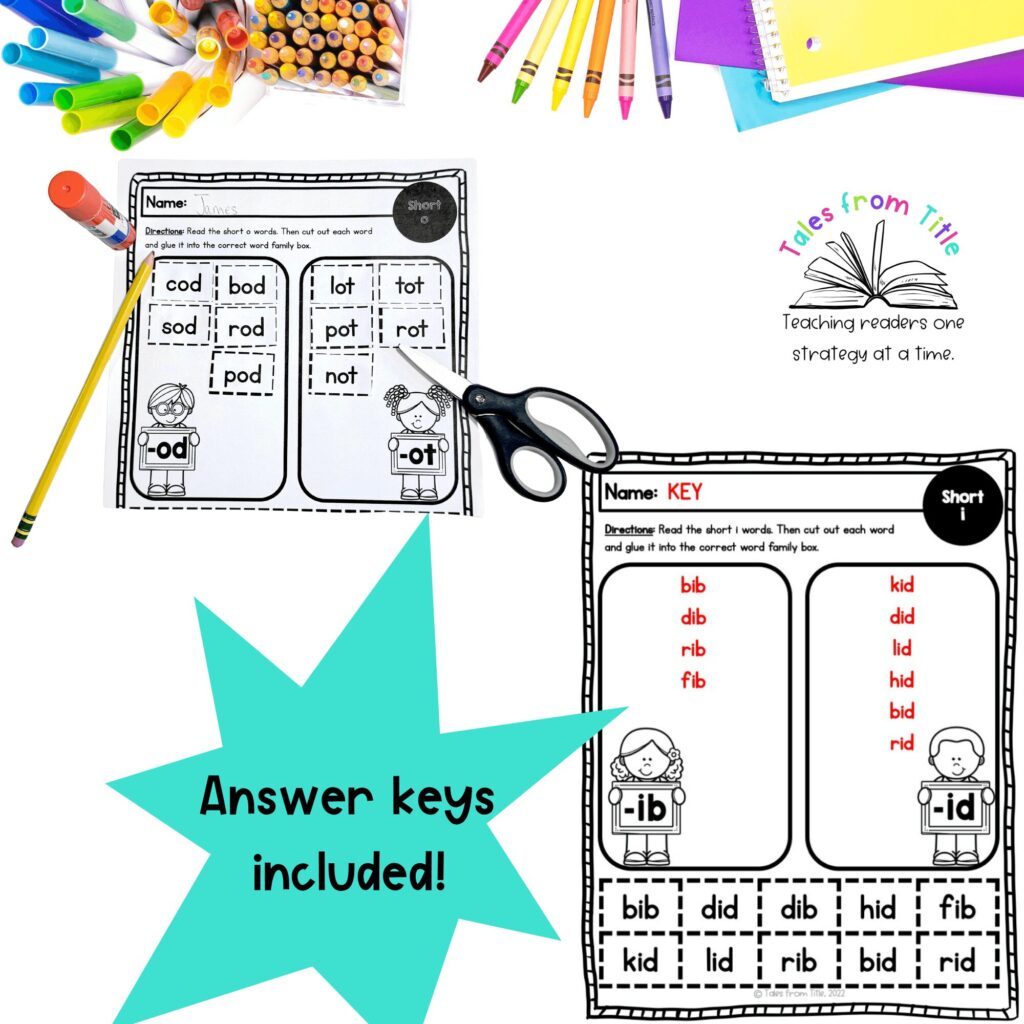
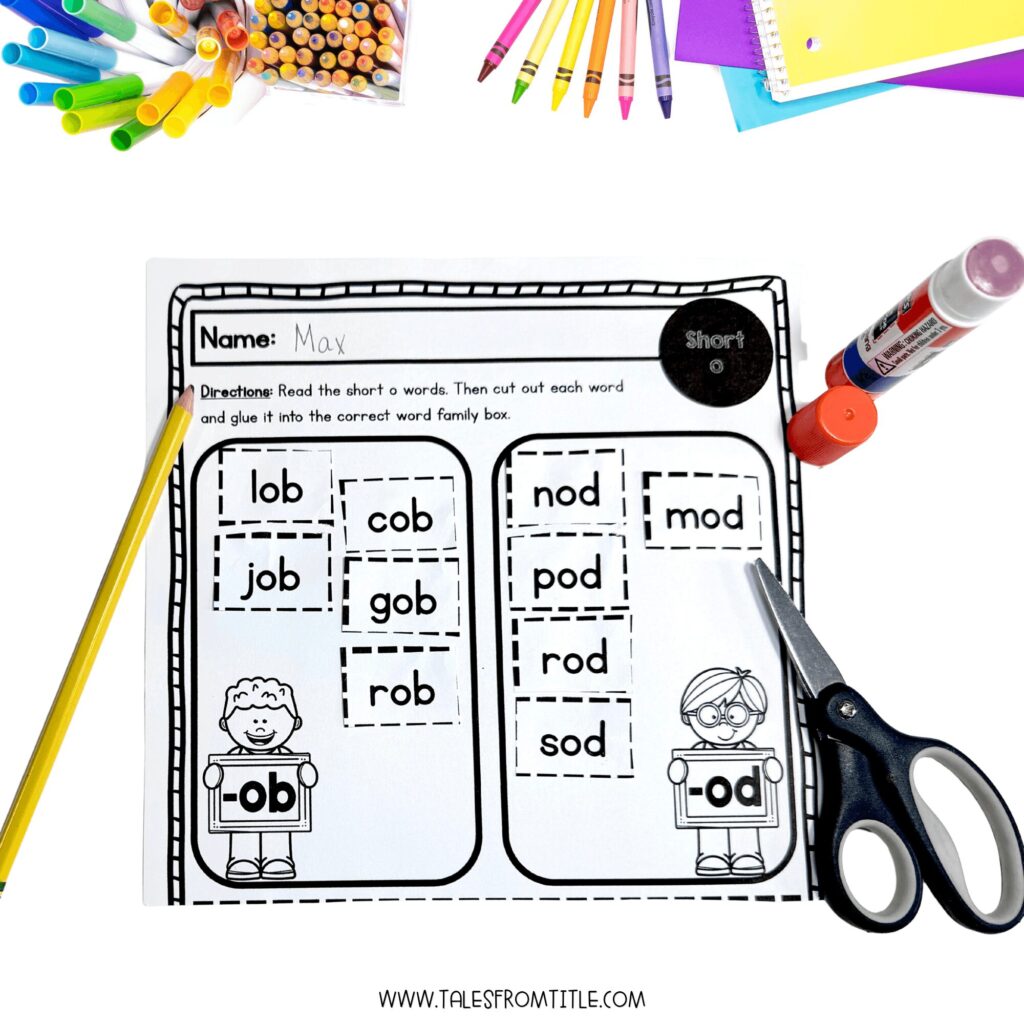
These worksheets provide targeted practice with:
- Blending sounds
- Decoding CVC words
- Recognizing word family patterns
- Building fluency with short O words
Because the worksheets are black and white and require no prep, they work well for busy classrooms, intervention settings, and homeschool instruction.
Word Families Included
This resource includes 15 worksheets covering the following short O word families:
- -ob
- -od
- -og
- -op
- -ot
- -ox
Each worksheet gives students opportunities to focus on one predictable phonics pattern at a time, helping build decoding confidence through repetition and consistency.
Answer keys are also included for quick and easy checking.
Ways to Use These Worksheets
One of the best things about targeted phonics worksheets is their flexibility.
You can use these Short O CVC worksheets can be used for:
- Literacy centers
- Small group instruction
- Reading intervention
- Independent practice
- Morning work
- Homework
- Sub plans
Because the activities are focused and predictable, most students can complete a worksheet in approximately 15 minutes or less.
This makes them especially useful for:
- Quick phonics rotations
- RTI support
- Extra decoding practice
- Homeschool phonics lessons
Reading Rockets explains that systematic and explicit phonics instruction helps students build the foundational skills necessary for fluent reading (The Science of Learning to Read Words).
Frequently Asked Questions
Who are these worksheets designed for?
These worksheets are ideal for:
- Kindergarten teachers
- First grade teachers
- Homeschool parents
- Reading interventionists
- RTI groups
They are especially helpful for students who need additional support decoding words with the short O medial vowel sound.
How long do the worksheets take?
Most students can reasonably complete a worksheet in 15 minutes or less, making them perfect for centers, morning work, or quick intervention practice.
How can these worksheets be used?
These worksheets work well for:
- Literacy centers
- Small groups
- Independent work
- Morning work
- Homework
- Intervention lessons
Because they are no prep, they are easy to print and use immediately.
Want a Free Sample?
If you’d like to try this style of phonics practice with your students, be sure to grab the FREE Short E Word Family Sorts by signing up below.
Ready to Help Your Students Build Decoding Confidence?
Consistent, focused phonics practice can make a huge difference for struggling readers. By narrowing the focus to one medial vowel sound at a time, students gain the repetition and support they need to become more confident decoders.
These Short O CVC Word Family Worksheets were designed to give students structured practice without creating extra prep work for teachers.
Whether you’re teaching in a classroom, homeschooling, or providing intervention support, these worksheets provide an easy way to strengthen foundational phonics skills and help students become more successful readers.