Strong readers aren’t built in a day, they’re built through consistent, intentional practice.
One of the biggest misconceptions about preschool literacy is that children need a new activity every day to stay engaged. In reality, young learners thrive when they practice important skills through familiar routines that gradually become more challenging.
That’s exactly what the Week 8 Early Pre-K Phonological Awareness Lessons are designed to do.
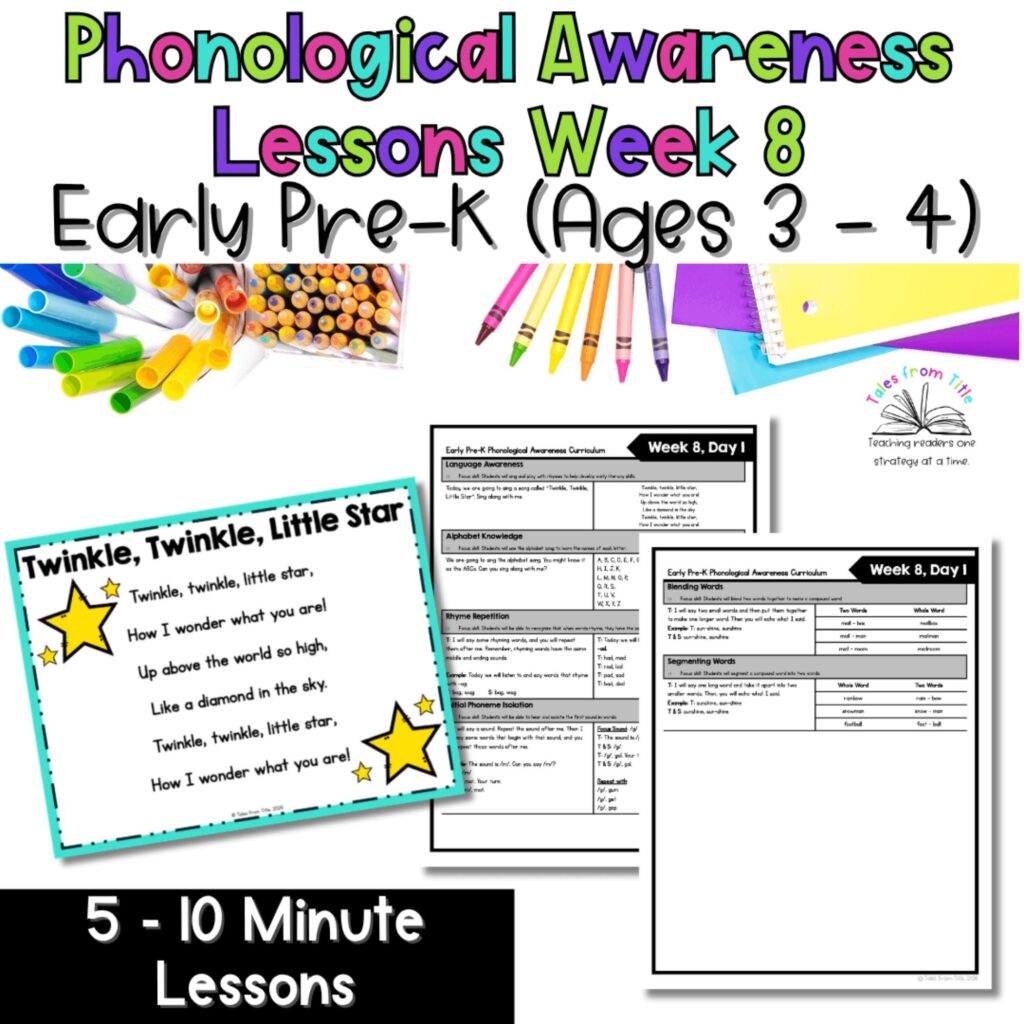
If you’re looking for preschool phonological awareness activities that are engaging, developmentally appropriate, and simple to teach, this resource provides three scripted lessons that help children ages 3–4 strengthen rhyming, beginning sound identification, compound word blending, and compound word segmentation in just 5–10 minutes each day.
Week 8 also completes the second month of the curriculum, giving preschoolers another week to practice and strengthen the foundational skills they’ll need before formal reading instruction begins.

Why Do Preschoolers Need Repetition?
The Science of Reading tells us that children learn new literacy skills best through explicit instruction paired with repeated opportunities to practice. Learning happens when children encounter the same types of activities over time, allowing their brains to recognize patterns and build stronger neural connections.
For preschoolers, that doesn’t mean repeating the exact same lesson every day. Instead, it means introducing new words and examples within familiar routines.
That’s why this curriculum follows a predictable instructional structure each week while continually introducing:
- New word families
- New beginning sounds
- New compound words
- New opportunities to blend and segment spoken words
The routine stays the same, but the learning continues to grow.

What Are Students Learning in Week 8?
Week 8 reinforces everything students have practiced throughout the second month while giving them additional experience with the newest skill introduced in week 7: compound word segmentation.
By this point in the curriculum, children have already spent several weeks learning to blend two words together to make one compound word.
Now they’re also learning to reverse that process by breaking familiar compound words apart.
For example:
- Firetruck → fire + truck
- Handshake → hand + shake
- Watermelon → water + melon
These oral language activities help children understand that spoken words can be made up of smaller meaningful parts, a foundational concept that supports later phonological awareness and phonics instruction.

What's Included in the Week 8 Resource?
Everything is ready to teach, making it easy to provide meaningful literacy instruction without spending hours planning.
The Week 8 resource includes:
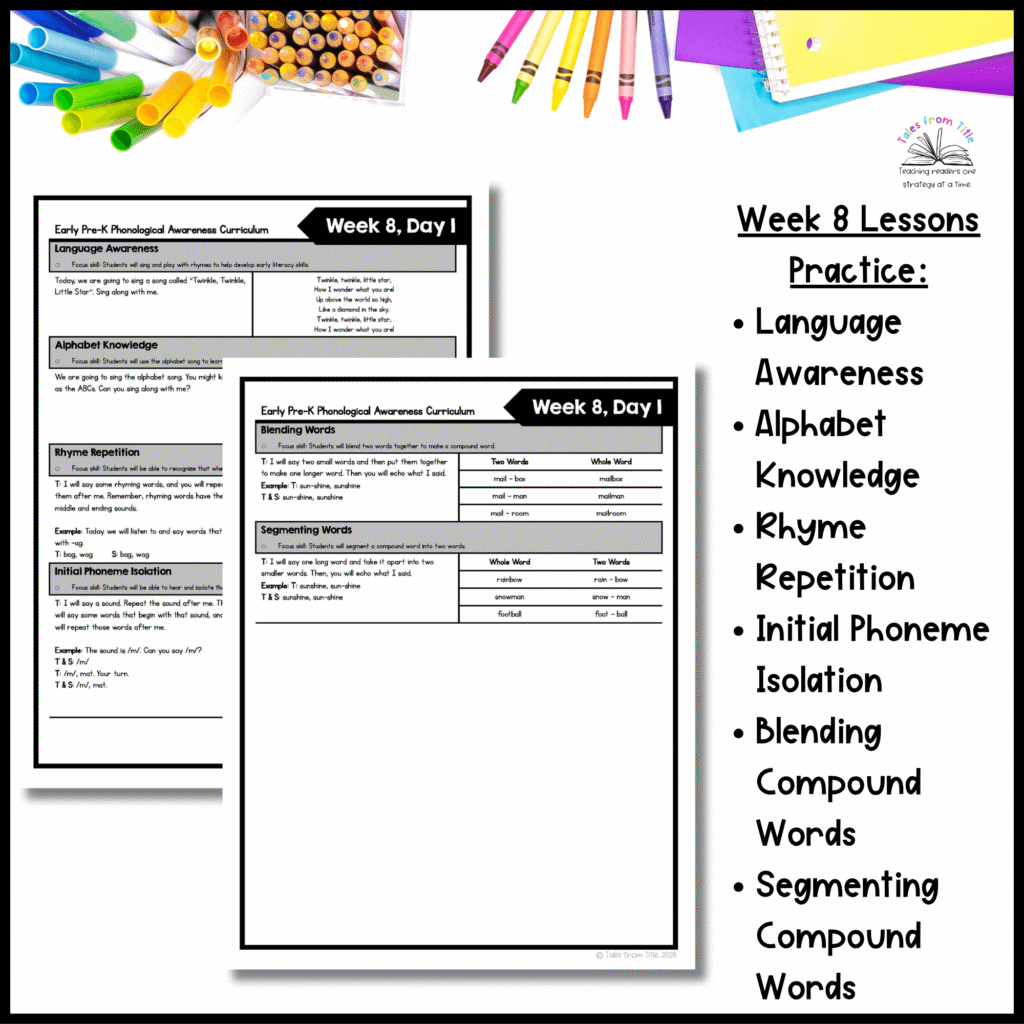
- Three scripted phonological awareness lessons
- Optional instructional slideshow (PowerPoint, Google Slides, and PDF formats included)
- Weekly rhyming song visual
- Low-prep lesson routines designed for busy preschool schedules
The short lessons fit naturally into:
- Preschool circle time
- Small-group instruction
- Homeschool preschool
- Literacy centers and warm-ups
- Early intervention
- Kindergarten readiness routines
Skills Practiced During Week 8
Children continue strengthening the essential phonological awareness skills introduced throughout the curriculum.
Students practice:
- Language awareness
- Alphabet knowledge
- Rhyming and rhyme repetition
- Beginning sound identification
- Blending compound words
- Segmenting compound words
Because these skills are practiced through playful oral language activities, children remain actively engaged while building important pre-reading foundations.
Ready to Continue Your Preschool Literacy Routine?
The Week 8 Early Pre-K Phonological Awareness Lessons are available in both my Teachers Pay Teachers and Etsy shops.
They’re an excellent choice for:
- Preschool teachers
- Homeschool families
- Reading interventionists
- Childcare providers
- Anyone looking for structured preschool literacy lessons that require very little preparation
New Here? Start with My FREE Week 1 Lessons
If you’re new to the curriculum, be sure to download the FREE Week 1 Early Pre-K Phonological Awareness Lessons.
The free resource introduces the same lesson format used throughout the curriculum, allowing you to experience the predictable instructional routine before purchasing additional weeks.
It’s the perfect way to see how your preschoolers respond to systematic phonological awareness instruction.
Save More with the Complete Month 2 Bundle
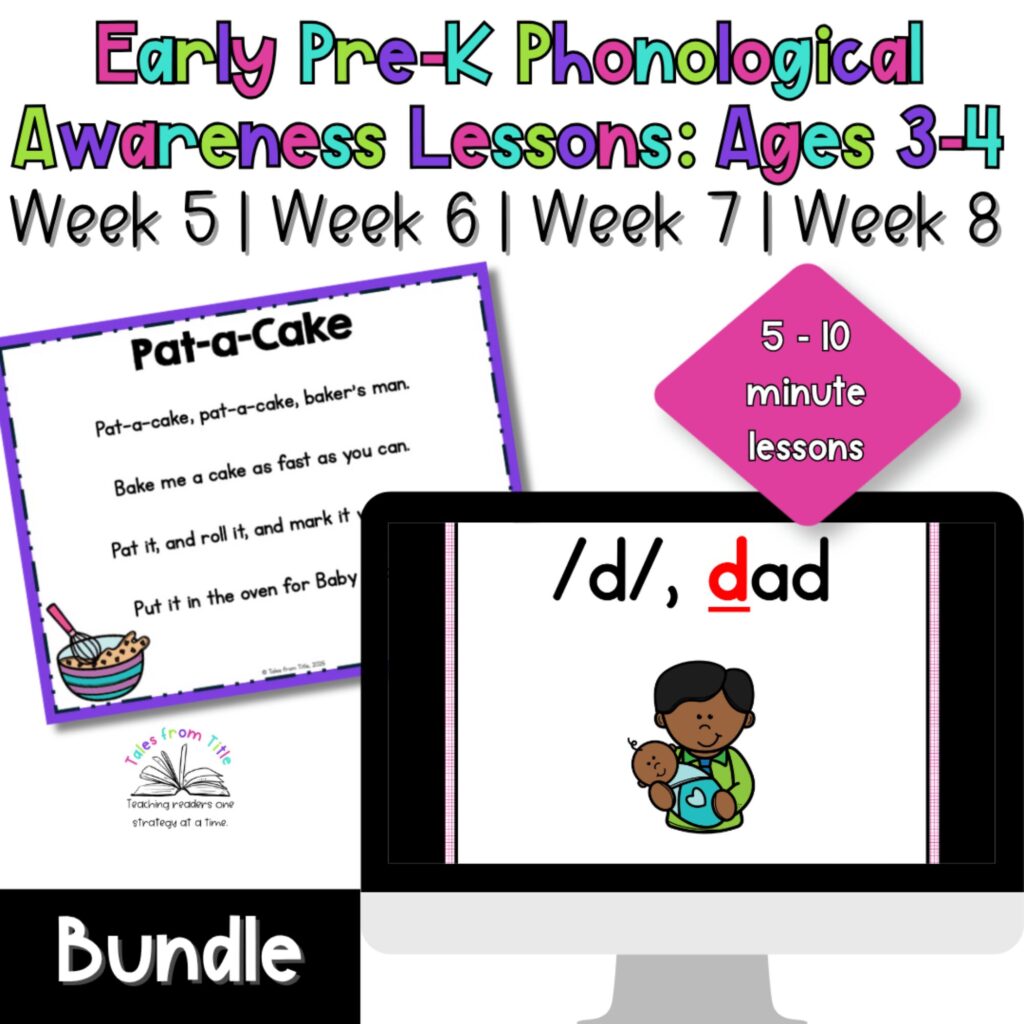
Week 8 completes the second month of the curriculum, making it the perfect time to purchase the Early Pre-K Phonological Awareness Month 2 Bundle (Weeks 5–8).
Instead of purchasing individual weeks, you’ll receive:
- Four weeks of scripted preschool literacy lessons
- Consistent instructional routines
- New rhyming word families and beginning sounds each week
- Compound word blending and segmentation activities
- Optional instructional slideshows
- A complete month of low-prep phonological awareness instruction
The bundle saves both planning time and money while providing a systematic approach to developing early literacy skills.
Explore More Preschool Phonological Awareness Resources
Continue building your preschool literacy routine with these additional resources:
- Early Pre-K Phonological Awareness Week 1
- Early Pre-K Phonological Awareness Week 2
- Early Pre-K Phonological Awareness Week 3
- Early Pre-K Phonological Awareness Week 4
- Early Pre-K Phonological Awareness Month 1 (Weeks 1-4) Bundle
- Early Pre-K Phonological Awareness Week 5
- Early Pre-K Phonological Awareness Week 6
- Early Pre-K Phonological Awareness Week 7
- Early Pre-K Phonological Awareness Month 2 Bundle (Weeks 5–8)
Every opportunity children have to listen, rhyme, blend, and segment spoken words strengthens the foundation they’ll use when they begin learning phonics and reading. With consistent, engaging routines and just a few minutes of intentional instruction each day, you’re helping preschoolers build skills that will support them throughout their literacy journey.