Helping preschoolers become confident readers starts long before they begin sounding out words. One of the most important skills children develop before phonics instruction is phonological awareness, the ability to hear, recognize, and manipulate the sounds in spoken language.
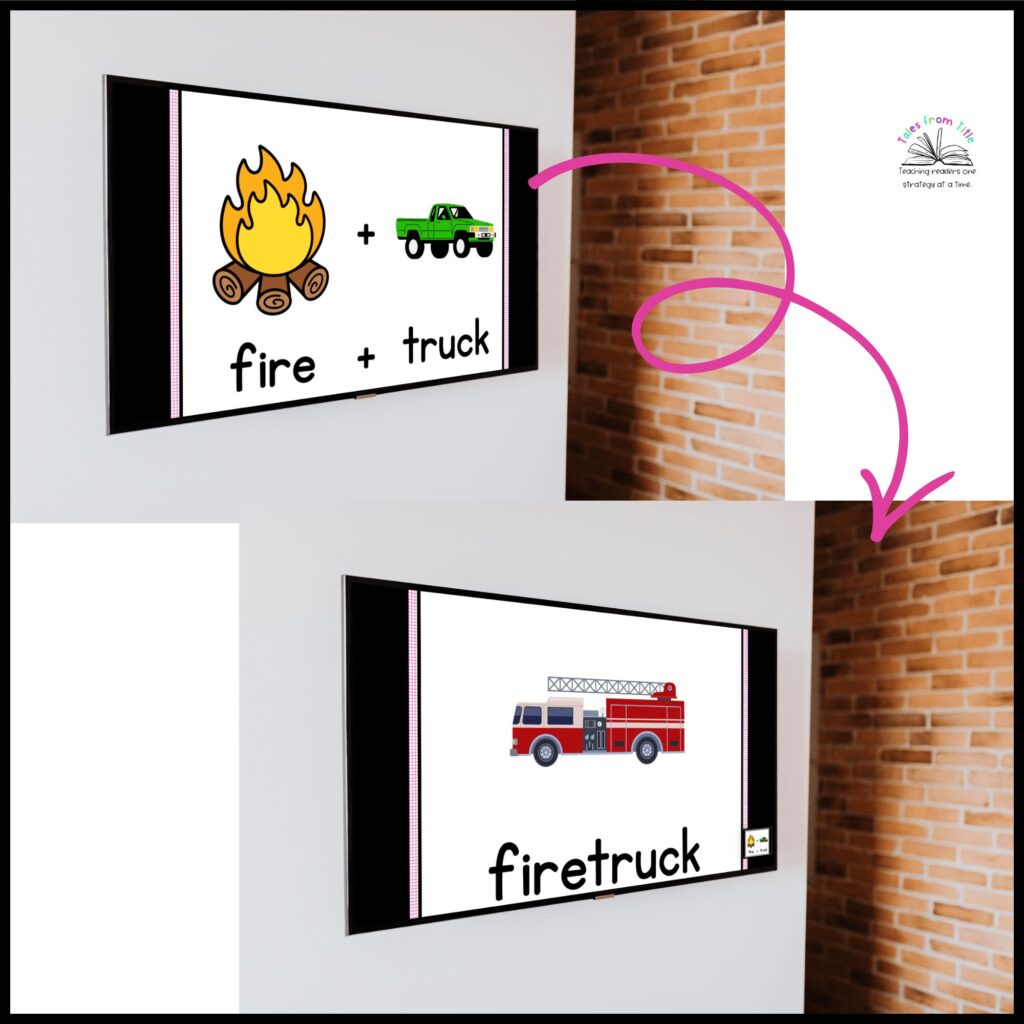
If you’re looking for preschool phonological awareness activities that are engaging, developmentally appropriate, and easy to implement, these Week 6 Early Pre-K Phonological Awareness Lessons provide everything you need. Designed specifically for children ages 3–4, each lesson takes just 5–10 minutes and helps young learners build essential pre-reading skills through songs, rhyming, listening activities, beginning sound practice, and compound word blending.
Week 6 also marks an important milestone in the curriculum, as it is the final week dedicated to listening skills before students move on to more advanced phonological awareness activities in the following weeks.
Why Is Phonological Awareness Important?
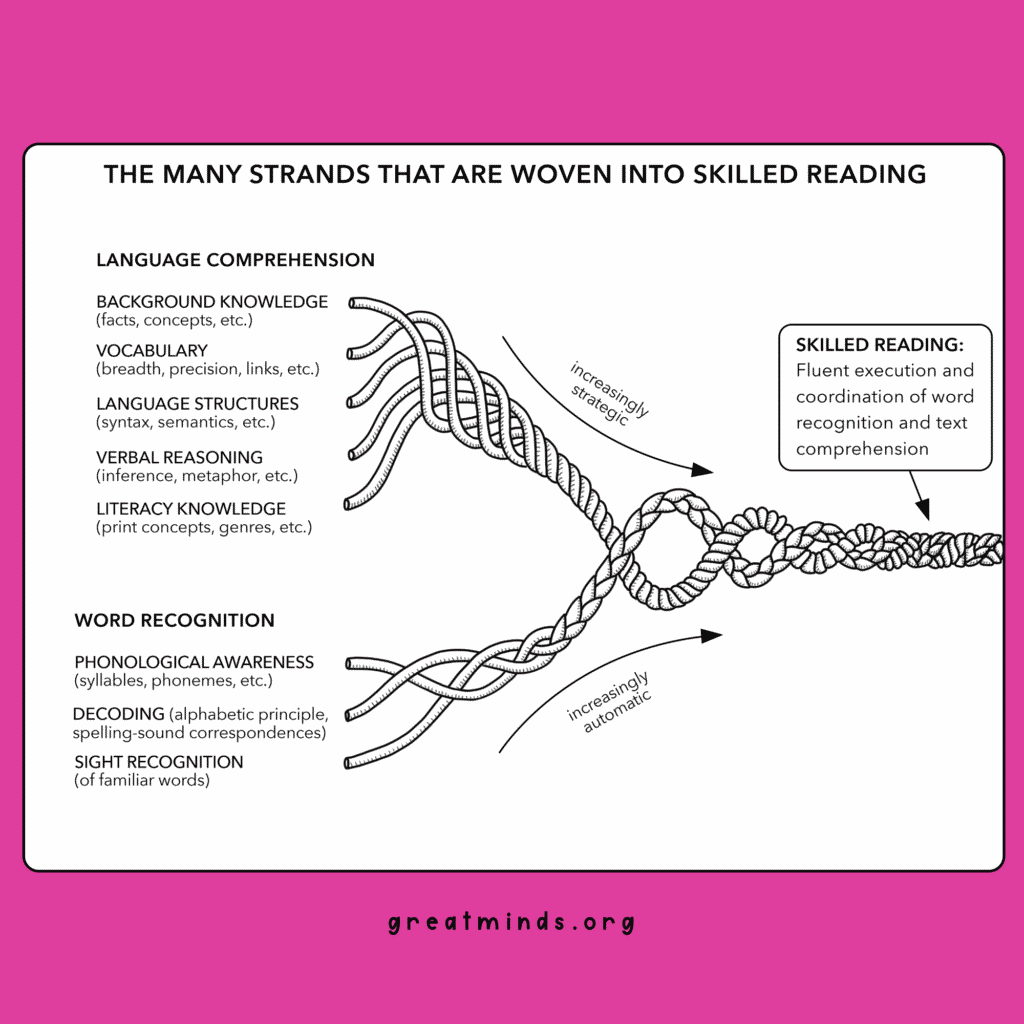
The Science of Reading has consistently shown that strong phonological awareness is one of the best predictors of future reading success. Before children can connect letters to sounds, they must first learn to hear and recognize the sound structures within spoken language.
Research has found that explicit phonological awareness instruction helps children develop the skills needed for later decoding, spelling, and fluent reading. Young learners who regularly practice listening to words, recognizing rhymes, identifying beginning sounds, and blending spoken words are better prepared to transition into formal phonics instruction.
The good news? These skills are best taught through short, playful, oral language activities, exactly the type of instruction preschoolers enjoy.
What Makes the Week 6 Lessons Different?
Consistency is one of the biggest advantages of this curriculum.
Rather than introducing an entirely new routine every week, Week 6 continues the same predictable lesson structure your students have already learned. Because children know what to expect, they can devote their attention to practicing new word families and strengthening their phonological awareness skills instead of learning new procedures.
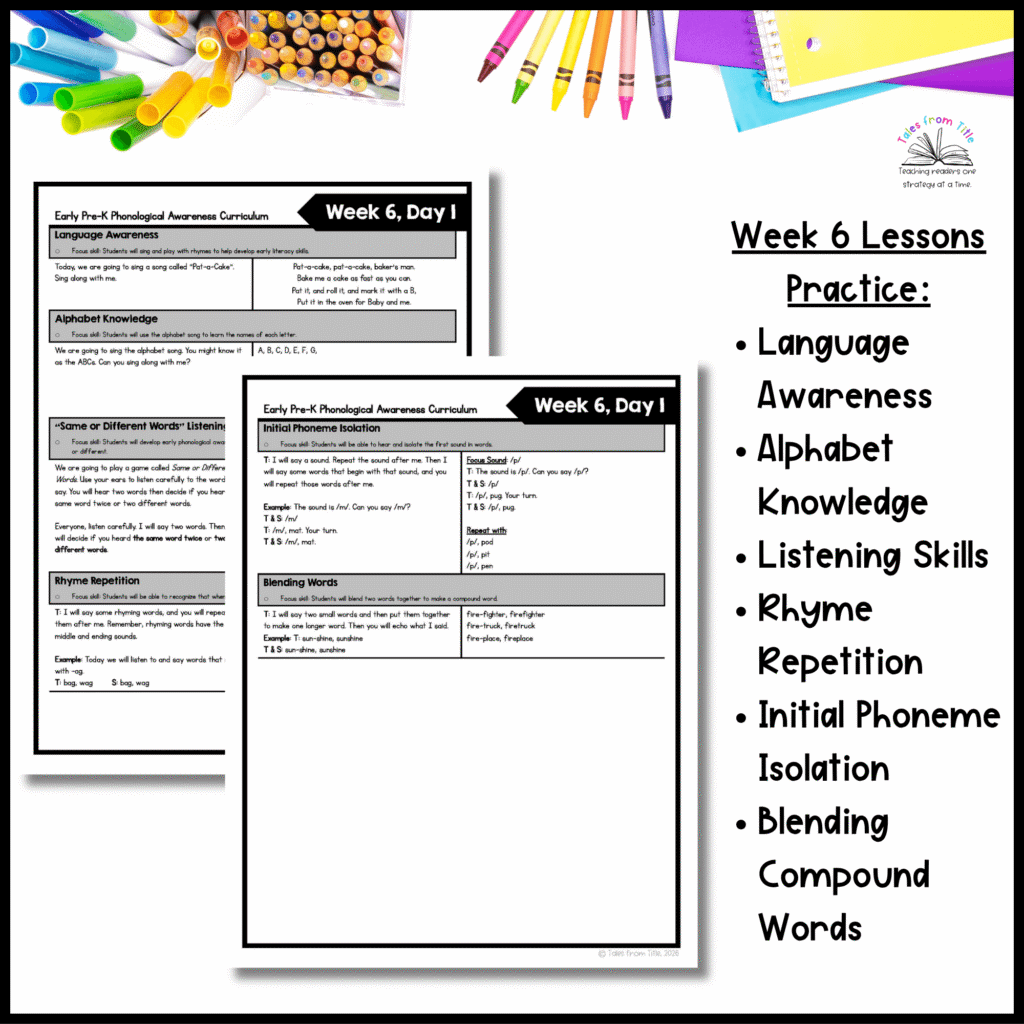
Each lesson includes:
- Three scripted phonological awareness lessons
- Optional instructional slideshow (PowerPoint, Google Slides, and PDF formats included)
- Weekly rhyming song visual
- Low-prep activities that fit into busy preschool schedules
Whether you’re teaching in a preschool classroom, leading a small intervention group, or homeschooling your child, these lessons are ready to use with minimal preparation.
Skills Practiced During Week 6
Throughout Week 6, students continue strengthening the foundational skills that support future reading success:
- Listening carefully to spoken words and sounds
- Repeating rhyming word families
- Identifying beginning sounds
- Blending two words to form compound words
- Building alphabet knowledge through the ABC song routine
This is also the last week of listening skills activities before the curriculum begins introducing compound word segmentation in Week 7. By providing multiple weeks of listening practice first, children build the auditory foundation they need before being asked to break spoken words apart into smaller meaningful parts.
That gradual progression reflects how young children naturally develop phonological awareness skills over time.
Designed Specifically for Ages 3–4
Many preschool literacy resources expect children to complete worksheets or perform tasks that are developmentally inappropriate for their age.
These lessons were intentionally created for Early Pre-K learners by focusing on oral language, movement, repetition, and active participation.
Each activity is:
- Short enough for preschool attention spans
- Easy to implement during circle time
- Appropriate for whole-group or small-group instruction
- Designed to strengthen language through play
The optional instructional slideshow also provides visual support that helps keep young learners engaged throughout each lesson.
Try Week 6 Preschool Phonological Awareness Lessons
If you’re ready to make preschool literacy instruction easier, the Week 6 Early Pre-K Phonological Awareness Lessons are available in both my Teachers Pay Teachers and Etsy shops.
They’re perfect for teachers, homeschool families, interventionists, and childcare providers looking for:
- No-prep preschool literacy lessons
- Daily phonological awareness activities
- Structured circle time routines
- Developmentally appropriate instruction
- Engaging lessons that take only 5–10 minutes

New to the Curriculum? Start with My FREE Week 1 Lessons
Not sure if the routine is right for your students?
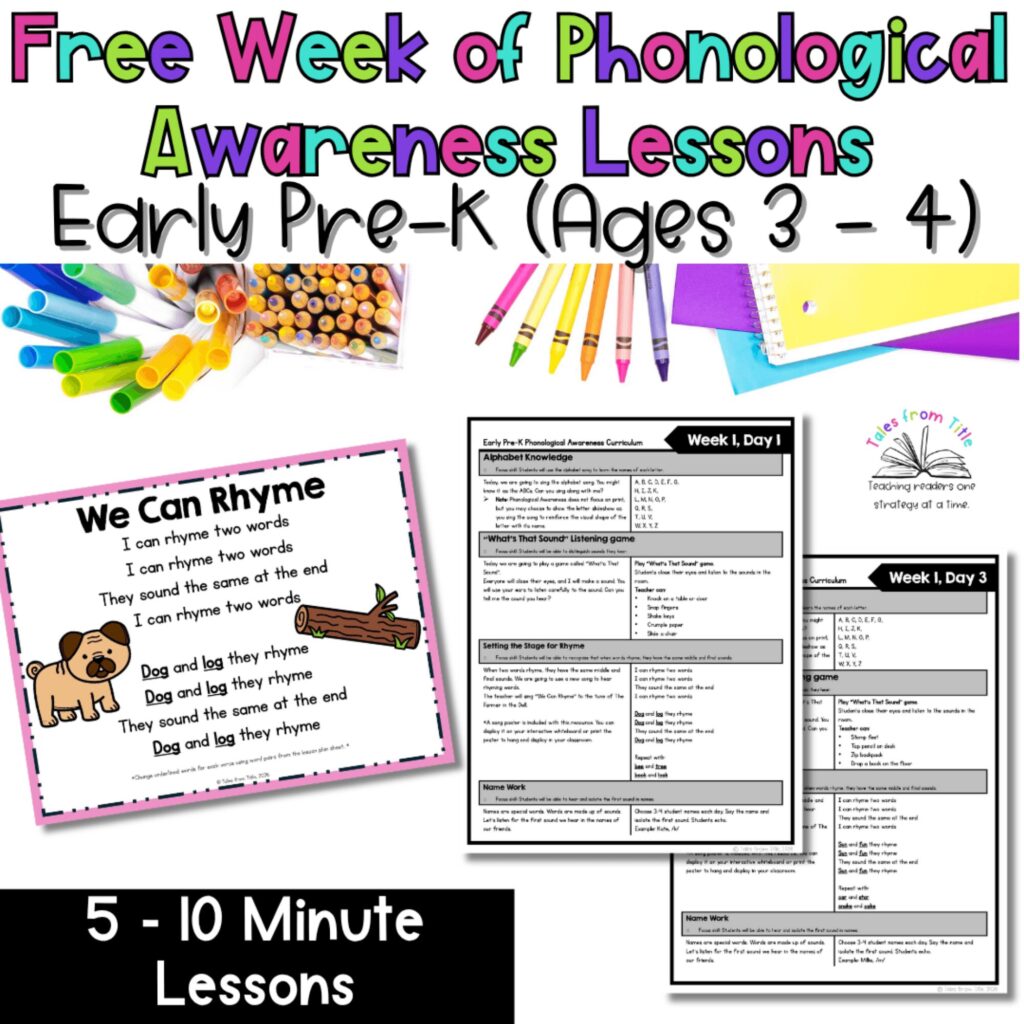
Download the FREE Week 1 Early Pre-K Phonological Awareness Lessons to experience the lesson format before purchasing additional weeks.
The free resource introduces the same predictable instructional routine used throughout the curriculum, making it an easy way to see how your preschoolers respond to daily phonological awareness instruction.
Save Even More with the Month 2 Bundle
Planning multiple weeks of preschool literacy instruction doesn’t have to be overwhelming.
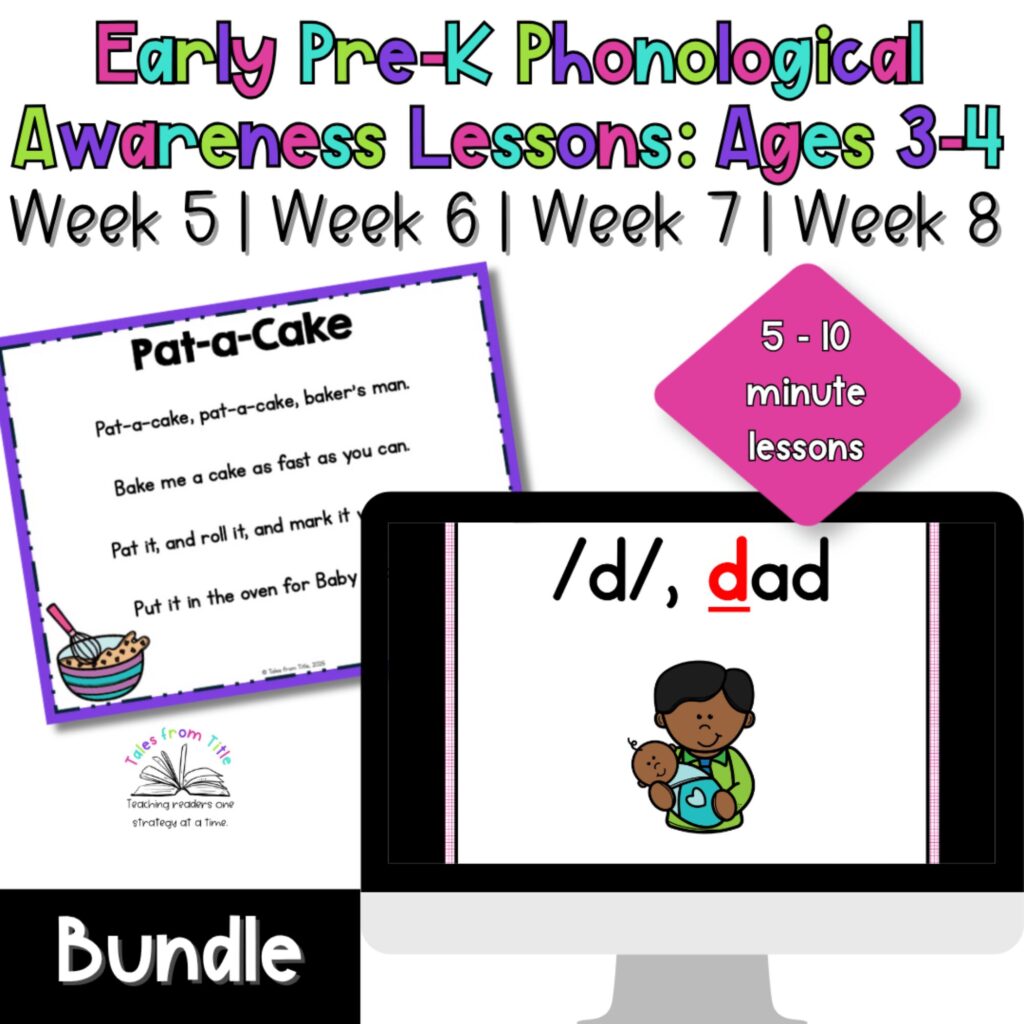
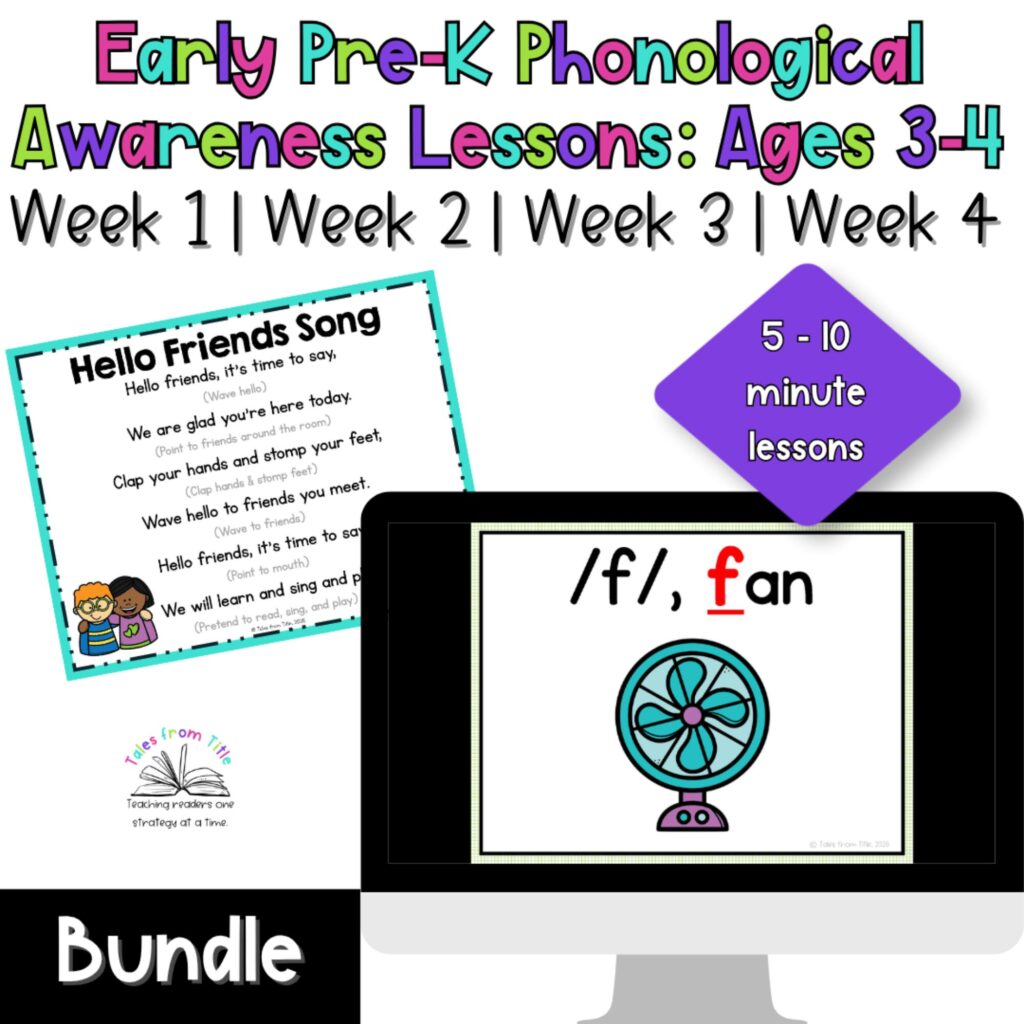
If you’re ready to continue beyond individual lessons, check out the Early Pre-K Phonological Awareness Month 2 Bundle (Weeks 5–8). You’ll receive four weeks of ready-to-teach lessons that systematically build phonological awareness while introducing new word families and preparing students for the next developmental step: compound word segmentation.
It’s an easy way to save planning time while providing consistent, research-supported literacy instruction.
Continue Building Strong Early Literacy Skills
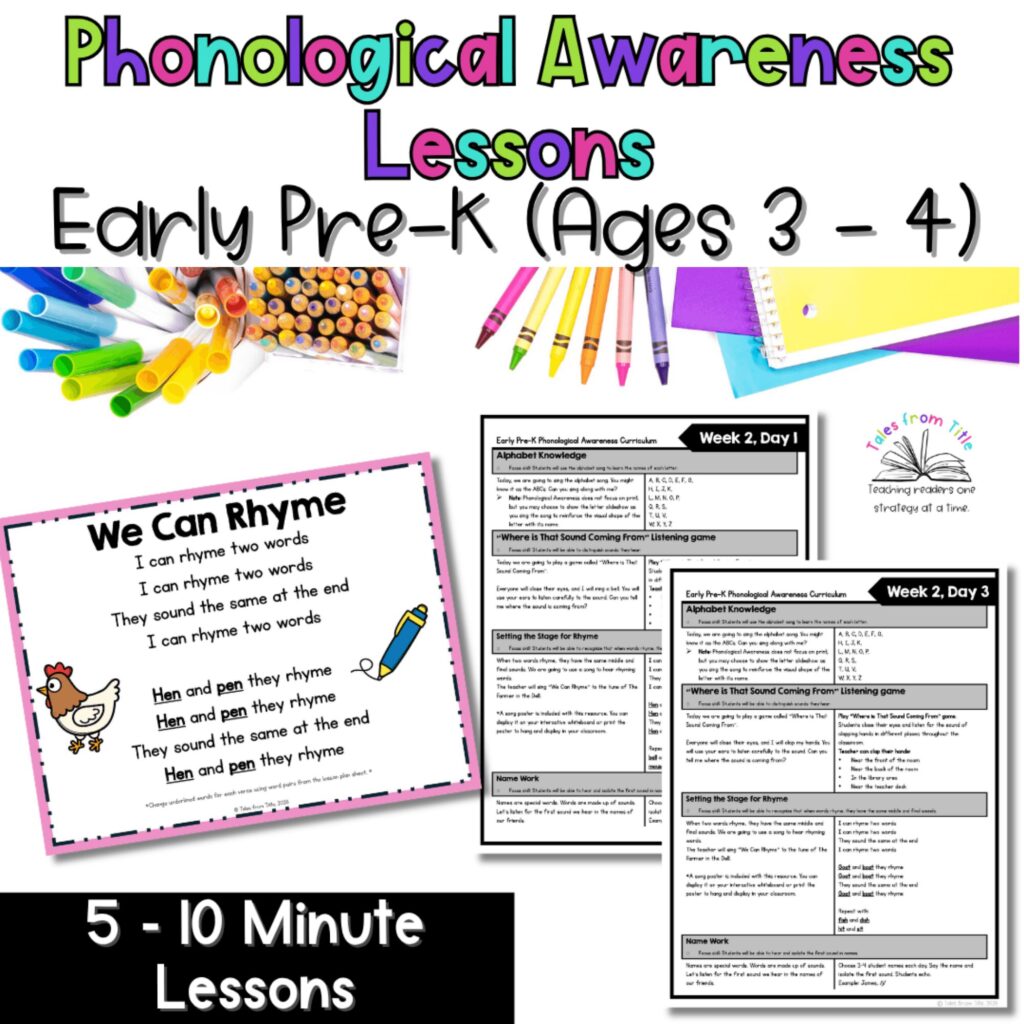
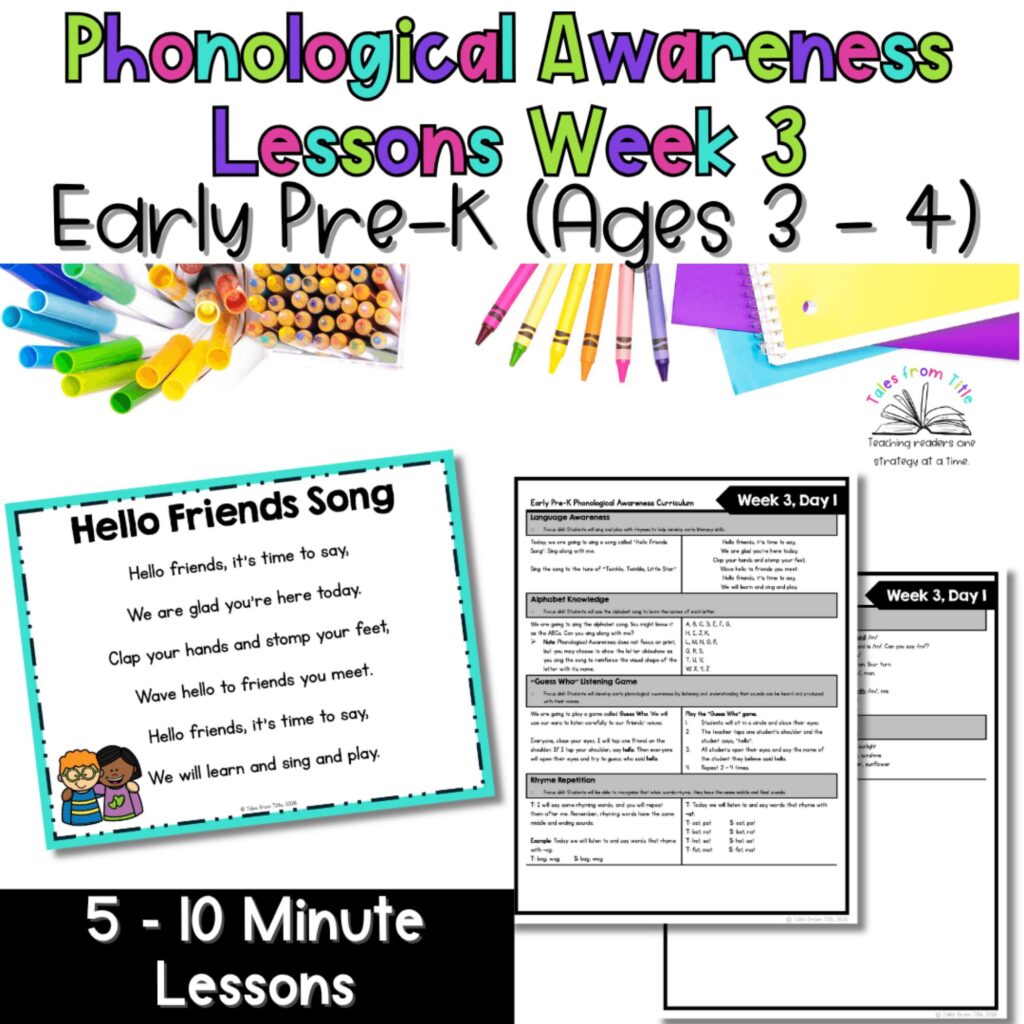
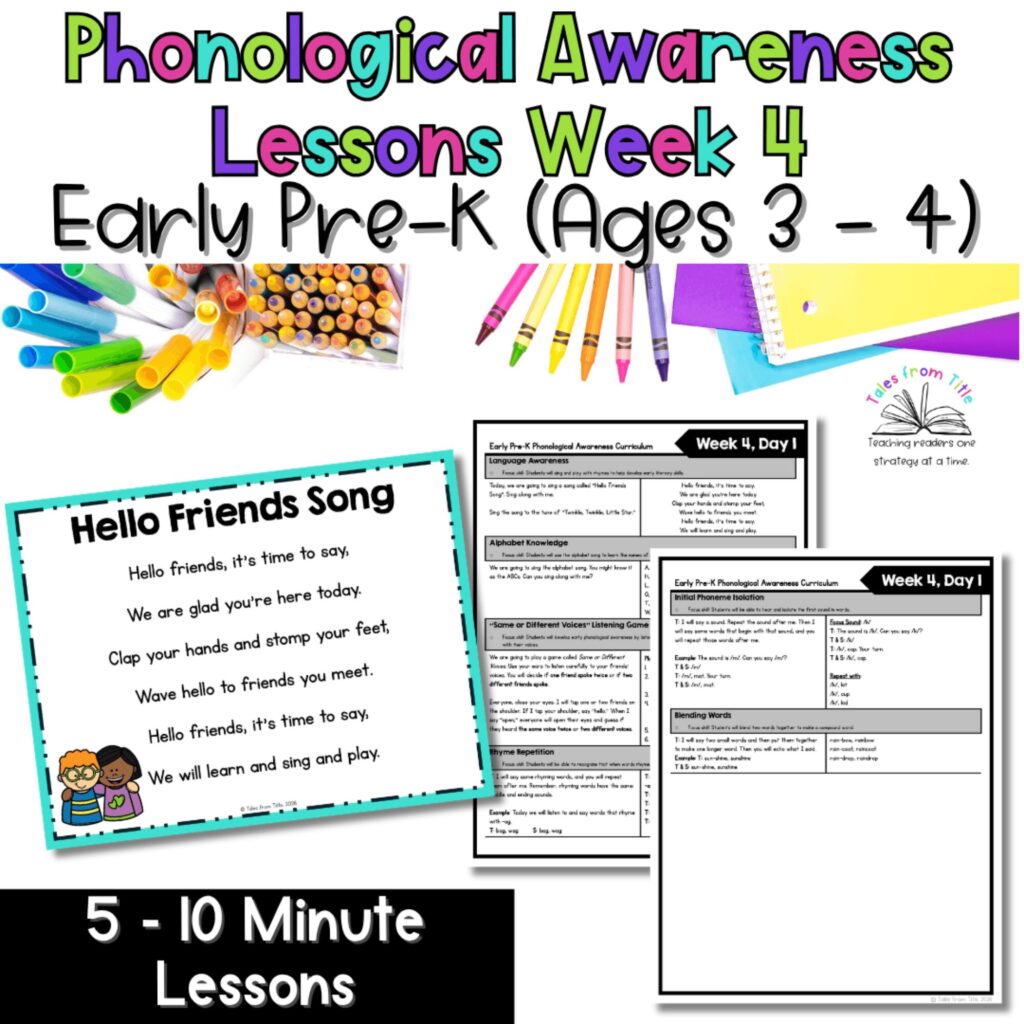
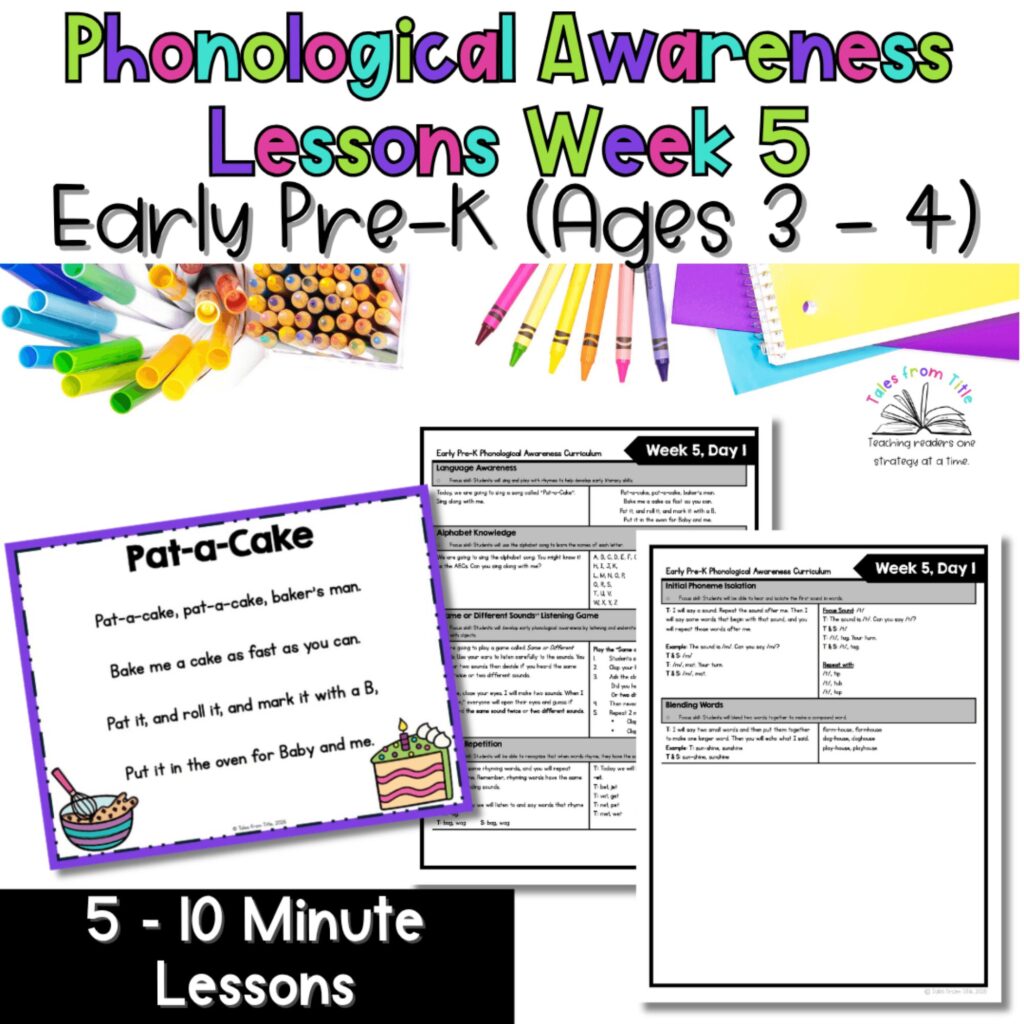
If you’re following the complete curriculum, be sure to explore the additional resources available:
Providing children with consistent opportunities to listen, rhyme, blend, and play with spoken language is one of the most valuable investments you can make in their future reading success. With just a few minutes of intentional practice each day, you’re helping build the foundation they’ll use as they begin learning to read.