Why Letter Recognition Matters for Early Readers
Letter recognition is one of the strongest building blocks for learning to read. Along with phonemic awareness, it gives students the foundation they need to succeed in kindergarten, where the demands for reading and writing are higher than ever.
But the playing field is not even. Some students arrive at school with little to no knowledge of letters, while others grew up in a print-rich home, attended preschool, and had caregivers who read to them every day.
So, what can we do as teachers to level the playing field? Two things make the biggest difference:
- Intervene early. You can spot students who need extra support very quickly, so meet with them early and often to fill in the gaps.
- Teach all four components of learning letters. Letter recognition is only the beginning. Well-rounded instruction is what helps students truly learn their letters.
Let’s break down each component so you can build it into your lessons.
What Are the Four Components of Learning Letters?
The four components of learning letters are:
- Letter recognition
- Letter naming
- Letter sound knowledge
- Letter writing
Students need practice with all four. Here is what each one looks like in the classroom.
1. Letter Recognition: Identifying the Shape of a Letter
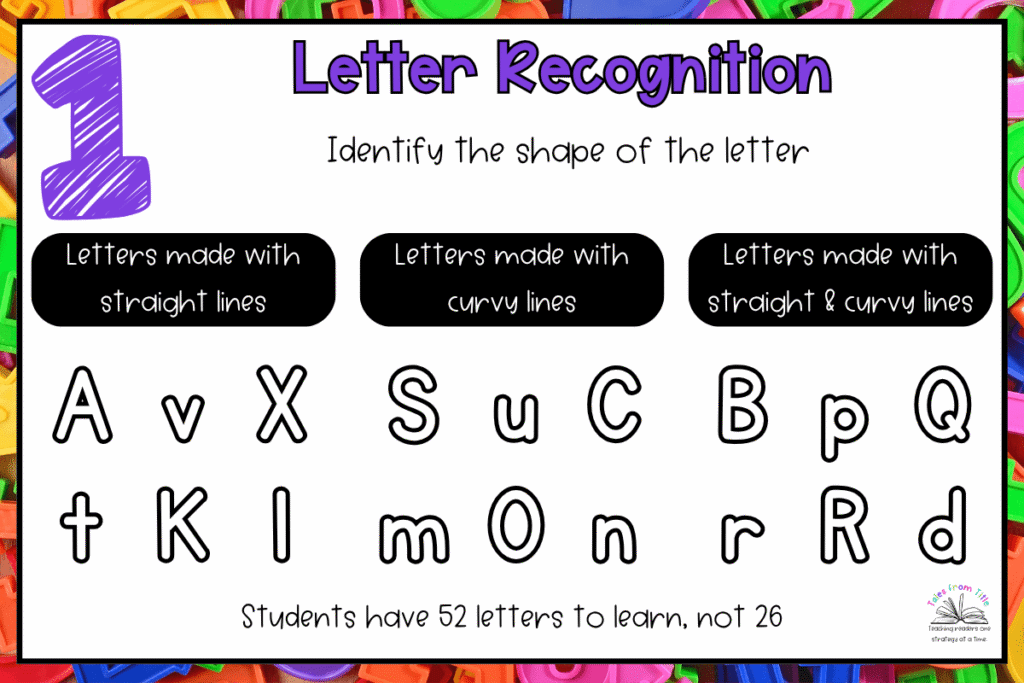
Letter recognition is a child’s ability to recognize the size and shape of a letter. Students should be able to identify a letter when you show it to them and pick it out from a group of letters.
Children usually learn capital letters first, because that is what they see on toys, blocks, and magnetic letters. However, you can’t assume a child knows the lowercase letter because they know the capital. Many letters look completely different in their uppercase and lowercase forms (think A and a, or G and g).
That means students have 52 letters to learn, not 26. Strong letter recognition instruction always covers both.
Try it in your classroom:
- Letter hunts: have students find a target letter in books, on posters, or around the room
- Letter sorts: sort magnetic letters by shape, or match uppercase to lowercase
- Sensory bins: hide letters in sand or rice and have students name each one they find
2. Letter Naming: Connecting a Shape to Its Name
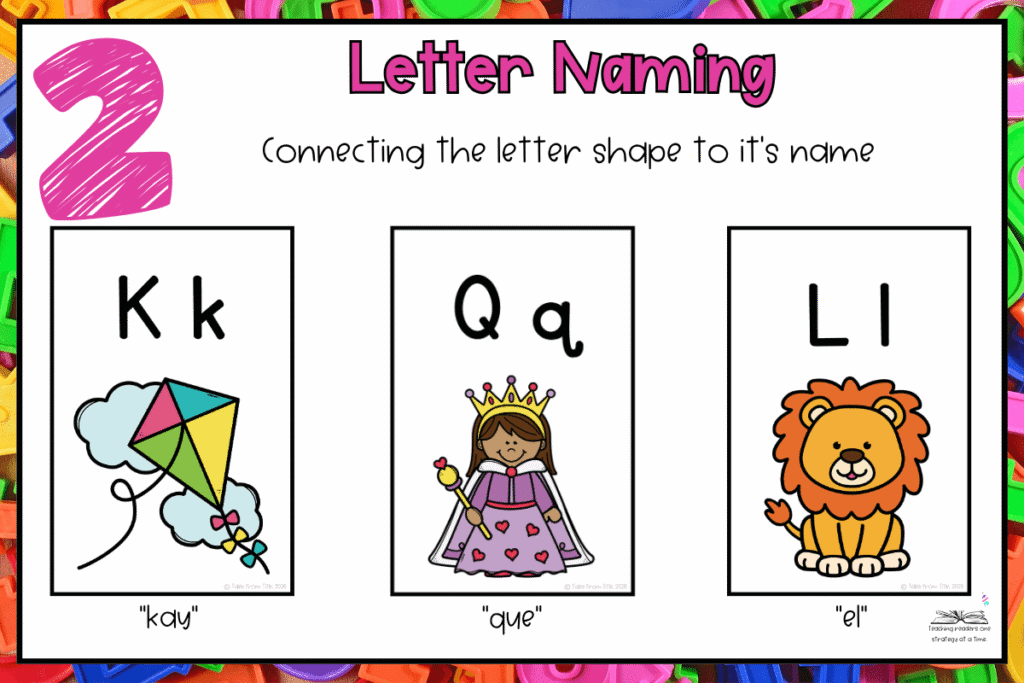
Letter naming is the ability to connect the shape of a letter with its name. This is what most of us picture first when we think about teaching letters: flashcard drills where you show a letter and students call out the name.
When building fluency, aim for students to say a letter name within three seconds of seeing it. If a student has to stop, think, and talk through it, they don’t fluently know the letter yet.
Try it in your classroom:
- Quick letter name warm-ups with a few mixed uppercase and lowercase cards
- Alphabet songs paired with pointing to each letter on a chart
- Games like letter bingo or “I Spy” with letters
3. Letter Sound Knowledge: Linking Letters to Phonemes
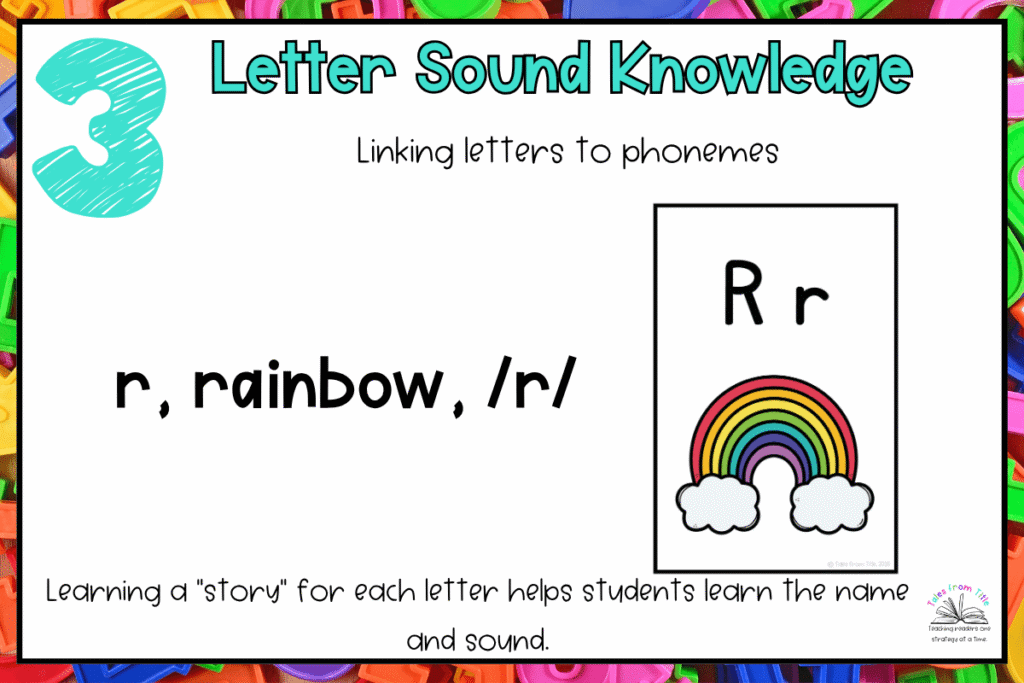
Letter sound knowledge is the ability to determine which sound goes with the shape or name of a letter. It is essential for learning to read, because students must know the sound of each letter in order to read words. You can read more about the importance of phonics here.
As with letter naming, you want students to say the sound within three seconds of seeing the letter. Many programs teach a routine for each letter: say the letter name, say a word that begins with it, then say the sound. For example: d, dog, /d/.
If a student can only give you the sound by reciting the whole routine, they don’t fluently know that letter sound yet. The goal is to produce the sound alone, quickly.
Try it in your classroom:
- Sound sorts using picture cards
- Quick sound drills once students know the routine
- Beginning sound matching games: Check out these fun, simple games that can be easily incorporated into your small groups.
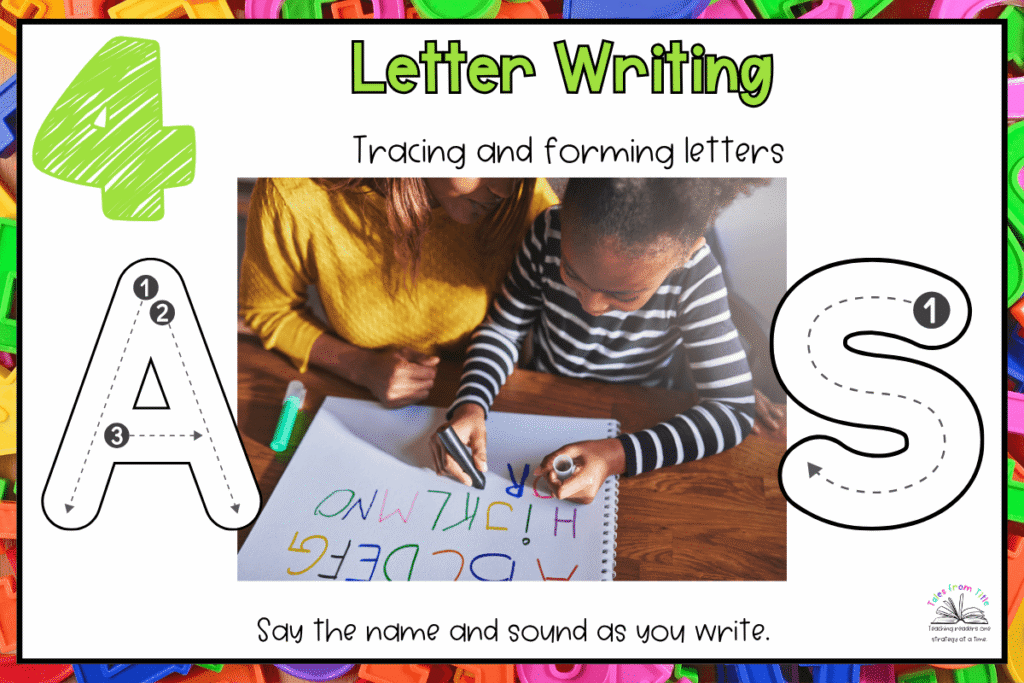
4. Letter Writing: Tracing and Forming Letters
Letter writing is the ability to trace or write a letter. Your phonics program likely includes a letter formation guide or verbal cues for each letter, so use them consistently.
While students practice writing, talk about the letter name and the sound it makes. It may feel like you are a broken record, but repetition and repeated exposure really help students who don’t know their letters yet.
Try it in your classroom:
- Tracing letters in shaving cream, sand, or salt trays
- Building letters with play dough
- Skywriting with a finger while saying the name and sound
Frequently Asked Questions About Letter Recognition
What is the difference between letter recognition and letter naming? Letter recognition is identifying a letter by its shape, such as picking out a B from a group of letters. Letter naming is attaching the correct name to that shape. Students can sometimes do one before the other.
Should students learn uppercase or lowercase letters first? Many children learn uppercase first because it is common on toys and blocks. Teach both, since lowercase letters make up most of the print students will read.
How long should letter recognition practice take? Short, frequent practice works best. A few focused minutes a day, using all four components, is more effective than one long session.
How do I know if a student has mastered a letter? For letter naming and letter sounds, look for a response within three seconds. Hesitation or needing a whole routine to get there means more practice is needed.
Final Thoughts on Teaching Letters
Full disclosure: I have 100% been the teacher who relied too heavily on flashcards when providing intervention for my kindergarten and first-grade students. If you have too, that’s okay!
We are always learning and growing as teachers. I encourage you to include all four components in your lessons: letter recognition, letter naming, letter sound knowledge, and letter writing. When students interact with letters in a variety of ways, they understand how they will meet and use letters in everyday life.
Leave a comment below and tell me your favorite activities and games for teaching letters!